

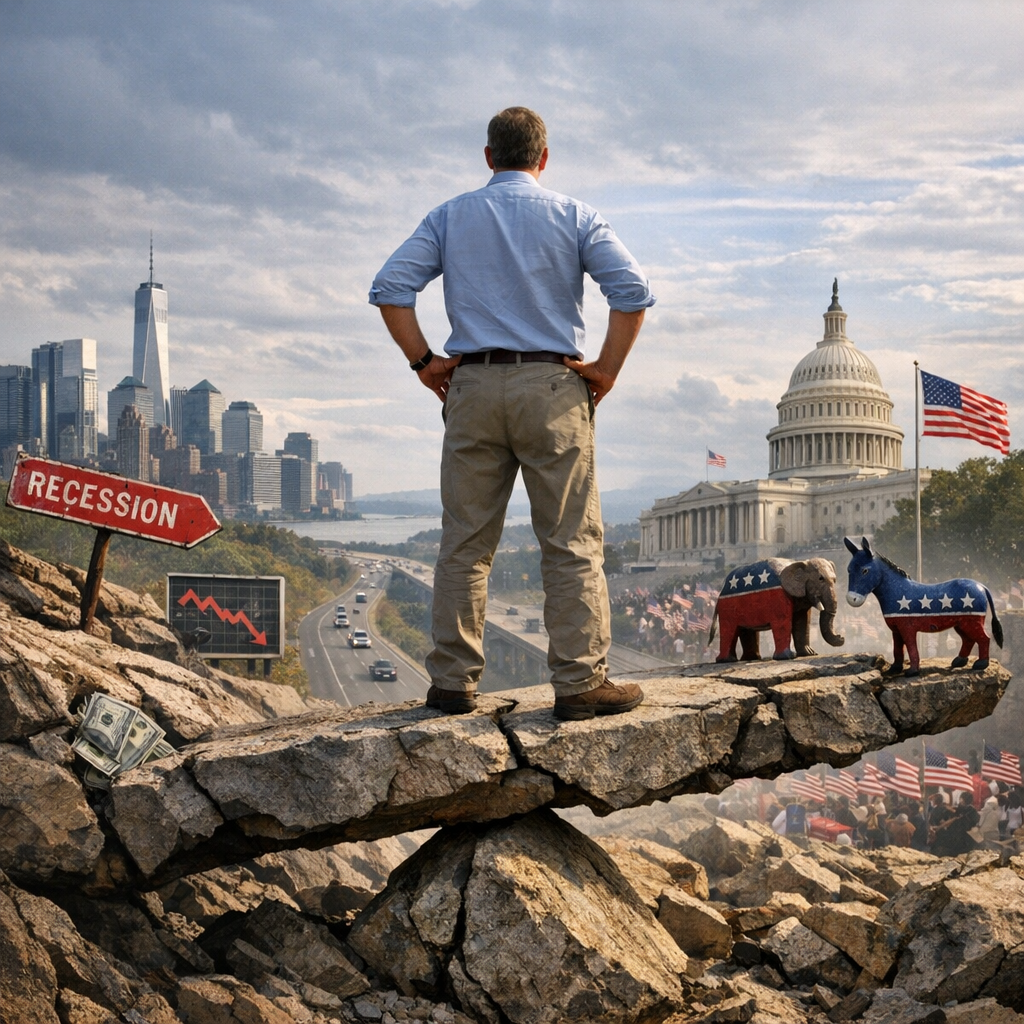
The United States continues to experience a dynamic economic and political environment, with recent developments influencing both domestic and international landscapes.
Economic Performance and Outlook
In 2025, the U.S. economy demonstrated resilience, achieving a 2% growth rate despite policy shifts and a government shutdown in the fourth quarter. This growth was underpinned by strong productivity gains, even as employment growth slowed due to reduced immigration flows. Inflation remained steady, with tariff-induced increases in goods prices offset by declining services inflation. The federal fiscal deficit narrowed slightly to 5.9% of GDP, while general government debt rose to 123.9% of GDP. The current account deficit remained substantial at 3.7% of GDP. Looking ahead, GDP growth is projected to rise to 2.4% in 2026, with core PCE inflation expected to return to 2% by the first half of 2027. Employment growth is anticipated to slow further, but the unemployment rate should remain near 4%.
Trade Policies and Global Relations
Trade policies have been a focal point, with recent tariff implementations affecting various sectors. While some regions have benefited from protectionist measures, others, particularly in agriculture and food processing, have faced challenges due to increased costs. Additionally, external pressures, such as rising energy prices stemming from geopolitical tensions, have impacted transportation and agricultural expenses, contributing to inflationary concerns.
Political Climate and Public Sentiment
Politically, the U.S. is navigating a period of uncertainty. Public sentiment reflects this, with a significant portion of Americans holding negative views of the economy. Approximately 72% rate economic conditions as only fair or poor, indicating widespread concern about the nation’s economic trajectory. As the midterm elections approach, these sentiments may influence electoral outcomes and subsequent policy directions.
Implications for Global Partners
For international partners, including those in the United Arab Emirates, understanding these developments is crucial. The U.S. remains a key player in the global economy, and its policy decisions can have far-reaching effects. Staying informed about these trends will aid in navigating the complexities of international trade and economic relations.