

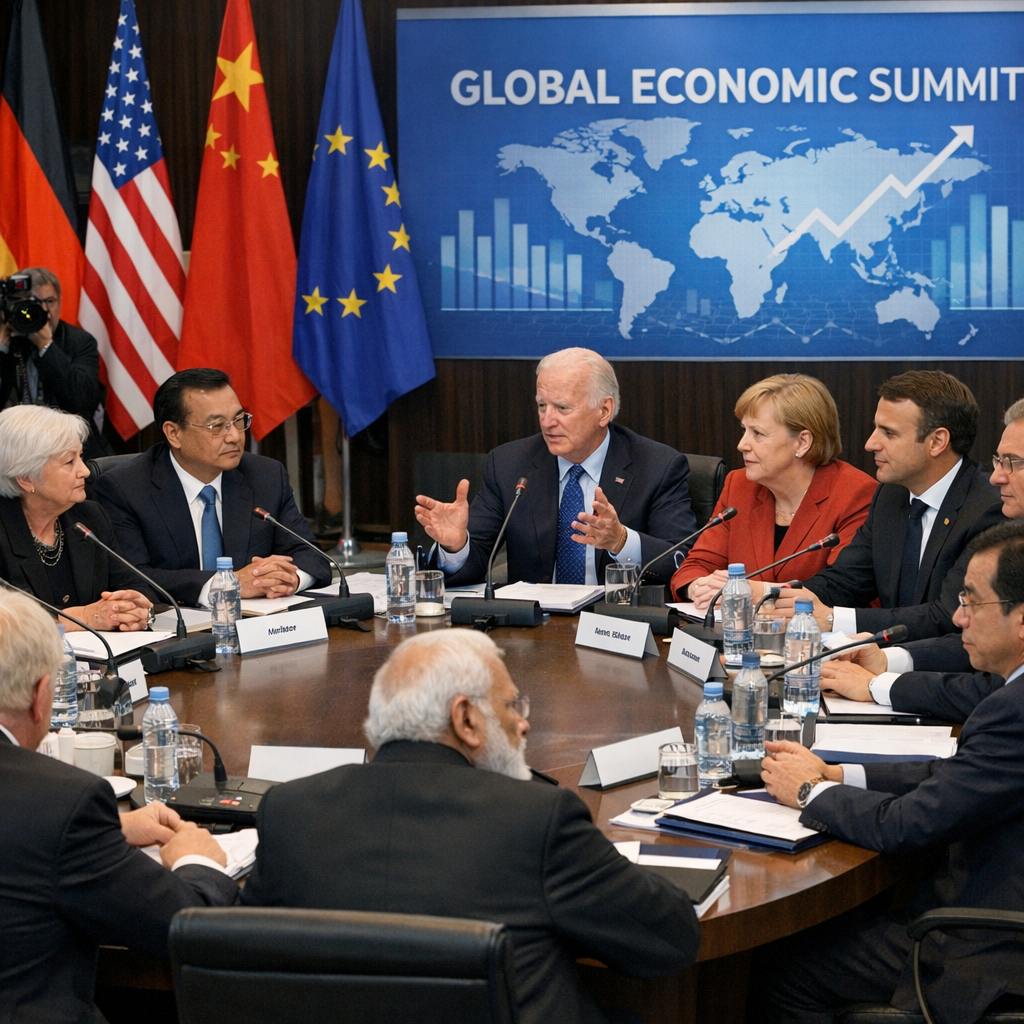
The global economy is currently navigating a complex landscape marked by geopolitical tensions and energy market disruptions. Recent forecasts indicate a slowdown in growth, with projections suggesting a decline to 2.7% in 2026, down from 3% in 2025. This deceleration is attributed to factors such as subdued investment and structural challenges, despite easing inflation and monetary policy adjustments.
Impact of Geopolitical Conflicts
Ongoing conflicts, particularly in the Middle East, have introduced significant uncertainty into global markets. The Organization for Economic Cooperation and Development (OECD) highlights that the energy supply shock resulting from these conflicts is testing the resilience of the global economy. The OECD projects global growth of 2.9% in 2026 and 3.0% in 2027, noting that a prolonged disruption could further dampen growth prospects.
Regional Economic Projections
Different regions are expected to experience varied economic trajectories:
- United States: Growth is projected at 2.0% in 2026, moderating to 1.7% in 2027, influenced by a slowdown in consumer spending and capital expenditures.
- Euro Area: Growth is anticipated to be 0.8% in 2026 and 1.2% in 2027, with energy price increases impacting economic activity.
- China: Growth is expected to slow to 4.4% in 2026 and 4.3% in 2027, reflecting challenges in the property sector and broader economic adjustments.
Inflationary Pressures
Inflation remains a concern, with global headline inflation projected to rise modestly in 2026 before resuming its decline in 2027. The OECD forecasts inflation in G20 countries at 4.0% in 2026, easing to 2.7% in 2027. These projections underscore the need for vigilant monetary policies to manage inflationary pressures effectively.
Policy Recommendations
In response to these challenges, the OECD recommends that government policies be timely and targeted, focusing on households and businesses most in need. Additionally, diversifying energy sources and promoting eco-friendly energy solutions are emphasized to enhance economic resilience.
As the global economy confronts these multifaceted challenges, coordinated policy actions and strategic investments will be crucial in steering towards sustainable growth and stability.