

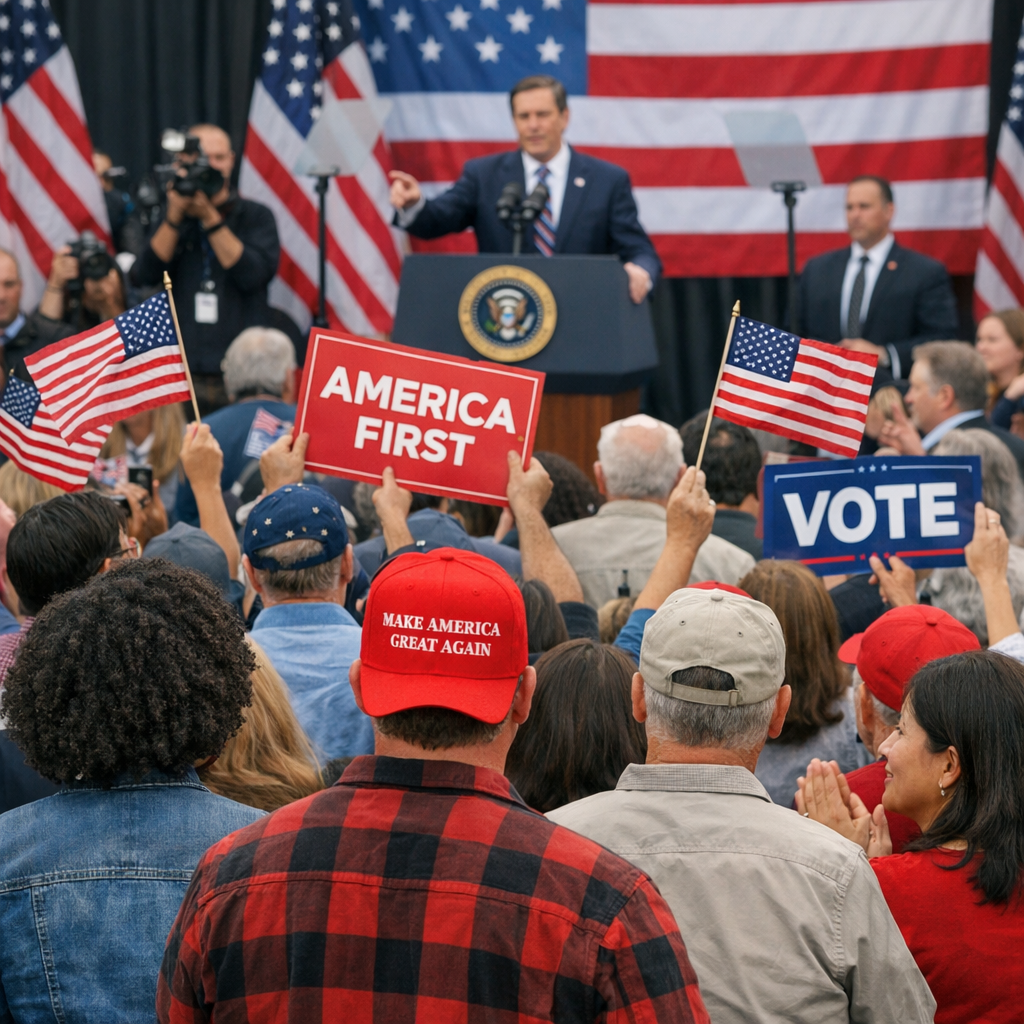
The United States is currently experiencing significant shifts in its political and economic spheres, with recent events poised to influence both domestic and international landscapes.
Political Developments
In California, Xavier Becerra has advanced in the state’s gubernatorial race, marking a notable progression in his political career. This development underscores the dynamic nature of U.S. state politics and the potential for new leadership to emerge.
On the national stage, the political climate remains charged as the country approaches the 2026 midterm elections. The outcomes of these elections are anticipated to have profound effects on the legislative agenda and the balance of power within Congress.
Economic Outlook
The U.S. economy is navigating a complex environment characterized by fluctuating inflation rates and evolving trade policies. Recent data indicates a 0.3% rise in wholesale inflation, maintaining the annual level at 2.7%. Additionally, retail sales have seen a modest increase of 0.2%, though when adjusted for inflation, consumer spending has slightly declined.
In the corporate sector, the technology industry is witnessing significant movements. Benchmark Capital has closed two new funds, totaling $2 billion, signaling robust investor confidence in early-stage and growth-stage ventures.
International Relations
U.S. foreign policy continues to adapt to global challenges. Recent interactions with Iran have led to heightened tensions, with Iranian media claiming that the Iranian navy fired warning shots at U.S. destroyers. Such incidents highlight the delicate nature of international diplomacy and the importance of strategic engagement.
As the U.S. navigates these multifaceted developments, the interplay between political decisions and economic policies will be crucial in shaping the nation’s trajectory. Observers both domestically and internationally will be closely monitoring these trends to gauge their broader implications.