

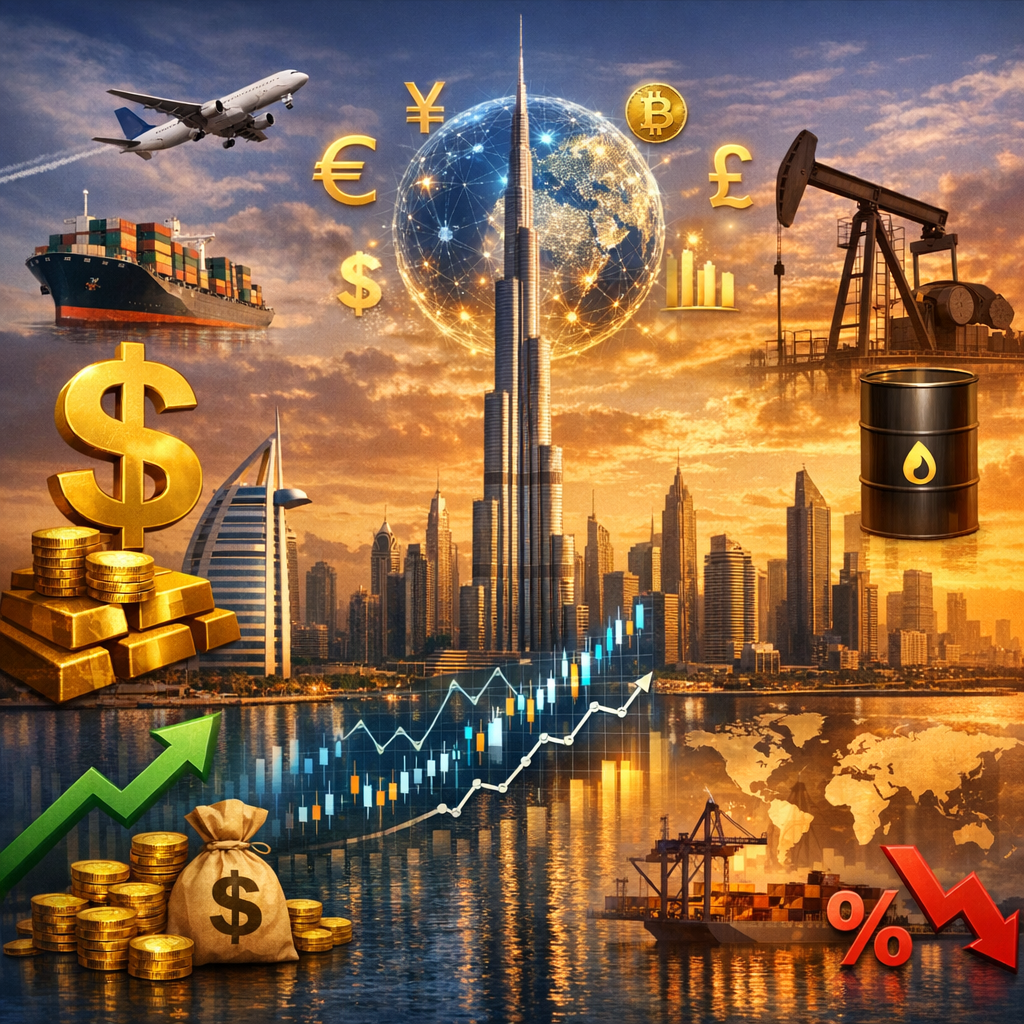
The global economy is currently navigating a complex landscape marked by geopolitical tensions, technological advancements, and shifting trade dynamics. These factors collectively influence economic growth, inflation rates, and investment patterns worldwide.
Global Economic Outlook
Recent forecasts indicate a moderation in global economic growth. The Organization for Economic Cooperation and Development (OECD) projects global growth to slow from 3.4% in 2025 to 2.8% in 2026, before picking up to 3.1% in 2027. This deceleration is attributed to factors such as energy shocks and rising inflationary pressures stemming from geopolitical conflicts. The OECD emphasizes that the evolving conflict in the Middle East has become a dominant force shaping global economic prospects, prompting an energy shock that is driving inflationary pressures and is projected to have adverse impacts on growth.
Implications for Dubai
Dubai, as a global financial hub and a nexus for international trade, is particularly sensitive to these global economic shifts. The city’s economy thrives on its strategic position in global trade routes, its status as a safe haven for investors, and its diversified economic base.
However, the ongoing geopolitical tensions, especially in the Middle East, pose challenges. The OECD notes that the global economy, which had shown robustness, is now facing a test of its resilience as conflicts in the Middle East have recently intensified. Such conflicts can lead to increased energy prices and supply chain disruptions, which may affect Dubai’s trade and logistics sectors.
Moreover, the city’s appeal to the global elite is being tested. Reports suggest that fears of becoming a target in regional conflicts are prompting some wealthy residents to reconsider their presence in Dubai. This underscores the importance of maintaining stability and security to retain investor confidence.
Strategic Considerations
To navigate these challenges, Dubai may consider the following strategies:
- Economic Diversification: Continuing to diversify the economy beyond oil and real estate can reduce vulnerability to global economic fluctuations.
- Strengthening Trade Partnerships: Expanding trade relations with emerging markets can offset potential declines from traditional partners affected by global economic slowdowns.
- Enhancing Technological Infrastructure: Investing in technology and innovation can position Dubai as a leader in sectors like artificial intelligence and renewable energy, attracting new forms of investment.
In conclusion, while global economic trends present challenges, they also offer opportunities for Dubai to adapt and reinforce its position as a resilient and dynamic global city.