

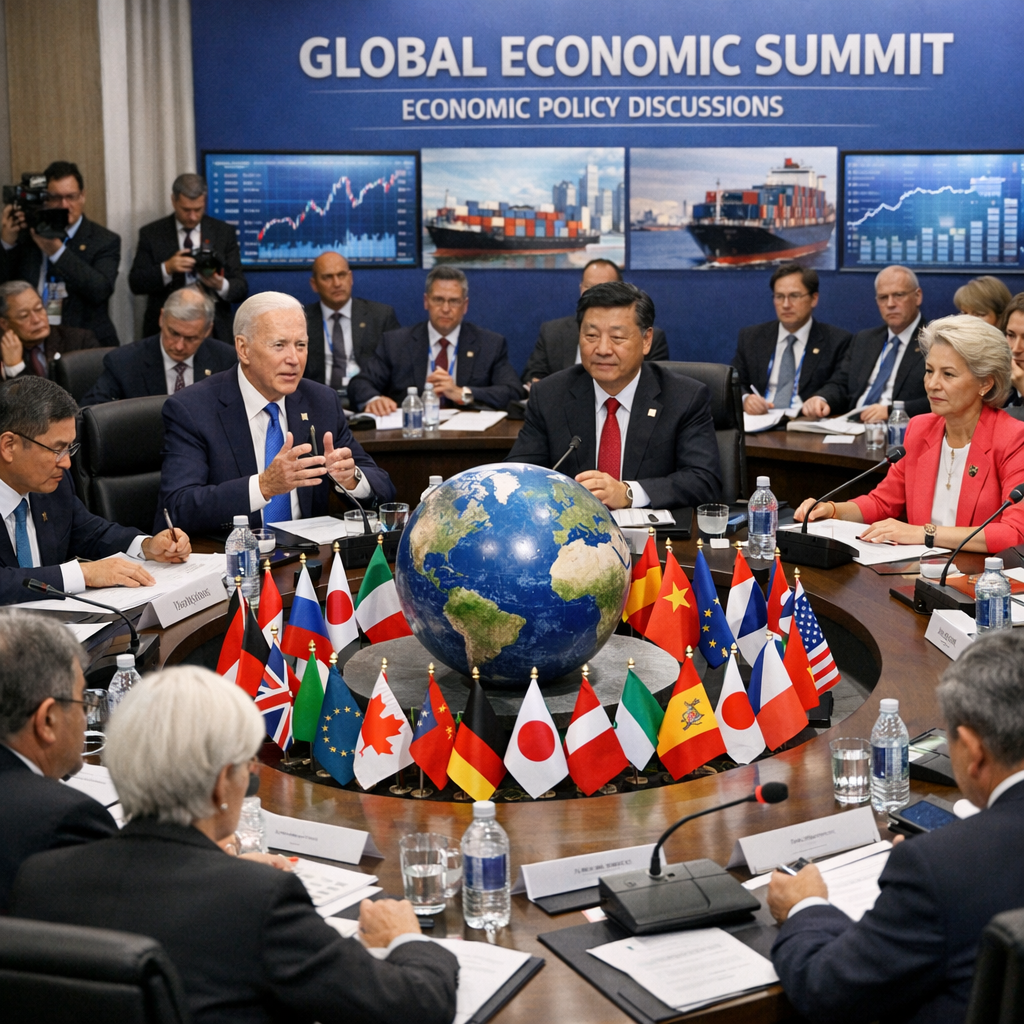
The global economic landscape is currently navigating a complex interplay of geopolitical tensions, energy shocks, and inflationary pressures. Recent assessments from leading economic organizations provide insights into the anticipated trajectories for the coming years.
Global Growth Projections
The Organization for Economic Co-operation and Development (OECD) projects a slowdown in global growth, estimating a decrease from 3.4% in 2025 to 2.8% in 2026, with a slight uptick to 3.1% in 2027. This deceleration is attributed to ongoing conflicts in the Middle East, which have disrupted energy production and trade, leading to increased inflationary pressures. The OECD outlines two scenarios: a time-limited disruption with a gradual return to pre-conflict energy levels, and a prolonged disruption scenario with extended energy production and export challenges.
Regional Economic Outlooks
In the United States, growth is projected at 2.0% in 2026, slowing to 1.8% in 2027. The euro area is expected to experience modest growth of 0.8% in 2026, improving to 1.2% in 2027. China’s growth is anticipated to slow to 4.5% in 2026 and 4.3% in 2027. These projections reflect the varied impacts of geopolitical tensions and economic policies across regions.
Inflationary Trends
Inflation remains a significant concern, with the OECD forecasting consumer price inflation in G20 economies to rise to 4.0% in 2026, up from 3.4% in 2025, before easing to 3.1% in 2027. The energy shock resulting from Middle East conflicts is a primary driver of these inflationary pressures, affecting commodity prices and broader economic stability.
Policy Recommendations
To mitigate these challenges, the OECD emphasizes the need for targeted and temporary fiscal support aimed at vulnerable households and businesses. Additionally, diversifying energy sources and improving energy efficiency are recommended to reduce future vulnerabilities. Central banks are advised to remain vigilant, balancing the need to control inflation with supporting economic growth.
Implications for the United Arab Emirates
For the United Arab Emirates, a nation deeply integrated into the global economy and energy markets, these developments hold particular significance. The UAE’s strategic position and economic policies will play a crucial role in navigating the uncertainties posed by global economic shifts. Proactive measures in energy diversification, economic diversification, and policy adaptation will be essential in maintaining economic resilience amid these global challenges.