

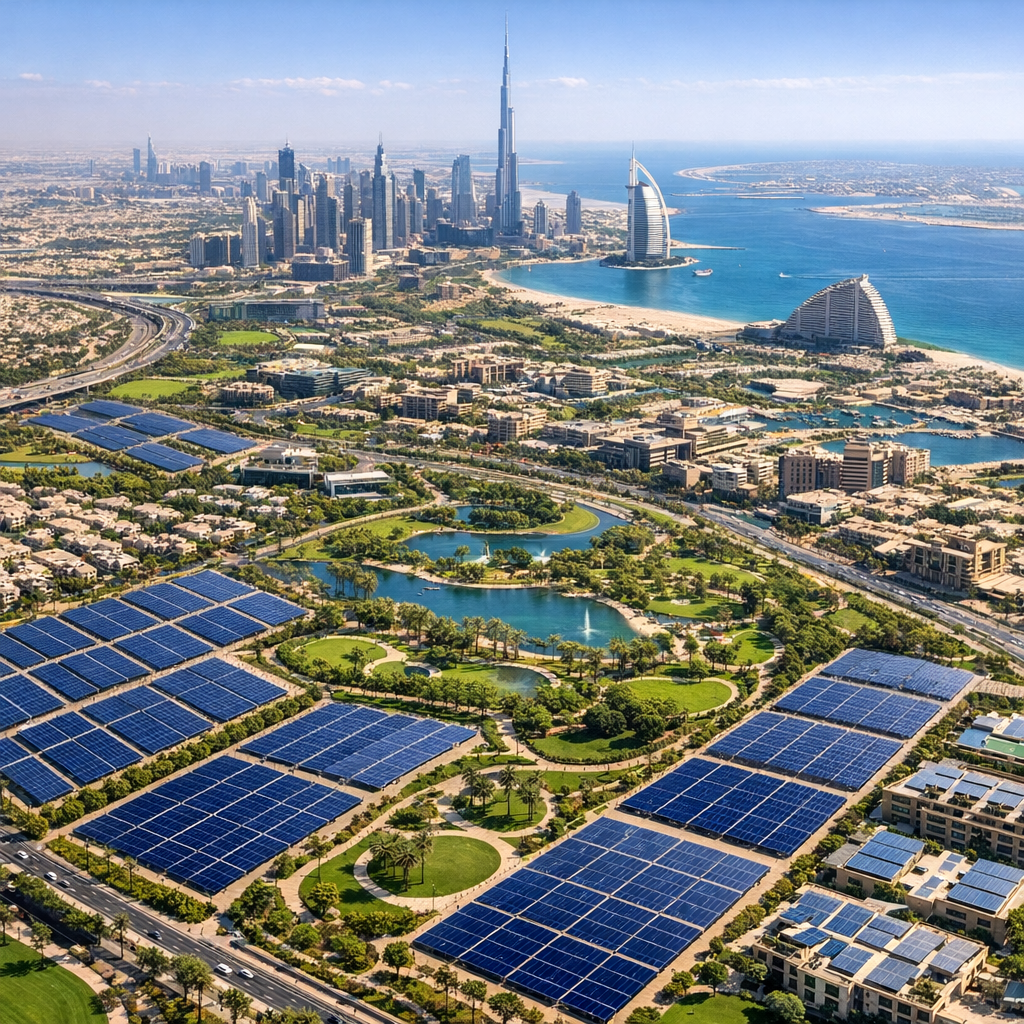
Dubai has long been recognized for its rapid development and architectural marvels. However, in recent years, the emirate has also emerged as a leader in environmental sustainability, implementing a series of initiatives and strategies to promote a greener future.
Clean Energy Initiatives
Central to Dubai’s sustainability efforts is the Mohammed bin Rashid Al Maktoum Solar Park, the world’s largest single-site solar park. With a planned capacity of 5,000 MW by 2030, this project is expected to reduce carbon emissions by over 6.5 million tons annually. Additionally, the Hatta hydroelectric power plant utilizes water stored in the Hatta Dam to generate solar energy, further diversifying the emirate’s renewable energy sources.
Waste Management and Circular Economy
Dubai Municipality has launched the Circle Dubai project, aiming for 100% diversion of all waste types from landfills by 2041. Supported by 17 strategic projects and 26 performance indicators, this initiative seeks to redefine waste management practices and promote a circular economy within the emirate.
Urban Greening and Biodiversity Conservation
In 2024, Dubai Municipality planted 216,500 new trees, marking a 17% increase from the previous year. This effort expanded the emirate’s green spaces by 391.5 hectares, enhancing the urban landscape and improving air quality. Furthermore, Dubai has established eight protected areas covering approximately 31% of its total area, representing all major ecosystem types and preserving the natural beauty of the region.
Marine Conservation Efforts
Dubai Holding is a strategic partner of the DUBAI REEF programme, one of the world’s largest purpose-built reef developments. Spanning 600 km², this initiative aims to restore marine habitats, enhance biodiversity, and support conservation research and ecotourism. Additionally, the Dubai Can initiative focuses on reducing single-use plastic water bottle waste by encouraging the use of refillable bottles and installing free drinking water stations across the city.
Commitment to Net Zero
Aligned with the UAE Net Zero Strategy 2050, Dubai is committed to achieving net-zero greenhouse gas emissions by mid-century. This commitment is evident in various projects, including the Waste to Energy Center in Warsan, which has the capacity to treat around 2 million tons of solid waste annually, generating power for over 135,000 homes.
Through these comprehensive initiatives, Dubai continues to set benchmarks in sustainable urban development, demonstrating a steadfast commitment to environmental stewardship and a greener future for all.