

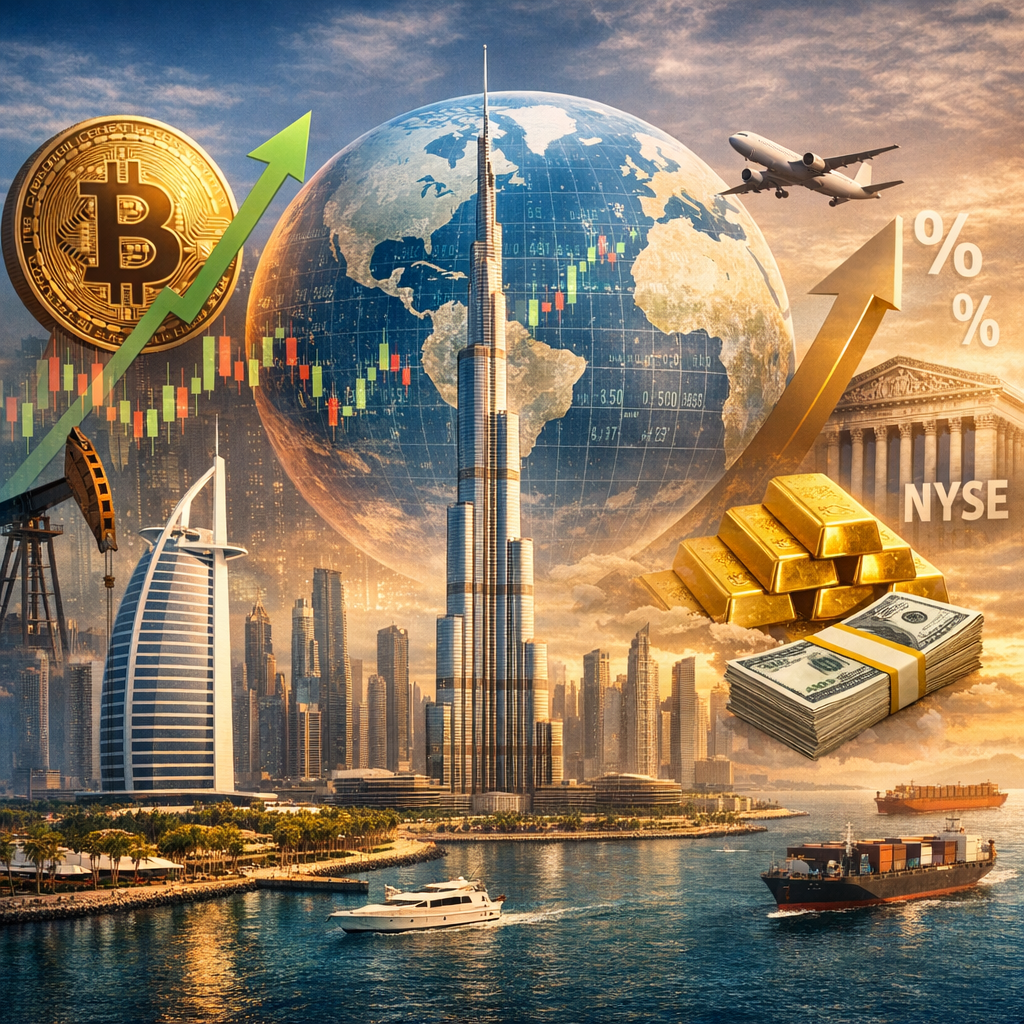
The global economic landscape is undergoing significant transformations, influenced by geopolitical tensions, technological advancements, and evolving trade dynamics. These shifts hold particular relevance for Dubai, a city deeply integrated into the global economy.
Global Economic Outlook
Recent forecasts indicate a moderation in global growth. The World Bank projects a slowdown to 2.6% in 2026, down from 3% in 2025, citing factors such as trade tensions and policy uncertainties. Similarly, the OECD highlights the impact of Middle East conflicts on energy markets, leading to inflationary pressures and subdued growth expectations.
Implications for Dubai
Dubai’s strategic position as a global trade and tourism hub makes it sensitive to these global economic fluctuations. The city’s economy, heavily reliant on international trade, may face challenges due to potential disruptions in global supply chains and fluctuating energy prices. However, Dubai’s proactive economic policies and diversification efforts position it to navigate these challenges effectively.
Strategic Responses
To mitigate potential adverse effects, Dubai continues to invest in sectors such as technology, finance, and renewable energy. These initiatives aim to reduce dependency on traditional industries and enhance economic resilience. Additionally, strengthening trade relations with emerging markets and fostering innovation are key components of Dubai’s strategy to adapt to the evolving global economic environment.
In conclusion, while global economic trends present challenges, Dubai’s strategic initiatives and adaptive policies provide a robust framework to maintain its economic vitality in a changing world.