

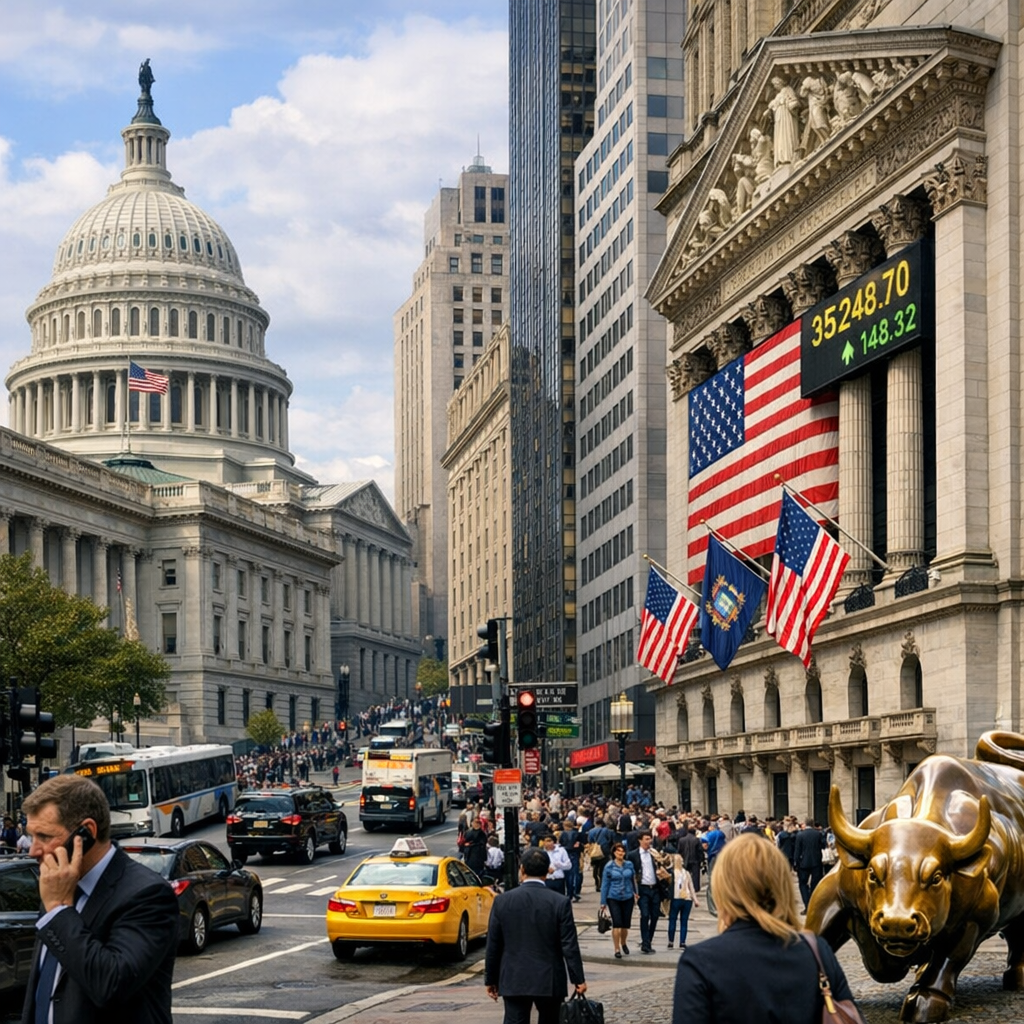
The United States continues to experience a dynamic interplay between economic performance and political developments, shaping the nation’s current landscape.
Economic Performance and Outlook
In 2025, the U.S. economy demonstrated resilience, achieving a 2% growth rate despite policy shifts and a government shutdown in the fourth quarter. This growth was underpinned by strong productivity gains, even as employment growth decelerated due to reduced immigration flows. Inflation remained stable, with tariff-induced increases in goods prices offset by declining services inflation. The fiscal deficit narrowed slightly to 5.9% of GDP, while general government debt rose to 123.9% of GDP. The current account deficit remained substantial at 3.7% of GDP. Looking ahead, GDP growth is projected to rise to 2.4% in 2026, with core PCE inflation expected to return to 2% during the first half of 2027. Employment growth is anticipated to slow further, but the unemployment rate should remain near 4%.
Political Developments and Implications
As the 2026 midterm elections approach, political dynamics are poised to influence the economic landscape. Historically, the president’s party tends to lose seats during midterms, and current polling suggests Democrats may regain control of the House of Representatives. In the Senate, Democrats have opportunities to flip seats in states like North Carolina, Maine, and Ohio, though the overall map favors Republicans. Regardless of the election outcomes, Washington is expected to face increased gridlock, potentially stalling legislative initiatives and impacting economic policy decisions.
Public Sentiment and Consumer Behavior
Public perception of the economy remains cautious. Approximately 28% of Americans rate economic conditions as excellent or good, while 72% view them as only fair or poor. This sentiment reflects ongoing concerns about inflation, employment prospects, and the broader economic outlook. Consumer behavior is influenced by these perceptions, with spending patterns potentially adjusting in response to economic uncertainties.
Conclusion
The United States stands at a crossroads, with economic resilience tempered by political uncertainties and public apprehension. As the nation navigates these challenges, the interplay between policy decisions, economic performance, and public sentiment will be crucial in shaping its future trajectory.