

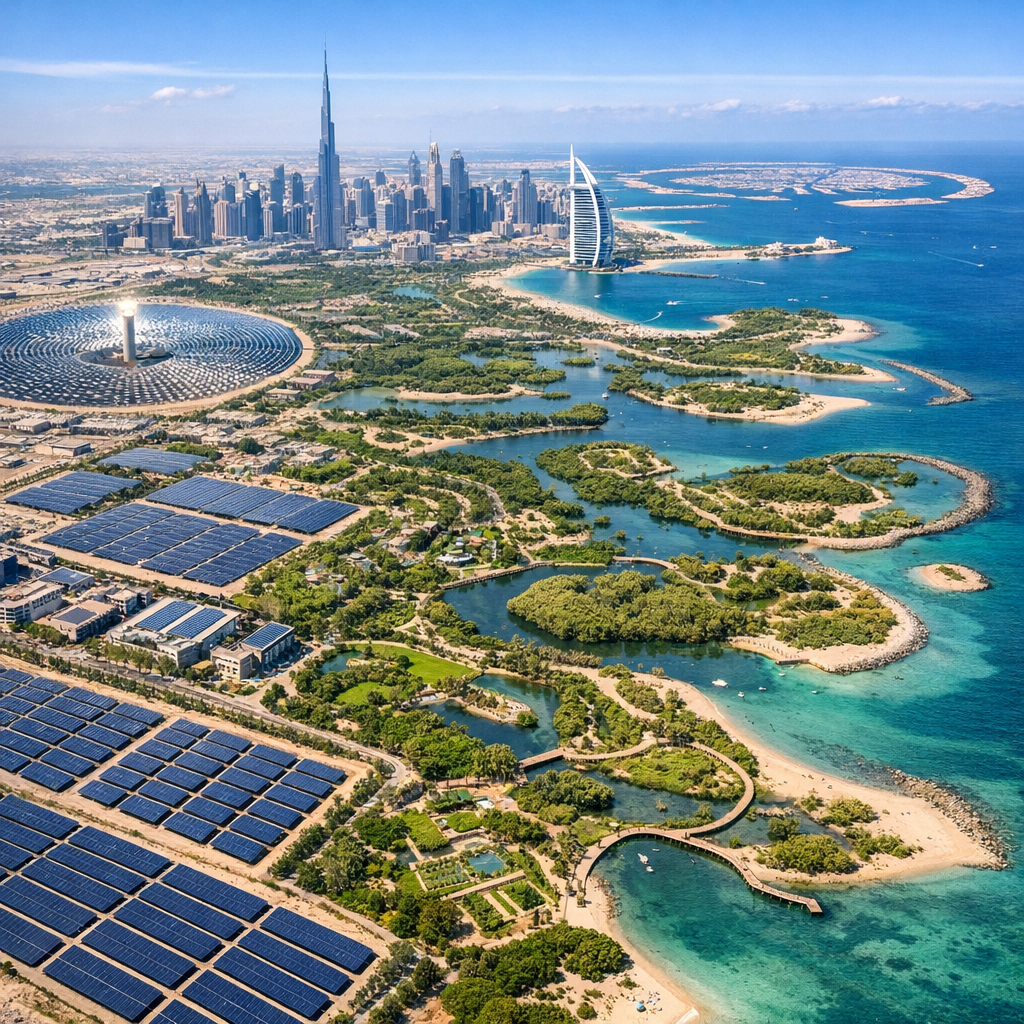
Dubai has long been recognized for its rapid development and architectural marvels. However, alongside its urban growth, the emirate has been steadfast in its commitment to environmental sustainability. This article delves into the various initiatives and strategies that Dubai has implemented to promote a greener future.
Clean Energy Initiatives
One of the cornerstone projects in Dubai’s clean energy endeavors is the Mohammed bin Rashid Al Maktoum Solar Park. As the largest single-site solar park globally, it aims to achieve a production capacity of 5,000 MW by 2030, significantly reducing carbon emissions and promoting renewable energy sources. This initiative aligns with the Dubai Clean Energy Strategy 2050, which seeks to position the city as a global hub for clean energy and green economy.
Waste Management and Circular Economy
In its pursuit of sustainable waste management, Dubai Municipality launched the Circle Dubai project. This initiative targets a 100% diversion of all waste types from landfills by 2041. Supported by 17 strategic projects and 26 performance indicators, Circle Dubai emphasizes reducing waste generation, advancing recycling practices, and embedding circular economy principles into daily life.
Marine Conservation Efforts
Recognizing the importance of marine ecosystems, Dubai has undertaken significant conservation efforts. The DUBAI REEF initiative, one of the world’s largest purpose-built reef developments, aims to enhance biodiversity, safeguard coastal habitats, and support fish populations. By deploying 20,000 reef modules by 2027, the project underscores Dubai’s commitment to marine conservation and ecotourism.
Urban Greening and Air Quality
To combat urban heat and improve air quality, Dubai has been expanding its green spaces. In 2024, Dubai Municipality planted 216,500 new trees, marking a 17% increase from the previous year. This initiative not only beautifies the city but also contributes to its resilience against climate change.
Protected Natural Reserves
Dubai has established eight protected areas covering approximately 31% of its total area. These reserves represent the emirate’s major ecosystems, including mountains, deserts, and coastal regions. Managed by Dubai Municipality, these areas aim to preserve the natural beauty and biodiversity of the region.
In conclusion, Dubai’s multifaceted approach to environmental sustainability reflects its dedication to balancing urban development with ecological preservation. Through clean energy projects, waste management strategies, marine conservation efforts, urban greening, and the establishment of protected areas, Dubai is paving the way for a sustainable and environmentally conscious future.