

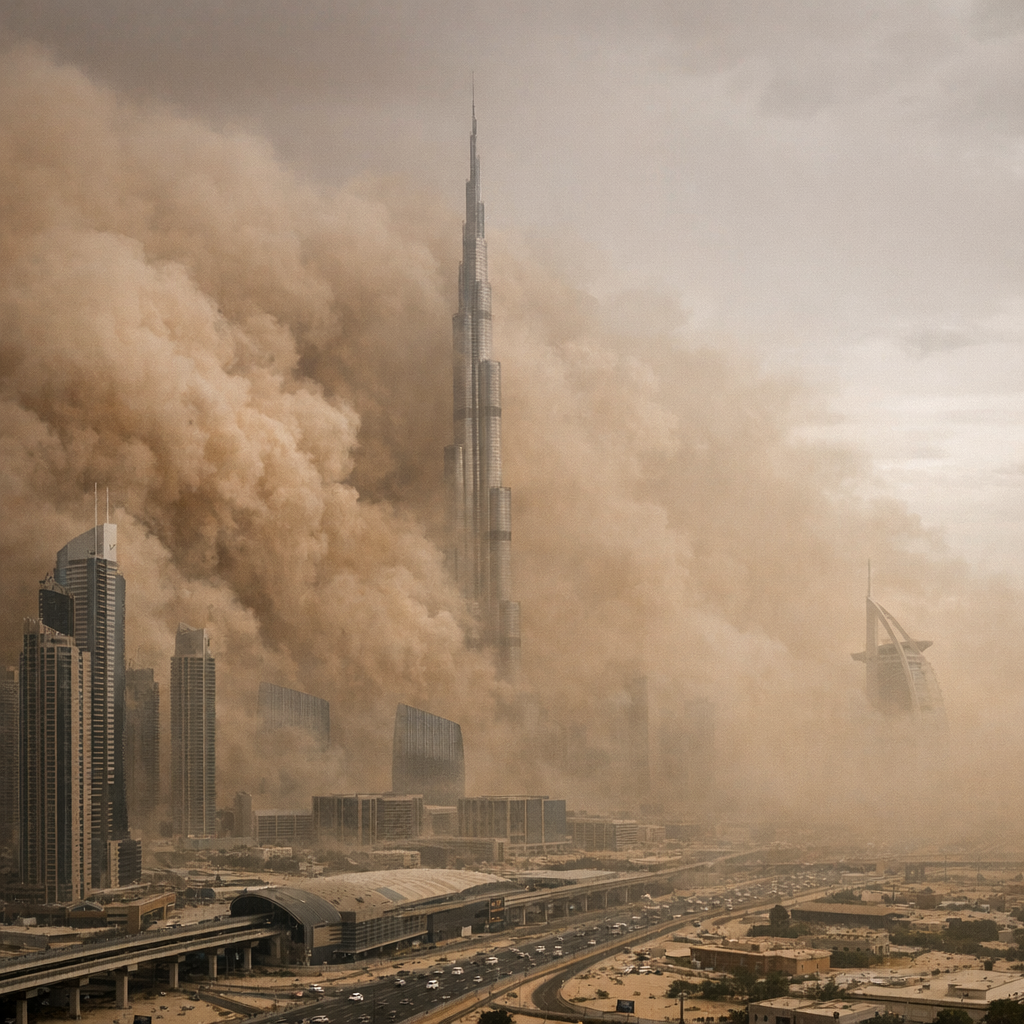
Dubai’s climate is characterized by its hot desert environment, marked by extreme heat, high humidity, and minimal rainfall. Understanding these patterns is essential for residents and visitors alike.
Seasonal Weather Patterns
Summer (May to September)
During summer, temperatures often exceed 40°C, with highs reaching up to 50°C. Coastal areas experience high humidity levels, making the heat feel more intense. The combination of heat and humidity can result in heat indices that approach the human survivability limit, making outdoor activities challenging.
Winter (December to February)
Winters are mild and pleasant, with daytime temperatures ranging from 20°C to 26°C. This season also brings the majority of Dubai’s limited rainfall, averaging around 100 mm annually. Rainfall is typically brief but can lead to temporary disruptions due to the city’s infrastructure.
Environmental Challenges
Sandstorms
Dubai experiences sandstorms, particularly during the summer months. These storms, driven by strong north-westerly winds known as ‘Shamal,’ can reduce visibility and deposit fine desert dust across the city. Residents are advised to stay indoors during severe sandstorms to avoid respiratory issues.
Air Quality
Air quality in Dubai varies seasonally. During summer, high temperatures and humidity can cause pollutants to linger near the ground, leading to elevated levels of ozone and particulate matter. Sandstorms can also cause sudden spikes in air pollution, pushing the Air Quality Index (AQI) into the ‘Very Unhealthy’ range.
Adaptation and Mitigation Efforts
Dubai has implemented several initiatives to address its environmental challenges. The ‘Tasreef’ storm-water program aims to expand the city’s drainage network to handle future storms more effectively. Additionally, the Dubai 2040 Urban Master Plan focuses on creating shaded, walkable districts to mitigate the urban heat island effect and improve residents’ quality of life.
Understanding Dubai’s climate and environmental challenges is crucial for planning daily activities and long-term living arrangements. Staying informed and prepared can help residents and visitors navigate the city’s unique weather conditions safely and comfortably.