

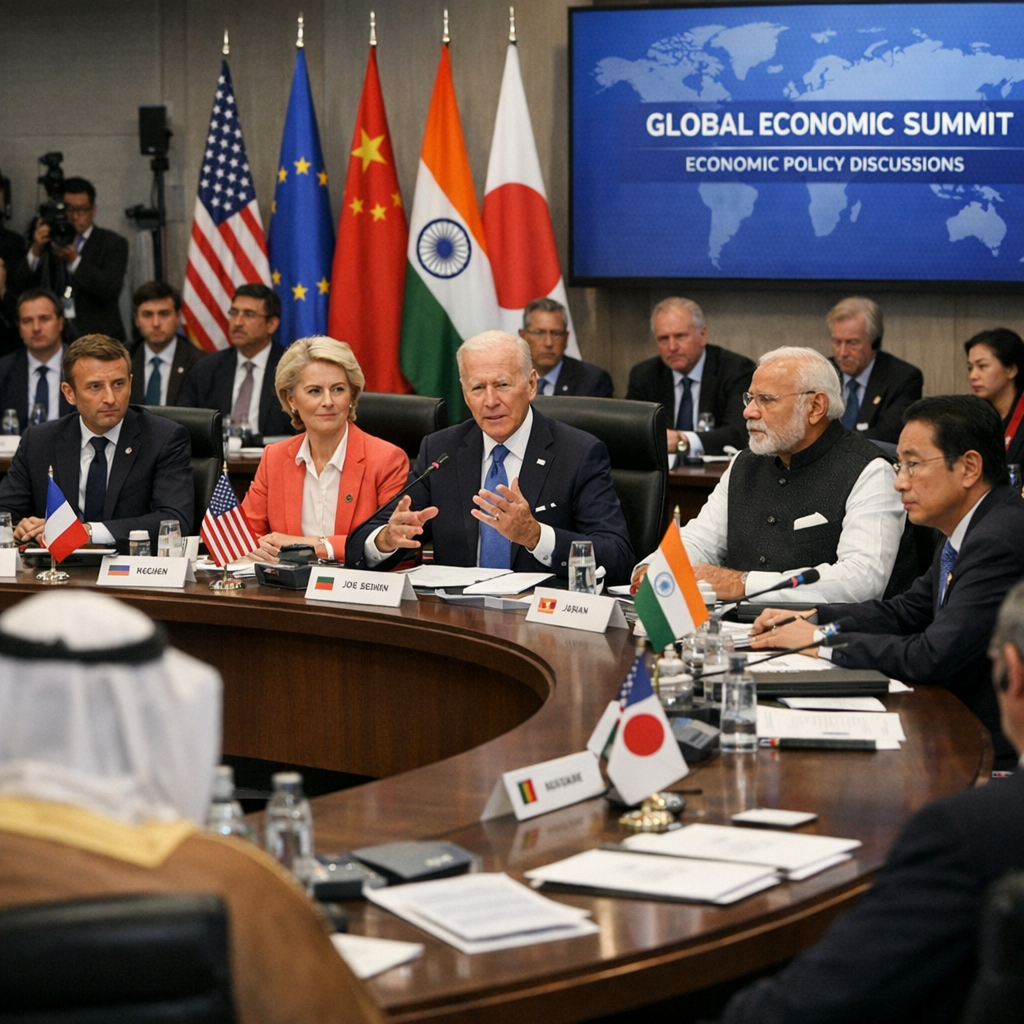
The global economy is currently navigating a complex landscape shaped by geopolitical tensions and rapid technological advancements. Recent conflicts in the Middle East have introduced significant uncertainties, particularly affecting energy markets and inflation rates.
Impact of Middle East Conflicts on Global Growth
The Organization for Economic Cooperation and Development (OECD) has highlighted that the evolving conflict in the Middle East is a dominant force influencing global economic prospects. This situation has led to an energy shock, driving inflationary pressures and adversely impacting growth. The OECD projects global growth to slow from 3.4% in 2025 to 2.8% in 2026, with a potential rebound to 3.1% in 2027. However, these projections are contingent upon the resolution of the conflict and stabilization of energy markets.
Regional Economic Outlooks
In the United States, growth is projected at 2.0% in 2026, moderating to 1.8% in 2027. The euro area is expected to experience modest growth of 0.8% in 2026, improving to 1.2% in 2027. China’s growth is anticipated to slow to 4.5% in 2026 and 4.3% in 2027. These forecasts underscore the widespread impact of geopolitical tensions on major economies.
Inflationary Pressures and Policy Responses
Inflationary pressures are rising globally, driven by higher commodity prices and indirect effects on agricultural inputs and food. In the G20 economies, consumer price inflation is expected to rise to 4.0% in 2026, up from 3.4% in 2025, before easing to 3.1% in 2027. Central banks are advised to remain vigilant, with potential policy responses necessary if broader price pressures intensify or if growth weakens significantly.
Technological Advancements and Economic Resilience
Despite these challenges, technological advancements, particularly in artificial intelligence (AI), offer some cushioning effects. The United States, for instance, is benefiting from increased capital expenditures on AI, which is expected to drive moderate growth as global inflation slows. This trend highlights the importance of innovation in bolstering economic resilience amid geopolitical uncertainties.
Conclusion
The global economic outlook remains uncertain, heavily influenced by geopolitical events and technological transformations. While challenges persist, strategic policy responses and continued investment in technology may help navigate these complexities, fostering a more stable economic environment in the future.