

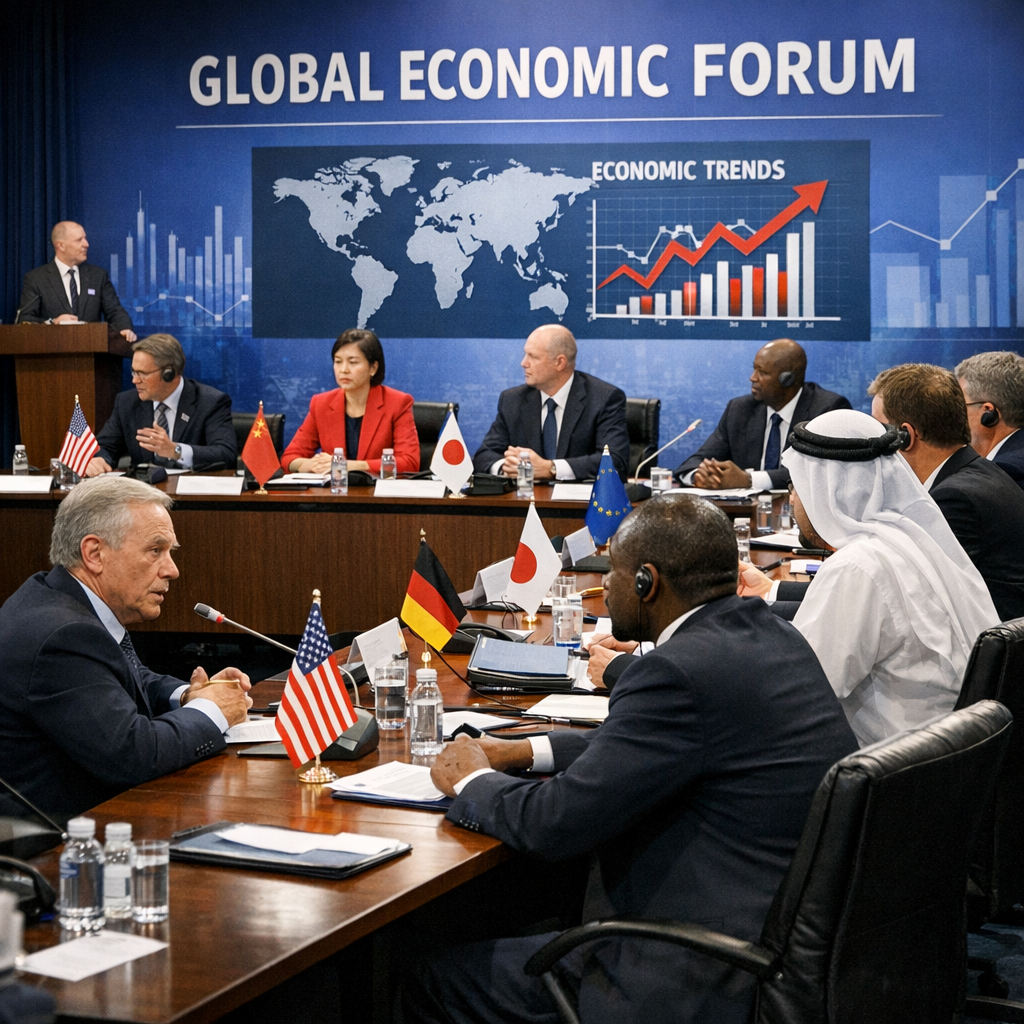
The global economy is currently navigating a complex landscape marked by geopolitical tensions, technological advancements, and shifting trade dynamics. Recent analyses from leading economic institutions provide insights into these developments and their potential implications.
Geopolitical Tensions and Economic Impact
The ongoing conflict in the Middle East has introduced significant volatility into global markets. The Organization for Economic Cooperation and Development (OECD) projects global growth to slow to 2.8% in 2026, down from 3.4% in 2025. This deceleration is attributed to energy supply disruptions and heightened inflationary pressures stemming from the conflict. The OECD emphasizes that the duration and intensity of the conflict will be critical in determining the extent of its economic impact.
Technological Advancements and Market Dynamics
Despite geopolitical challenges, technological innovation continues to drive certain sectors forward. The rapid expansion of artificial intelligence (AI) is reshaping industries and influencing economic trajectories. A study analyzing AI search trends revealed a significant increase in AI-generated search results globally, indicating a shift in information consumption patterns. This trend underscores the growing influence of AI on economic activities and decision-making processes.
Regional Economic Outlooks
Regional economies are experiencing varied impacts based on their unique circumstances. The United States is projected to maintain moderate growth, supported by resilient consumer spending and investments in AI technologies. In contrast, the Eurozone faces slower growth due to energy price increases and trade uncertainties. Emerging economies, particularly in Asia, are expected to lead global growth, with India projected to achieve a robust 6.4% growth rate in 2026, driven by strong consumer demand.
Implications for the UAE
For the United Arab Emirates, these global developments present both challenges and opportunities. As a major player in the energy sector, the UAE is directly affected by fluctuations in global oil prices resulting from geopolitical tensions. However, the nation’s strategic investments in technology and infrastructure position it to capitalize on emerging trends, particularly in AI and digital transformation. Diversifying the economy and fostering innovation will be key to navigating the uncertainties of the global economic landscape.
In conclusion, while the global economy faces a period of uncertainty, proactive strategies and adaptive measures can enable nations like the UAE to mitigate risks and harness opportunities in this evolving environment.