

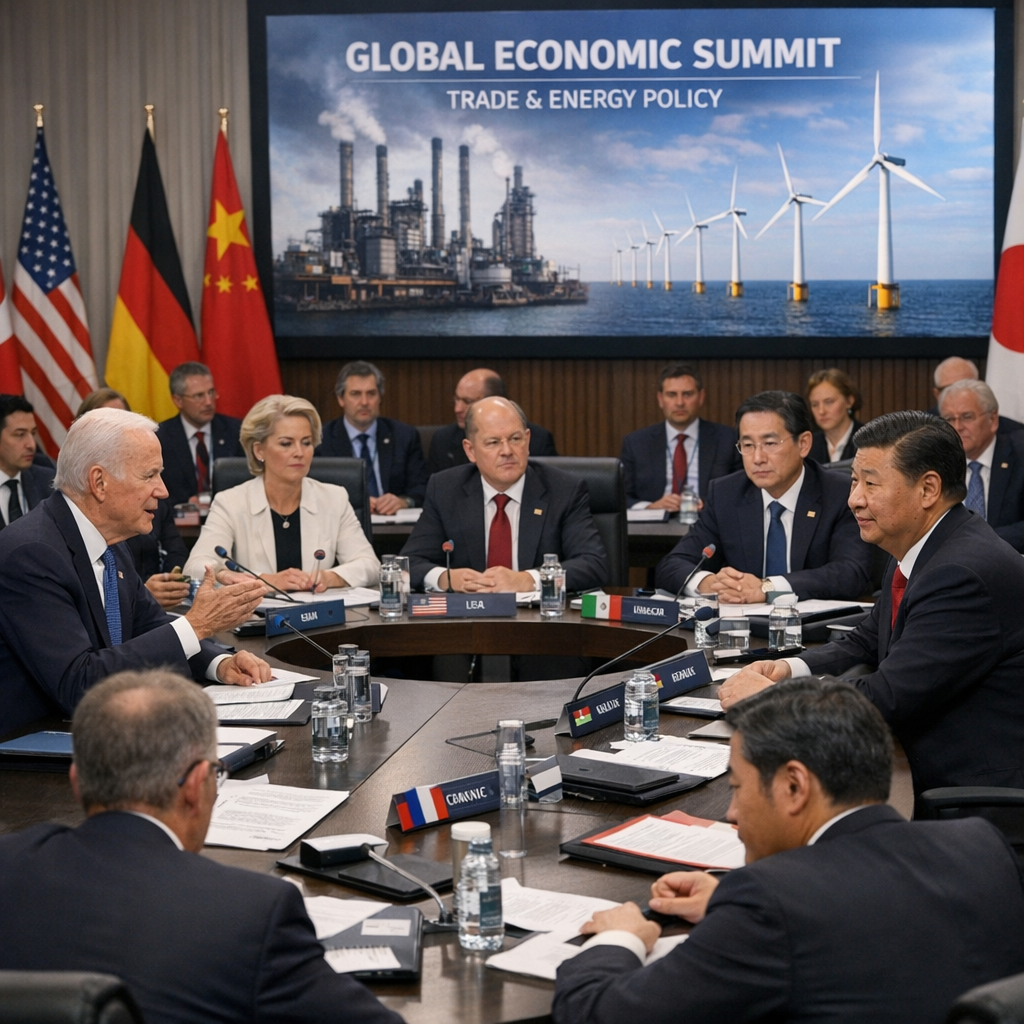
The global economic landscape is undergoing significant transformations, influenced by a confluence of geopolitical tensions, technological advancements, and evolving trade dynamics. Understanding these shifts is crucial for nations like the United Arab Emirates (UAE), which are deeply integrated into the global economy.
Geopolitical Tensions and Energy Markets
Recent conflicts in the Middle East have introduced volatility into global energy markets. The Organization for Economic Cooperation and Development (OECD) highlights that the ongoing situation has led to an energy supply shock, impacting global growth projections. In a scenario where disruptions are temporary, global growth is projected at 2.8% in 2026. However, prolonged disruptions could see growth slowing to 2.1% in 2026 and 1.8% in 2027. These developments underscore the importance of energy market stability for sustained economic growth.
Technological Advancements and Economic Resilience
Despite these challenges, technological innovations, particularly in artificial intelligence (AI), are providing a buffer against economic downturns. The United States, for instance, is experiencing moderate growth driven by consumer spending and capital expenditures on AI. This trend suggests that investments in technology can bolster economic resilience, a strategy that the UAE has been actively pursuing through its Vision 2030 initiatives.
Trade Dynamics and Policy Uncertainty
Global trade patterns are also shifting. The World Bank notes that while the global economy has shown resilience, it remains clouded by trade tensions and policy uncertainty. Growth is expected to slow to 2.7% in 2026, below pre-pandemic averages. For the UAE, a nation that thrives on international trade, staying abreast of these changes is vital to adapt and maintain its competitive edge.
Implications for the UAE
For the UAE, these global trends present both challenges and opportunities. The nation’s strategic location and diversified economy position it well to navigate the complexities of the current economic environment. By continuing to invest in technology, fostering trade relationships, and ensuring energy market stability, the UAE can not only mitigate potential risks but also capitalize on emerging opportunities in the global economy.
In conclusion, while the global economic outlook presents a mixed picture, proactive strategies and adaptive policies can enable nations like the UAE to thrive amidst uncertainty.