

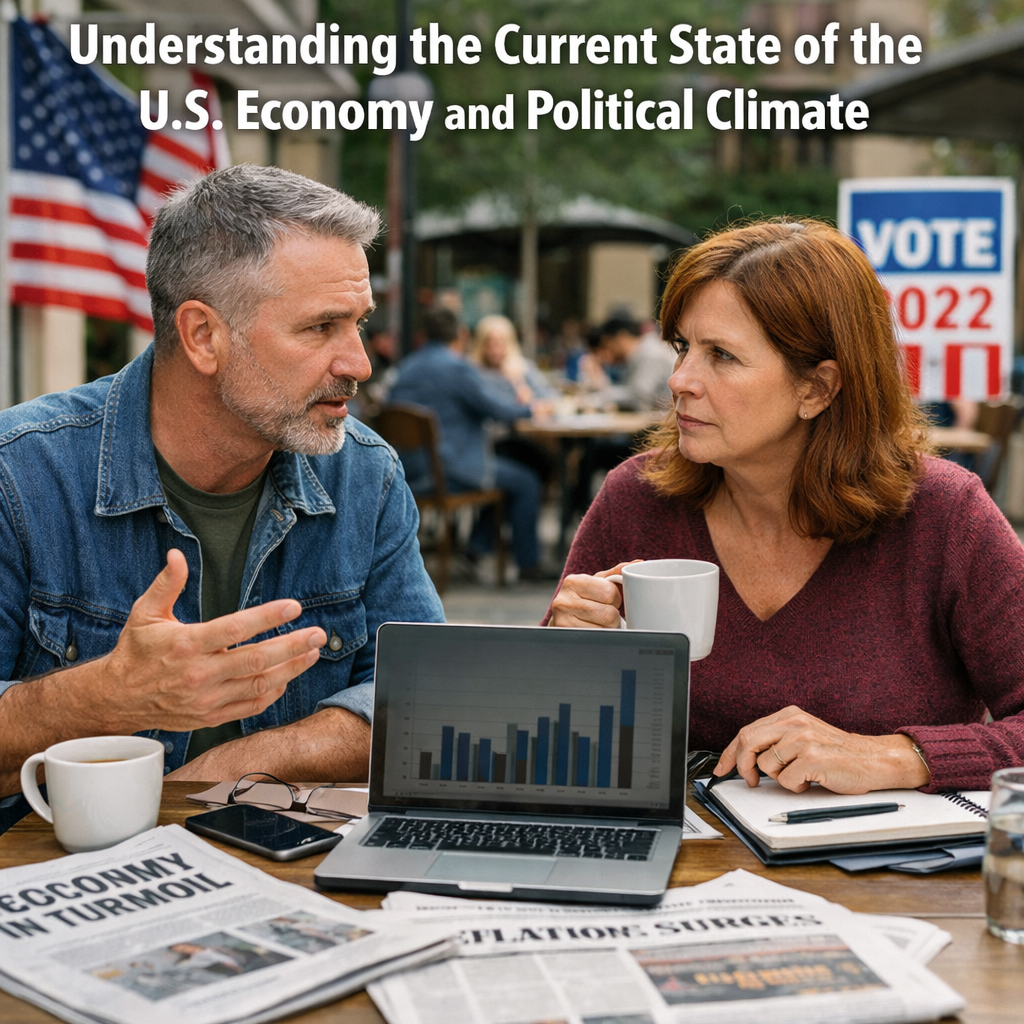
The United States is currently navigating a complex economic and political landscape, marked by significant developments that have both domestic and international implications.
Economic Overview
Recent data indicates a mixed economic performance. The U.S. economy expanded at a sluggish 0.7% annual rate in the fourth quarter, reflecting challenges such as the 43-day government shutdown. Additionally, inflation has surged to 3.3%, influenced by the ongoing conflict in Iran, which has led to a 50% increase in gasoline prices since the start of the war. This escalation has placed additional financial strain on consumers, particularly those with lower incomes.
Political Climate
On the political front, a Gallup poll reveals that approximately one-third of Americans view politics and government as the nation’s most pressing issues. This level of concern is notably higher than in most other wealthy democracies, underscoring deep-seated anxieties about the health of the U.S. political system. The generational divide is also evident, with younger Americans more focused on economic challenges like housing affordability, while older generations express greater concern over political stability.
Implications
The interplay between economic pressures and political concerns is shaping public sentiment and policy discussions. Rising inflation and energy costs are prompting debates over fiscal policies and international relations, while political anxieties are influencing voter behavior and trust in institutions. Understanding these dynamics is crucial for stakeholders both within and outside the United States, as they have far-reaching consequences on global markets and diplomatic relations.