

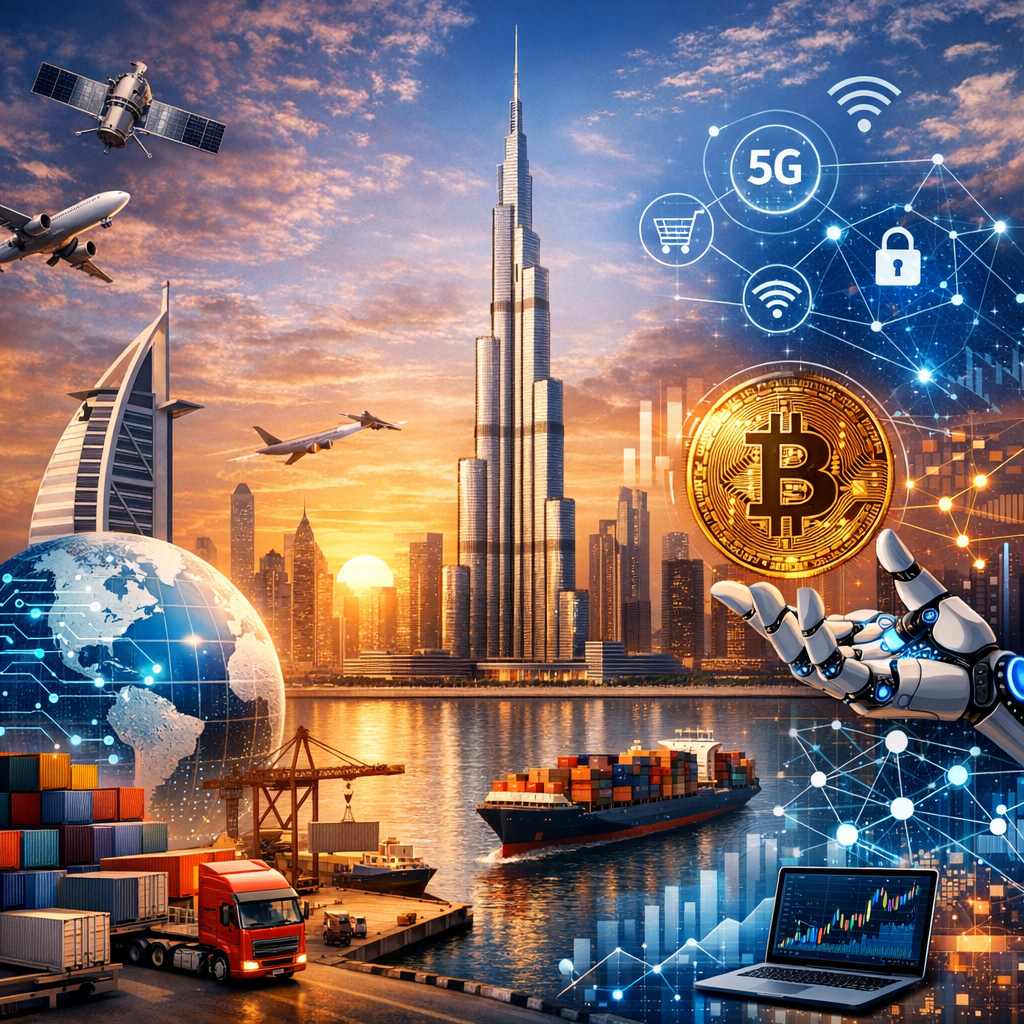
The global economic landscape is undergoing significant transformations, influenced by geopolitical tensions, technological advancements, and evolving trade dynamics. These shifts have profound implications for economies worldwide, including Dubai’s.
Global Economic Outlook
Recent reports indicate a moderation in global growth. The World Bank projects global GDP growth to ease to 2.6% in 2026, reflecting trade tensions and policy uncertainties. Similarly, the OECD highlights the impact of Middle East conflicts on energy prices, leading to inflationary pressures and potential growth slowdowns.
Technological Advancements and Trade Dynamics
Investment in artificial intelligence (AI) is driving economic growth, particularly in the U.S., where AI is boosting the stock market and business expenditures. However, concerns about AI-induced job losses and productivity gains remain central questions. Additionally, trade policy uncertainties, including potential tariffs and geopolitical tensions, are influencing global trade patterns.
Implications for Dubai
Dubai’s strategic position as a global trade hub makes it sensitive to these global economic shifts. The city’s economy, heavily reliant on international trade and tourism, may face challenges due to fluctuating energy prices and changing trade policies. However, Dubai’s proactive approach to economic diversification, including investments in technology and infrastructure, positions it to adapt to these changes effectively.
In conclusion, while global economic trends present challenges, Dubai’s resilience and strategic initiatives offer a pathway to navigate these shifts successfully.