

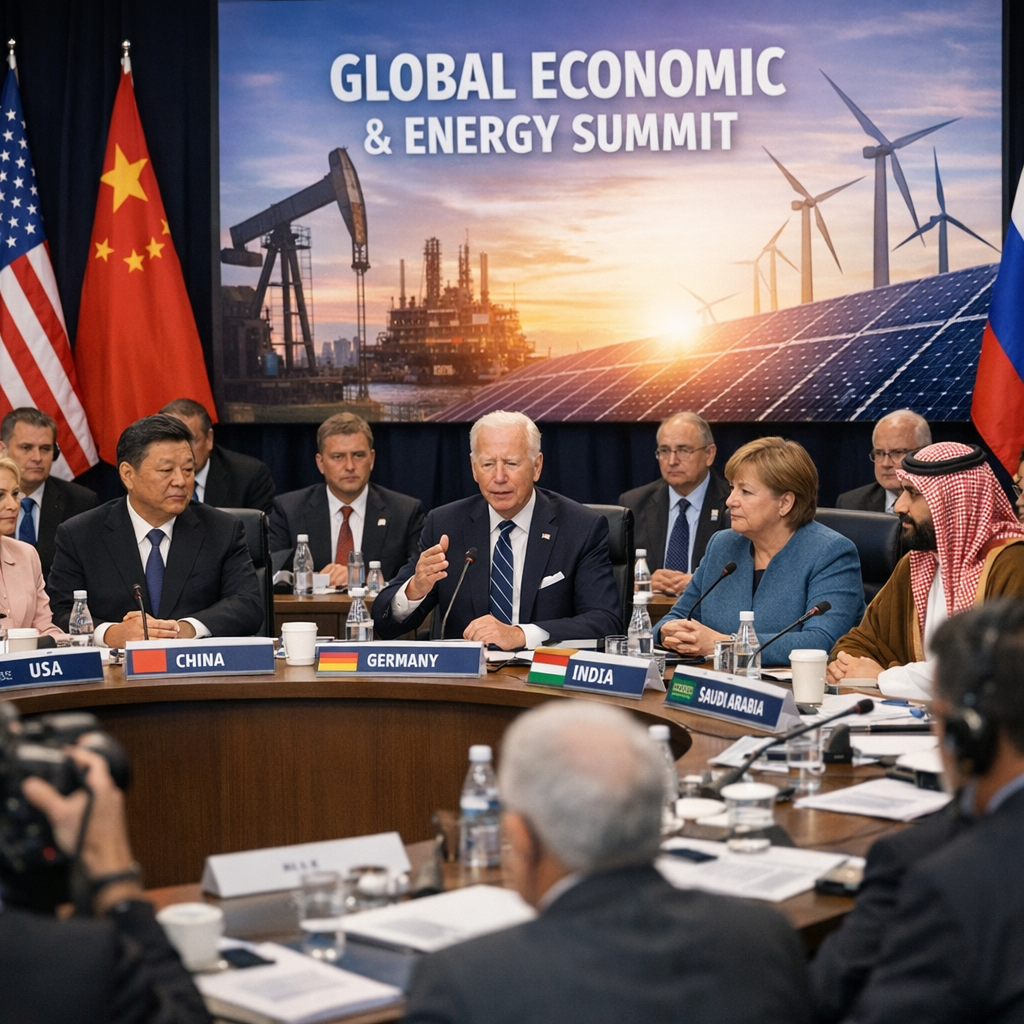
The global economy is currently navigating a complex landscape marked by energy shocks and geopolitical tensions, notably stemming from conflicts in the Middle East. These factors have introduced significant uncertainties, influencing growth trajectories and inflation rates across various regions.
Impact of Energy Shocks
The ongoing conflict in the Middle East has led to disruptions in energy production and trade, resulting in elevated energy prices. This surge has contributed to rising inflationary pressures globally, affecting both advanced and emerging economies. The Organization for Economic Cooperation and Development (OECD) projects that, under a scenario where disruptions persist into 2027, global growth could slow to 2.1% in 2026 and 1.8% in 2027. In this scenario, the OECD also anticipates that inflation in G20 countries could rise to 4.0% in 2026, up from 3.4% in 2025.
Regional Economic Projections
Different regions are experiencing varied impacts due to these global challenges:
- United States: The U.S. economy demonstrates resilience, with projected GDP growth of 2.0% in 2026, supported by strong domestic energy production and investments in artificial intelligence and defense sectors.
- Eurozone: European economies face stagflation, with growth predicted at just 0.8% in 2026. Rising energy costs are severely impacting industrial output, particularly in Germany and the U.K.
- China: China’s growth is projected to slow to 4.5% in 2026, influenced by ongoing real estate issues but offset by gains in green technology and AI exports.
- India: India stands out with a projected growth of 6.5% in 2026, driven by strong domestic momentum.
Inflationary Pressures and Policy Responses
Inflation remains a pressing concern, with global rates expected to reach around 4.5% in 2026. Central banks are adopting cautious stances, with interest rates unlikely to drop soon due to added inflation concerns. The OECD emphasizes the need for targeted and temporary fiscal support to assist those most affected, while avoiding further increases in public debt. Additionally, diversifying energy sources and promoting eco-friendly energy are recommended to enhance economic resilience.
Conclusion
As the global economy contends with these multifaceted challenges, coordinated policy responses and strategic investments are crucial to navigate the uncertainties ahead. Monitoring developments in energy markets and geopolitical landscapes will be essential for shaping effective economic strategies in the coming years.