

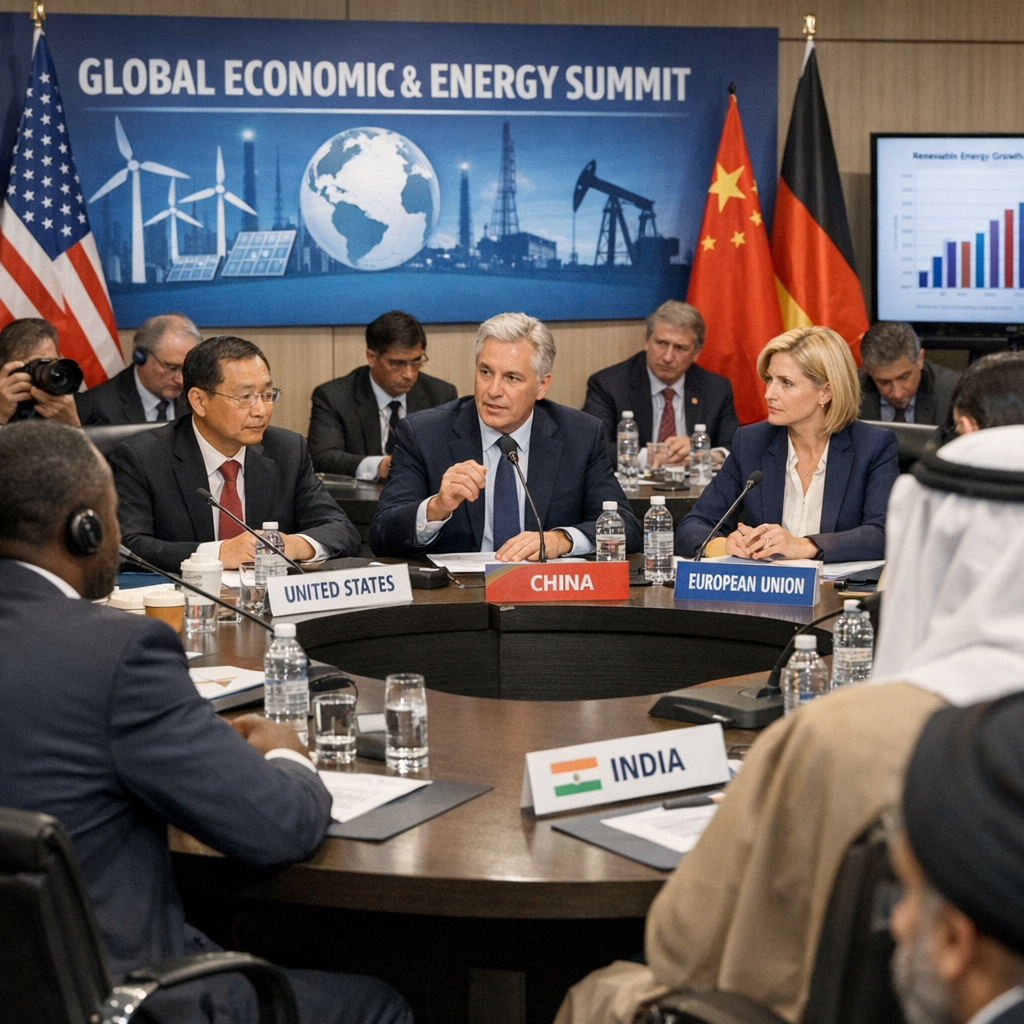
The global economy is currently navigating a complex landscape marked by energy shocks and geopolitical tensions, notably stemming from conflicts in the Middle East. These factors have introduced significant uncertainties, influencing growth trajectories and inflation rates across various regions.
Global Growth Projections
According to the Organisation for Economic Co-operation and Development (OECD), global growth is projected to slow to 2.9% in 2026, down from 3.4% in 2025. This deceleration is attributed to the energy supply shock resulting from the Middle East conflict, which has disrupted oil exports and elevated energy prices. The OECD highlights that the evolving situation poses considerable risks to these projections, with prolonged disruptions potentially leading to further declines in growth.
Regional Impacts
The United States is expected to experience a modest slowdown, with GDP growth projected at 2.0% in 2026, compared to 2.1% in 2025. This resilience is partly due to strong domestic energy production and investments in artificial intelligence and defense sectors. In contrast, the euro area faces more pronounced challenges, with growth anticipated at just 0.8% in 2026, as rising energy costs impact industrial output, particularly in countries like Germany and the United Kingdom.
Emerging economies present a mixed picture. India stands out with a robust growth forecast of 6.5% in 2026, driven by strong domestic demand. Conversely, China’s growth is projected to slow to 4.5%, influenced by ongoing real estate issues and a shift towards green technology and AI exports. Japan is expected to see minimal growth at 0.4%, while Latin American economies face pressures from weaker Chinese demand and rising fuel costs.
Inflationary Pressures
Inflation remains a pressing concern globally. The OECD projects that inflation in G20 countries will rise to 4.0% in 2026, up from 3.4% in 2025. This increase is primarily driven by elevated energy prices resulting from the Middle East conflict. Central banks are likely to maintain cautious monetary policies, with interest rates remaining steady to address these inflationary pressures.
Policy Recommendations
In response to these challenges, the OECD emphasizes the need for targeted and temporary fiscal support to assist those most affected by the energy shock. It also advocates for policies that promote energy efficiency and diversification of energy sources to enhance resilience against future disruptions. Additionally, fostering international cooperation and maintaining open trade policies are crucial to mitigating the adverse effects of geopolitical tensions on the global economy.
As the situation continues to evolve, staying informed and adaptable is essential for businesses and policymakers alike. Monitoring developments and implementing strategic measures will be key to navigating the uncertainties that lie ahead.