

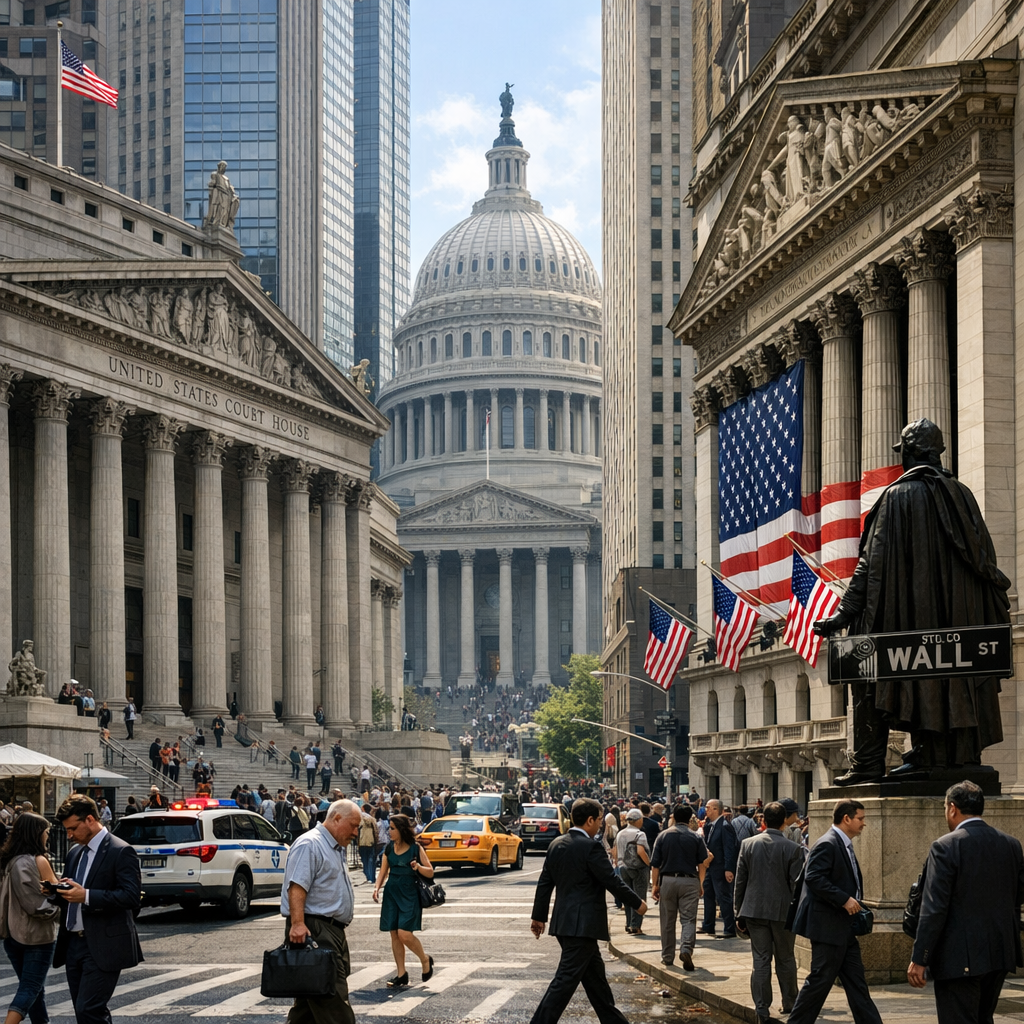
The United States continues to navigate a complex economic and political landscape, marked by resilience in the face of global challenges and internal debates over policy directions.
Economic Resilience Amid Global Challenges
Despite global uncertainties, the U.S. economy has demonstrated notable strength. The International Monetary Fund (IMF) projects a 2.4% growth in the U.S. gross domestic product (GDP) for the fourth quarter of 2026, an increase from the previous year’s 2.2%. Unemployment rates are also expected to decline from 4.5% in late 2025 to 4.1% in 2026, with inflation anticipated to align with the Federal Reserve’s 2% target by 2027.
However, the IMF has raised concerns about rising federal budget deficits, viewing them as potential risks to economic stability. The organization advises cautious fiscal management to mitigate these risks.
Political Climate and Public Sentiment
On the political front, a Gallup poll indicates that approximately one-third of Americans consider politics and government as the nation’s most pressing issues. This level of concern is notably higher compared to other wealthy democracies, reflecting deep-seated anxieties about the health of the U.S. political system.
Generational differences are evident, with older Americans more focused on political stability, while younger demographics express greater concern over economic challenges such as housing affordability and basic needs. This divide underscores the multifaceted nature of public sentiment in the U.S.
Looking Ahead
As the U.S. approaches the 2026 midterm elections, the interplay between economic performance and political dynamics will be crucial. Policymakers face the challenge of balancing economic growth with fiscal responsibility, while addressing the diverse concerns of the populace.
Understanding these dynamics is essential for both domestic stakeholders and international observers, as the decisions made in the coming months will have far-reaching implications for the U.S. and the global community.