

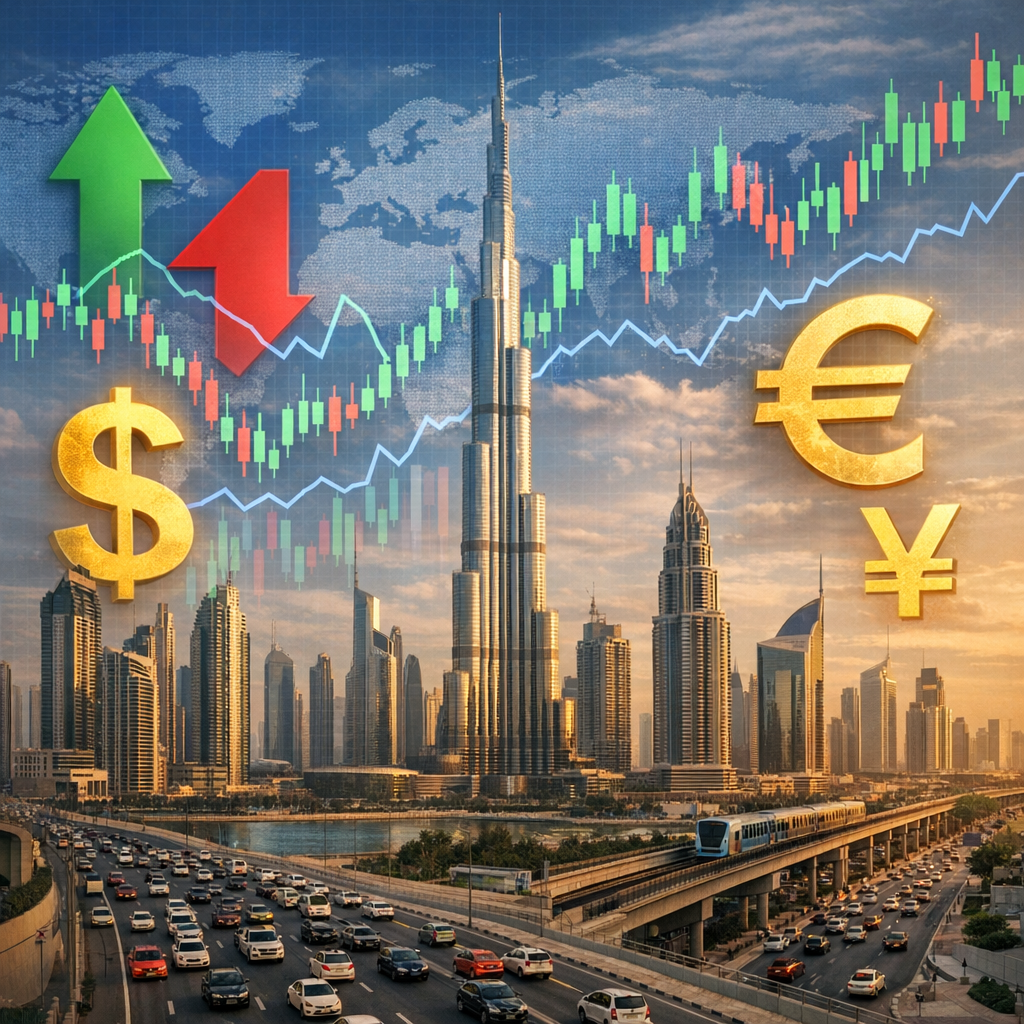
The global economy is currently experiencing significant transformations, influenced by geopolitical tensions, technological advancements, and evolving trade dynamics. These changes have far-reaching implications, including for Dubai, a city deeply integrated into the global economic fabric.
Global Economic Overview
Recent forecasts indicate a moderation in global economic growth. The World Bank projects a slight easing to 2.6% in 2026, with a subsequent rise to 2.7% in 2027. This slowdown is attributed to factors such as subdued investment and structural challenges, despite easing inflation and monetary policy adjustments.
Geopolitical tensions, particularly in the Middle East, have introduced uncertainties in energy markets. The OECD highlights that conflicts in the region have led to energy shocks, driving inflationary pressures and adversely affecting global growth prospects.
Regional Implications
In the United States, consumer spending and investments in artificial intelligence are expected to drive moderate growth, with projections of 2.0% in 2026. However, Europe faces challenges, with the eurozone’s growth anticipated to remain modest at 0.8% in 2026, influenced by rising energy costs and industrial output constraints.
Asia presents a mixed picture. India is poised for robust growth, projected at 6.5% in 2026, driven by strong domestic demand. Conversely, China’s growth is expected to slow to 4.5%, impacted by real estate sector challenges and a shift towards green technology and AI exports.
Implications for Dubai
Dubai’s strategic position as a global trade and financial hub means that these global economic shifts will have direct and indirect effects on its economy. The city’s reliance on international trade makes it susceptible to fluctuations in global demand and supply chains. Additionally, energy market volatility can influence operational costs and investment decisions within the region.
To navigate these challenges, Dubai may consider diversifying its economic base further, investing in emerging sectors such as technology and sustainable energy. Strengthening trade partnerships and enhancing economic resilience through policy measures can also mitigate potential adverse impacts.
Conclusion
As the global economic landscape evolves, staying informed and adaptable is crucial. For Dubai, understanding these global trends and proactively strategizing will be key to sustaining its economic growth and maintaining its position on the world stage.