

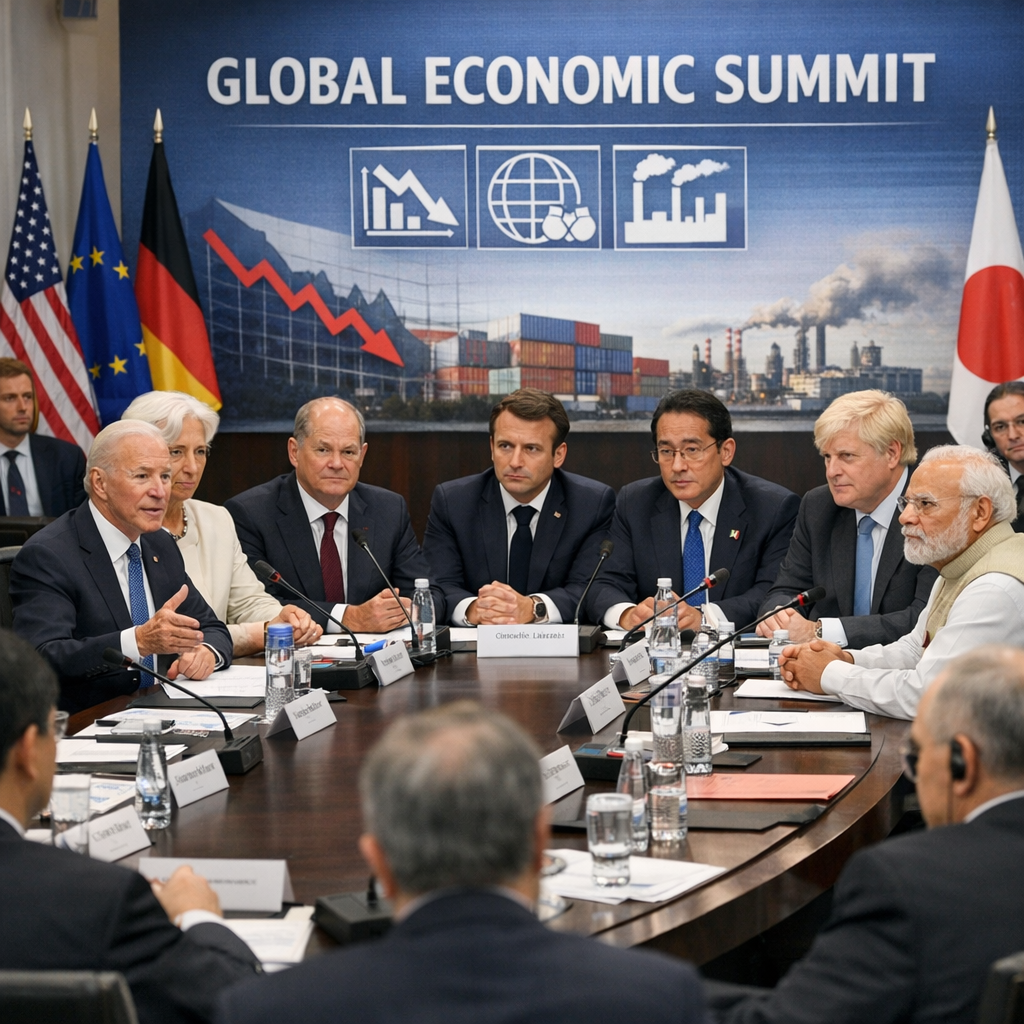
The global economy is currently navigating a complex landscape marked by energy shocks and rising inflationary pressures. Recent conflicts in the Middle East have disrupted oil exports, leading to increased commodity prices and inflation. The Organization for Economic Co-operation and Development (OECD) projects global growth to slow to 2.7% in 2026, down from 3.4% in 2025, before edging up to 2.9% in 2027. This slowdown is attributed to subdued investment and structural challenges, despite easing inflation and monetary policy adjustments.
In the United States, the economy remains relatively resilient, with a projected GDP growth of 2.1% in 2026. This resilience is supported by strong domestic energy production and investments in artificial intelligence, defense, and energy sectors. However, consumers are tightening spending due to rising inflation and unemployment.
Europe is experiencing stagflation, with eurozone growth predicted at just 0.8% in 2026. Energy costs are severely impacting industrial output, especially in Germany and the United Kingdom. The European Union is also growing increasingly concerned about a potential surge of cheap Chinese exports, which could severely impact its key industries. This fear is influencing current EU trade policy, especially with China recording a record $1.2 trillion trade surplus last year.
In Asia, India’s economy stands out with a projected growth of 6.5% in 2026, driven by strong domestic momentum. Conversely, China’s growth is expected to slow to 4.5% amid ongoing real estate issues, though gains in green-tech and AI exports provide some offset. Japan is projected to see minimal growth at 0.4%.
Latin America faces pressure from weaker Chinese demand, tighter U.S. monetary conditions, and rising fuel costs. Interest rates are unlikely to drop soon due to added inflation concerns. Central banks remain cautious, and U.S. private credit markets are showing early signs of distress, particularly in software loans, potentially affecting investor sentiment later in the year.
In this uncertain environment, governments are urged to implement targeted and temporary fiscal support measures to assist those most in need, while avoiding further increases in public debt. Additionally, efforts to diversify energy supply and improve energy efficiency are essential to reduce vulnerabilities to future shocks.