

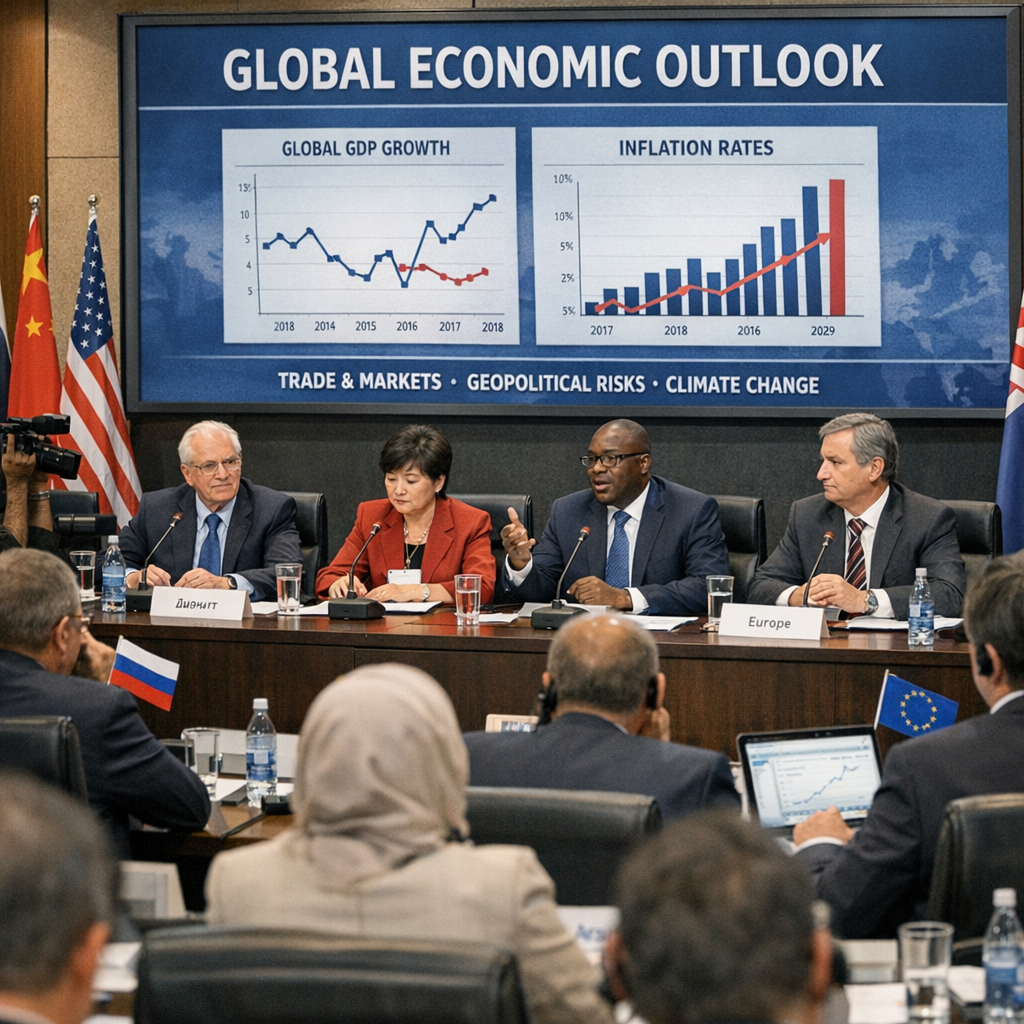
The global economy is currently navigating a complex landscape marked by resilience in the face of various challenges. Recent analyses indicate that while growth projections have been adjusted due to geopolitical tensions and energy market disruptions, certain regions and sectors continue to demonstrate robust performance.
Global Growth Projections
According to the OECD’s latest Economic Outlook, global growth is projected to slow to 2.8% in 2026, influenced by the evolving conflict in the Middle East and subsequent energy supply shocks. This scenario underscores the interconnectedness of geopolitical events and economic performance on a global scale.
Regional Insights
In the United States, the economy remains relatively resilient, with a projected GDP growth of 2.1% for 2026. This resilience is attributed to strong domestic energy production and significant investments in artificial intelligence (AI), defense, and energy sectors. Conversely, Europe faces stagflation, with eurozone growth predicted at just 0.8%, as rising energy costs impact industrial output, particularly in Germany and the UK.
China’s growth is projected to slow to 4.5% in 2026, influenced by ongoing real estate issues but bolstered by gains in green technology and AI exports. India stands out with a projected growth of 6.5%, driven by strong domestic momentum.
Inflationary Pressures
Global inflation is expected to reach around 4.5% in 2026, driven by rising commodity prices and energy costs. This trend poses challenges for both consumers and policymakers, as central banks may need to balance inflation control with supporting economic growth.
Investment Strategies
In light of these developments, investment strategies are adapting to the evolving economic environment. Analysts suggest maintaining a balanced portfolio, with a focus on sectors demonstrating strong earnings growth, such as technology and energy. Additionally, short-duration securities are favored in the fixed-income market due to concerns over inflation and interest rate fluctuations.
Conclusion
While the global economic outlook presents challenges, opportunities remain, particularly in sectors leveraging technological advancements and sustainable practices. Staying informed and adaptable is crucial for navigating this dynamic economic landscape.