

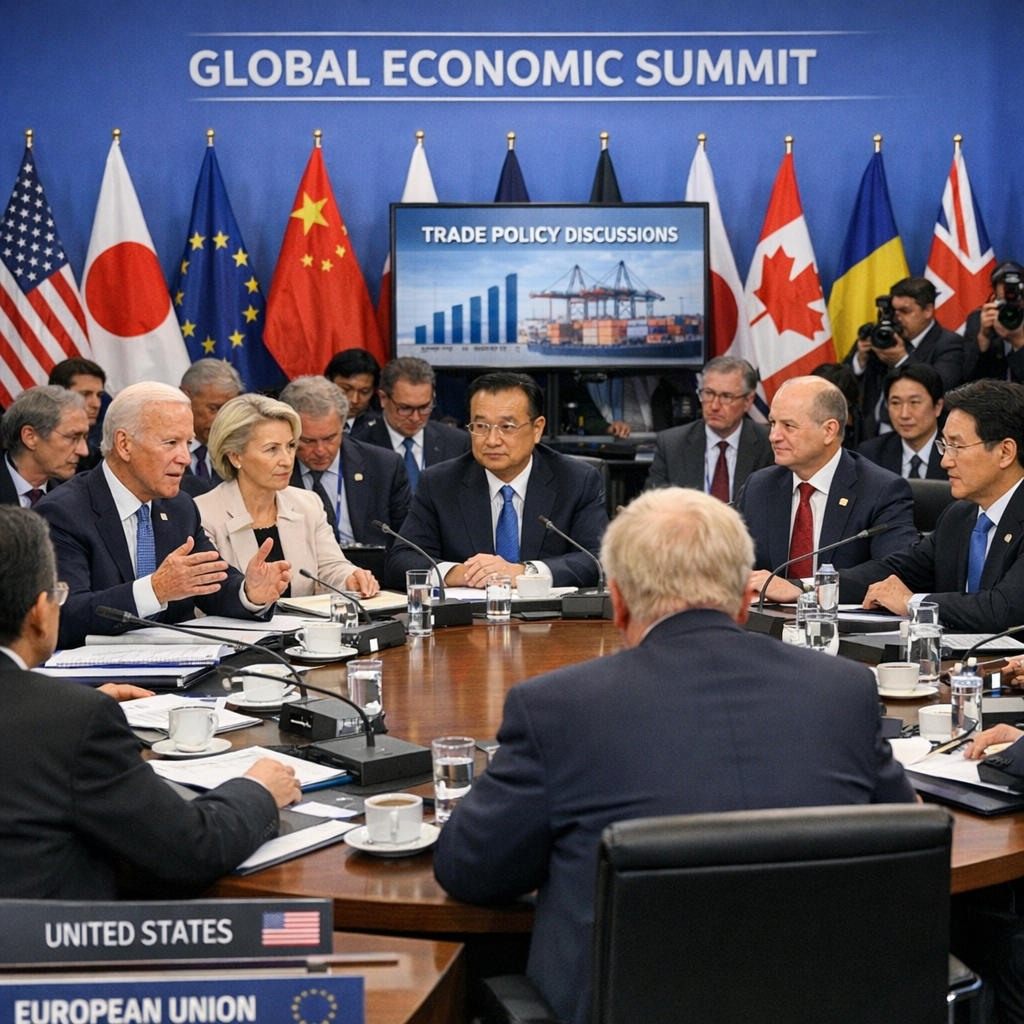
The global economy is currently navigating a complex landscape marked by geopolitical tensions, energy crises, and shifting trade dynamics. These factors collectively influence economic growth, inflation rates, and international trade patterns.
Impact of Geopolitical Tensions
Recent conflicts in the Middle East have significantly disrupted global energy markets. The Organization for Economic Cooperation and Development (OECD) projects that these disruptions will lead to a slowdown in global growth, with estimates indicating a decrease from 3.4% in 2025 to 2.8% in 2026. This downturn is primarily attributed to rising energy prices and inflationary pressures stemming from the conflict.
Regional Economic Outlooks
The United States demonstrates relative economic resilience, bolstered by strong domestic energy production and investments in artificial intelligence and defense sectors. Projections suggest a GDP growth of 2.1% for the U.S. in 2026. Conversely, Europe faces challenges, with the eurozone’s growth anticipated at just 0.8% due to stagflation and elevated energy costs impacting industrial output, particularly in Germany and the U.K.
In Asia, India’s economy stands out with a projected growth of 6.5%, driven by robust domestic demand. China, however, is expected to experience a slowdown to 4.5% growth, influenced by ongoing real estate challenges, despite gains in green technology and AI exports.
Trade Dynamics and Policy Shifts
The European Union is increasingly concerned about a potential surge of inexpensive Chinese exports, reminiscent of the ‘China shock’ from previous decades. This apprehension is shaping current EU trade policies, especially as China’s trade surplus reached a record $1.2 trillion last year. European policymakers are aligning more closely with the U.S. perspective that China’s industrial overproduction poses a significant threat to domestic manufacturing sectors.
Inflation and Monetary Policies
Inflationary pressures are mounting globally, with the OECD projecting consumer price inflation in G20 economies to rise to 4.0% in 2026. Central banks are adopting cautious stances, with interest rates unlikely to decrease in the near term due to persistent inflation concerns. This cautious approach reflects the delicate balance policymakers must maintain to support economic growth while controlling inflation.
Conclusion
The current global economic environment presents a mix of challenges and opportunities. While geopolitical tensions and energy crises pose significant risks, advancements in technology and strategic policy adjustments offer pathways for resilience and growth. Stakeholders must remain vigilant and adaptable to navigate this evolving landscape effectively.