

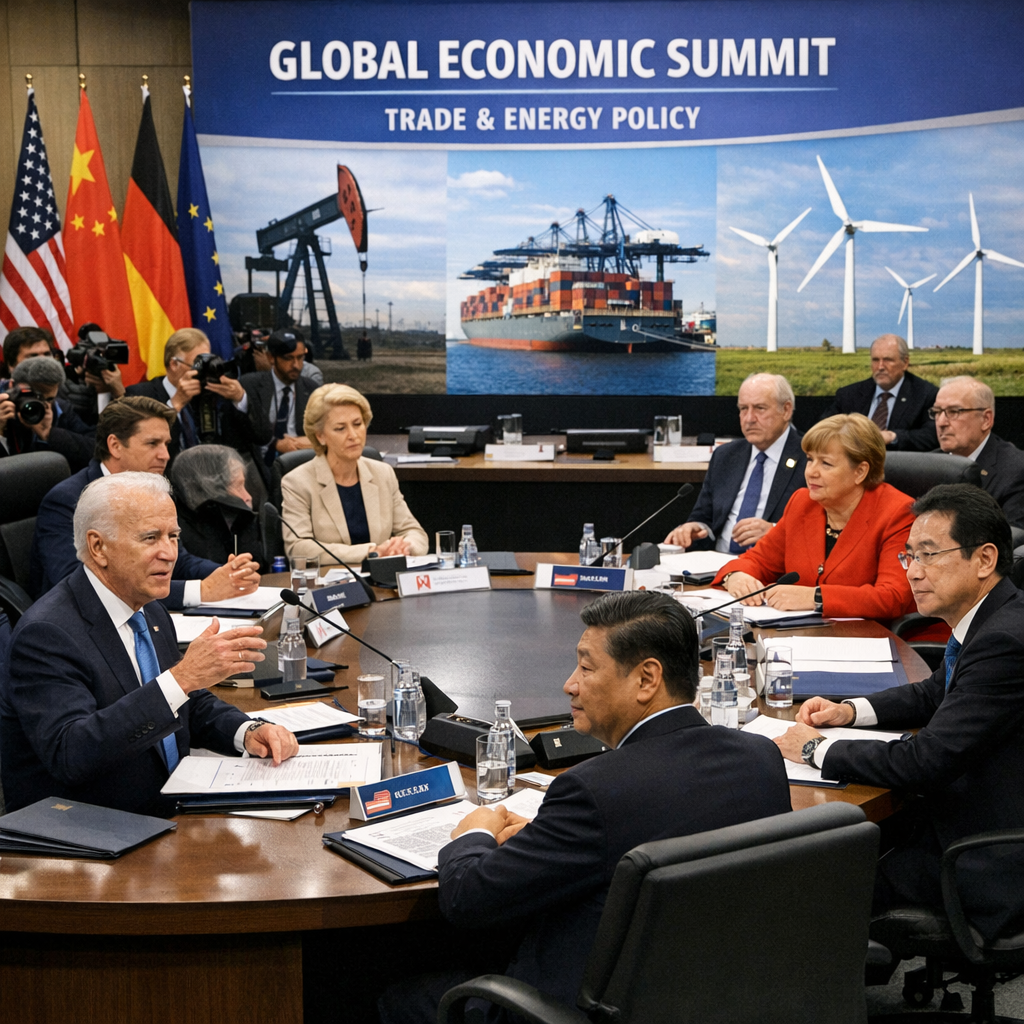
The global economy is currently navigating a complex landscape marked by geopolitical tensions, energy market volatility, and shifting trade dynamics. These factors are influencing economic growth, inflation rates, and policy decisions worldwide.
Energy Market Volatility
Recent conflicts in the Middle East have led to disruptions in oil exports, particularly from the Persian Gulf. This has resulted in rising commodity prices and inflationary pressures. The Organization for Economic Cooperation and Development (OECD) projects global growth to slow to 2.8% in 2026, with inflation expected to reach around 4.5% globally. The United States, however, remains relatively resilient due to strong domestic energy production and investments in artificial intelligence, defense, and energy sectors, supporting a projected GDP growth of 2.1%.
Trade Dynamics and Policy Shifts
The European Union is increasingly concerned about a potential surge of inexpensive Chinese exports, which could impact key industries. This issue is central to the G7 summit’s economic discussions, with European policymakers aligning with the U.S. viewpoint that China’s industrial overproduction poses a significant threat to domestic manufacturing.
Regional Economic Outlooks
India stands out with a projected growth of 6.5%, driven by strong domestic momentum. In contrast, China’s growth is expected to slow to 4.5% amid ongoing real estate issues, despite gains in green technology and AI exports. Japan anticipates minimal growth at 0.4%, while Latin America faces pressure from weaker Chinese demand, tighter U.S. monetary conditions, and rising fuel costs.
Implications for Dubai and the UAE
For Dubai and the broader United Arab Emirates, these global economic trends present both challenges and opportunities. The region’s strategic position as a global trade hub necessitates adaptability to shifting trade policies and energy market fluctuations. Continued investment in diversified sectors, including technology and renewable energy, will be crucial in navigating this evolving economic landscape.
In conclusion, while the global economy faces significant challenges, strategic investments and policy decisions can help mitigate risks and capitalize on emerging opportunities.