

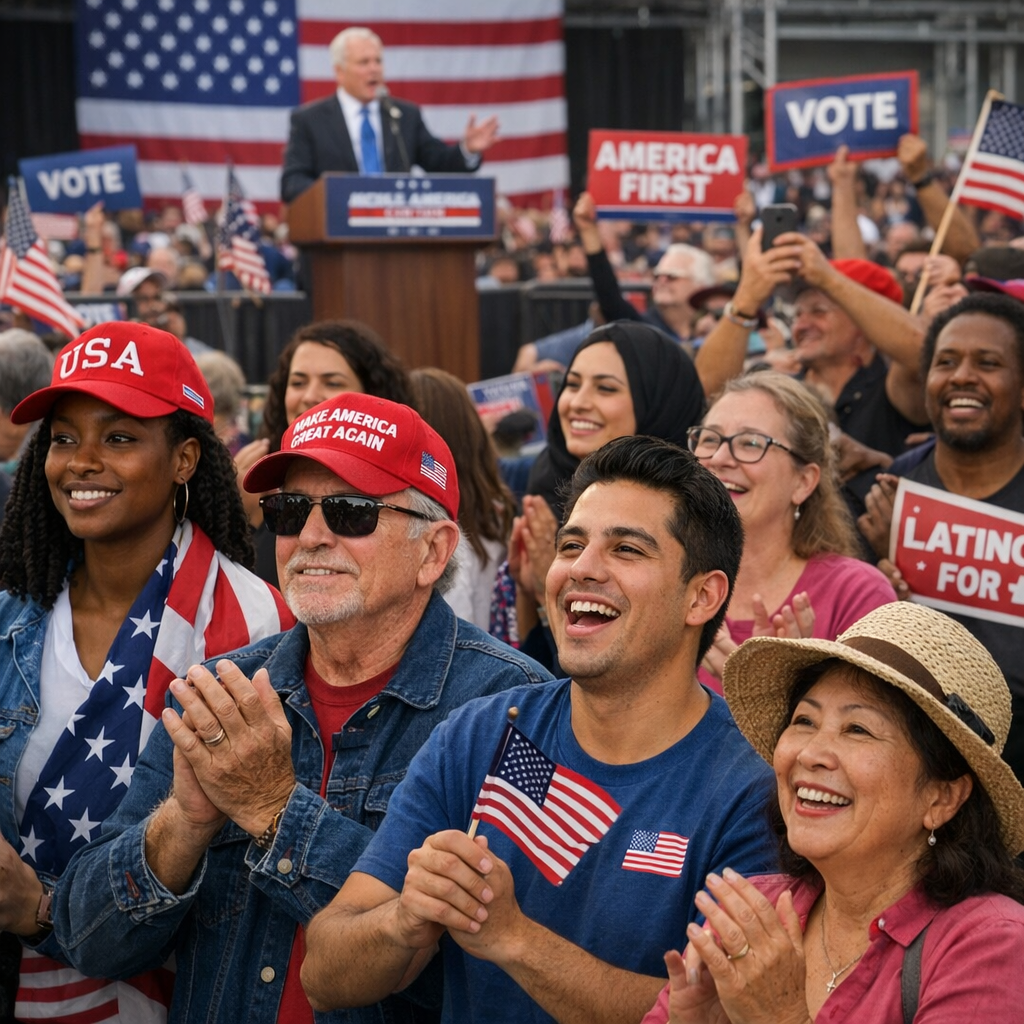
The United States is currently navigating a complex political and economic environment, with several key issues at the forefront of national discourse.
Political Climate and Public Sentiment
Recent polling indicates a significant level of public concern regarding the U.S. political system. Approximately one-third of Americans identify politics and government as the nation’s most pressing problems. This anxiety is particularly pronounced among older demographics, while younger Americans are more focused on economic challenges such as housing affordability and basic needs.
Economic Indicators
The U.S. economy presents a mixed picture. The International Monetary Fund (IMF) projects a 2.4% growth in gross domestic product (GDP) for the fourth quarter of 2026, up from 2.2% the previous year. Unemployment is expected to decrease from 4.5% in late 2025 to 4.1% in 2026, with inflation anticipated to align with the Federal Reserve’s 2% target by 2027.
However, the IMF also warns of potential risks associated with rising federal budget debts, which could pose stability challenges. Additionally, the ongoing conflict in Iran has contributed to increased oil prices, adding uncertainty to the economic outlook.
Looking Ahead
As the U.S. approaches midterm elections, the interplay between political dynamics and economic policies will be crucial. Voter concerns about political stability and economic mobility are likely to influence electoral outcomes and subsequent policy decisions.
Understanding these factors is essential for comprehending the current state of the U.S. and its potential future trajectory.