

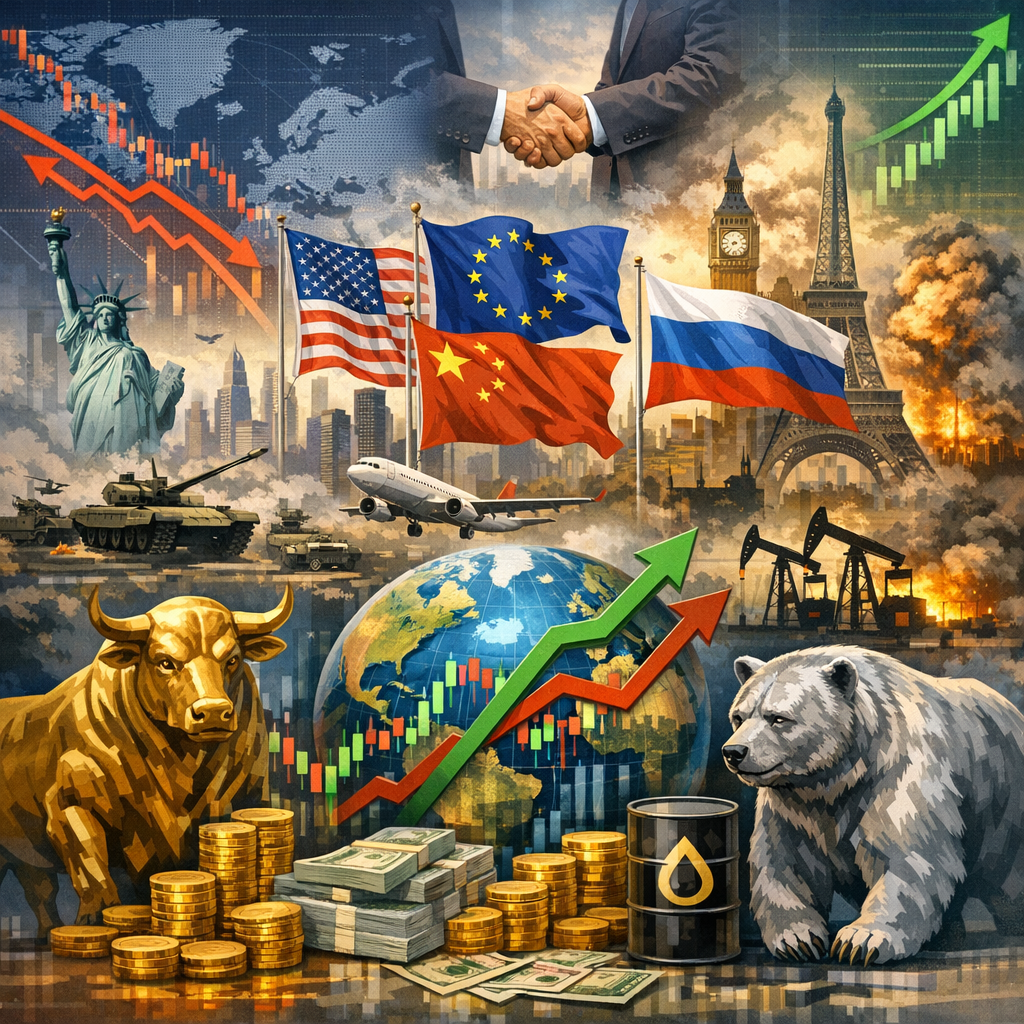
The global economy is currently navigating a complex landscape marked by energy shocks and geopolitical tensions, leading to a slowdown in growth and rising inflationary pressures.
Impact of Energy Shocks
The ongoing conflict in the Middle East has disrupted energy supplies, causing a surge in global energy prices. This disruption is expected to weigh heavily on global growth, with projections indicating a slowdown to 2.8% in 2026. The energy supply shock has also led to higher commodity prices, contributing to an anticipated global inflation rate of 4.0% in 2026.
Regional Economic Projections
In the United States, the economy is projected to grow by 2.0% in 2026, supported by resilient consumer spending and investments in artificial intelligence. However, rising inflation and unemployment may temper this growth. The euro area faces stagflation, with growth predicted at just 0.8% in 2026, as elevated energy costs impact industrial output. China is expected to experience a slowdown, with growth projected at 4.5% in 2026, influenced by ongoing real estate challenges and gains in green-tech and AI exports. India stands out with a projected growth of 6.5%, driven by strong domestic momentum.
Policy Responses and Future Outlook
Central banks are adopting cautious stances, with interest rates unlikely to decrease soon due to persistent inflation concerns. Governments are advised to implement targeted and temporary fiscal support measures to assist those most affected by the energy crisis, while also promoting energy efficiency and diversification to mitigate future shocks. The global economic outlook remains uncertain, with the duration and resolution of current geopolitical conflicts playing a critical role in shaping future growth trajectories.