

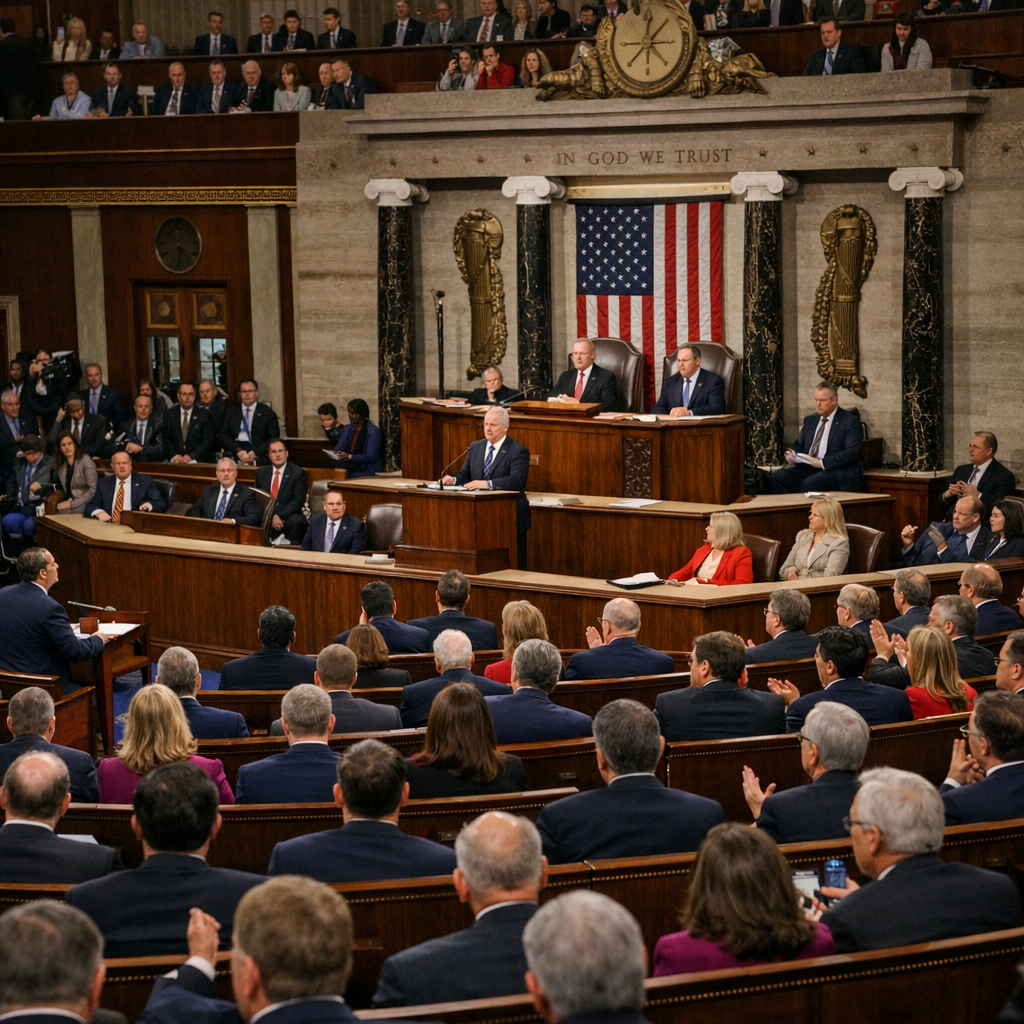
The United States is currently experiencing a dynamic and multifaceted political and economic environment, marked by significant developments that have both domestic and international implications.
Political Climate
As the 2026 midterm elections approach, the U.S. political landscape is characterized by heightened polarization and strategic maneuvering. The Republican Party, under the leadership of Speaker Mike Johnson, holds a narrow majority in the House of Representatives. Meanwhile, the Democratic Party, led by House Minority Leader Hakeem Jeffries, is actively strategizing to regain control. Redistricting efforts across various states are intensifying, with proposals that could potentially alter the balance of power in Congress. For instance, Florida Governor Ron DeSantis has proposed new congressional maps that may reduce Democratic representation, while Virginia’s recent Democratic-led redistricting threatens several Republican incumbents.
Public sentiment reflects growing concern over the political system’s stability. A Gallup poll indicates that approximately one-third of Americans view politics and government as the nation’s most pressing issues, a level of concern surpassed only by Taiwan. This anxiety is particularly pronounced among older demographics, whereas younger Americans are more focused on economic challenges such as housing affordability and basic needs.
Economic Overview
The U.S. economy presents a complex picture. The International Monetary Fund (IMF) projects a 2.4% growth in gross domestic product (GDP) for the fourth quarter of 2026, an increase from 2.2% the previous year. Unemployment is expected to decline from 4.5% in late 2025 to 4.1% in 2026, with inflation anticipated to reach the Federal Reserve’s 2% target by 2027. However, the IMF also warns of potential risks associated with rising federal budget deficits, which could pose stability challenges.
Despite these positive indicators, certain sectors face challenges. Small businesses are experiencing increased bankruptcies and sluggish job growth, signaling mounting pressures. Additionally, the administration’s tariff policies have introduced uncertainties in financial markets, with the Supreme Court recently striking down some of the broadest measures.
International Relations
On the global stage, the U.S. is navigating complex relationships. Tensions with Iran have led to military engagements and economic sanctions, impacting global energy markets and supply chains. The closure of the Strait of Hormuz has raised concerns about oil supplies and international trade. Domestically, these developments have contributed to rising gas prices and inflationary pressures, affecting American consumers and businesses.
In summary, the United States is at a pivotal juncture, with its political and economic trajectories closely intertwined. The outcomes of upcoming elections, policy decisions, and international engagements will significantly influence the nation’s future direction.