

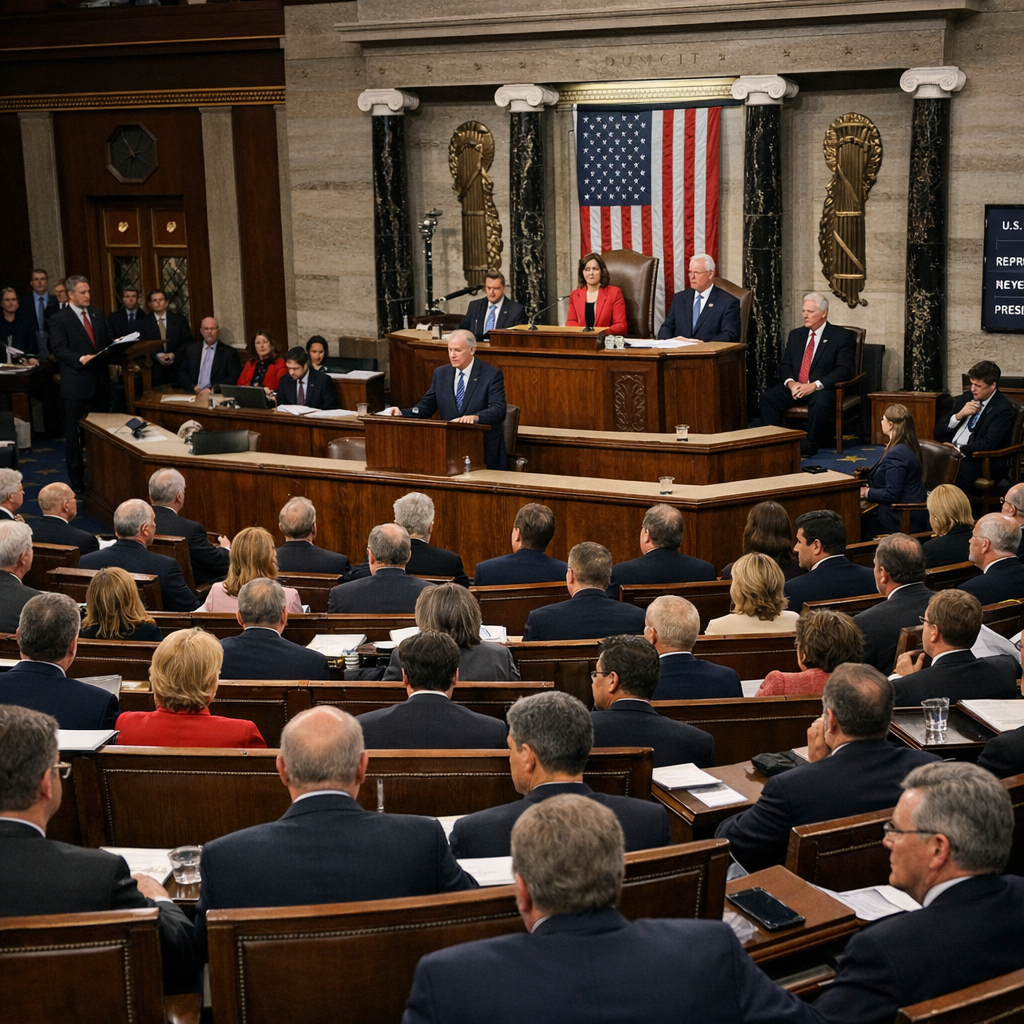
The United States is currently experiencing a period of significant political activity, with several key developments shaping the nation’s trajectory.
Midterm Elections and Congressional Dynamics
The upcoming midterm elections are poised to be pivotal, as all 435 House seats and 35 Senate seats are up for grabs. The outcomes will determine the balance of power in Congress and influence the legislative agenda for the coming years. Both major parties are intensifying their efforts in candidate recruitment, fundraising, and voter mobilization to secure favorable results.
Economic Policies and Public Sentiment
Economic concerns remain at the forefront of political discourse. The administration’s trade policies, including tariffs and trade agreements, have had mixed impacts on various sectors. While some industries have benefited, others have faced challenges, leading to debates over the effectiveness of these measures. Public confidence in the economy is fragile, with many Americans citing the cost of living as a primary concern.
Polarization and Institutional Trust
Political polarization continues to deepen, affecting public trust in institutions. Issues such as immigration, healthcare, and voting rights have become highly contentious, contributing to a divided electorate. This polarization poses challenges for governance and the implementation of policies that require bipartisan support.
Foreign Policy and Global Relations
The U.S. foreign policy stance, particularly the “America First” agenda, has led to shifts in international alliances and trade relationships. These changes have implications for global diplomacy and economic partnerships, influencing the U.S.’s role on the world stage.
As the political landscape evolves, it is crucial for stakeholders to stay informed and engaged, recognizing the complexities and nuances that define the current state of U.S. politics.