

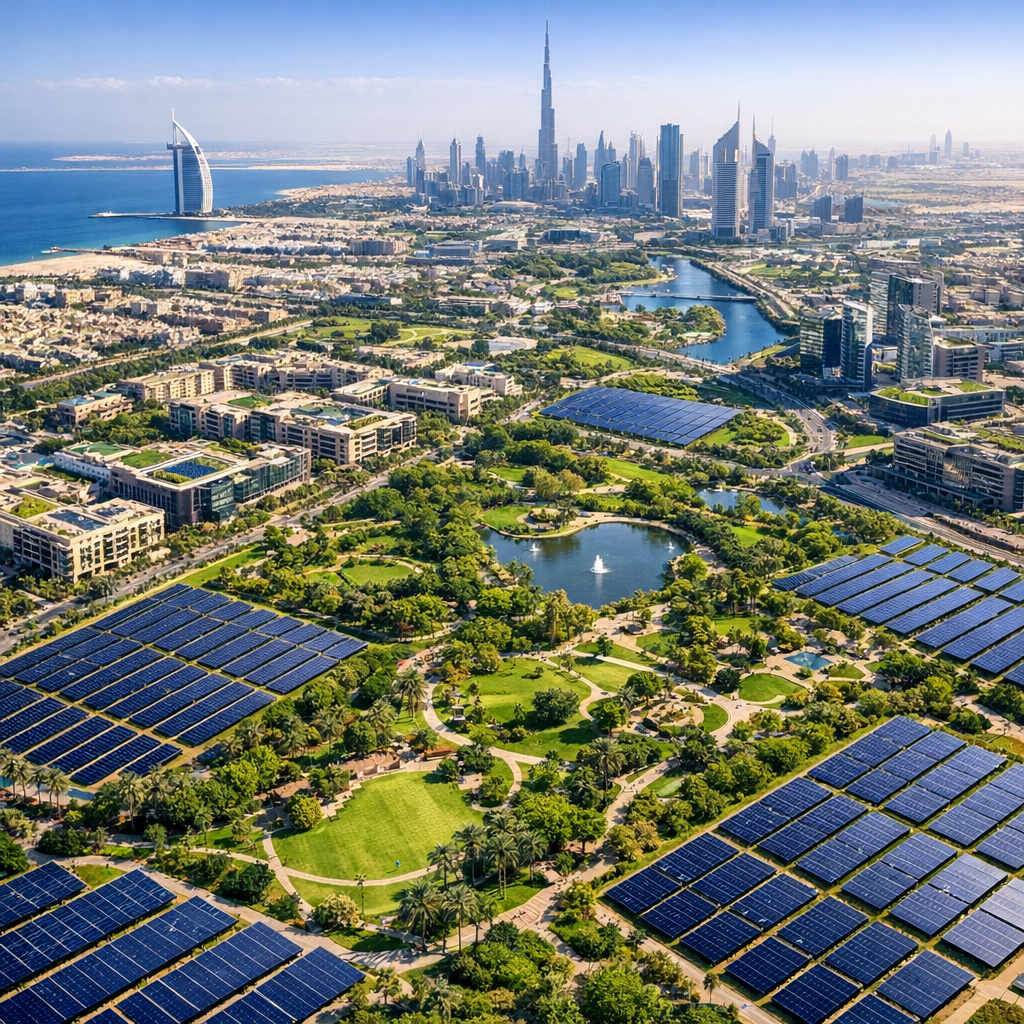
Dubai has long been recognized for its rapid development and architectural marvels. However, alongside its urban growth, the emirate has demonstrated a steadfast commitment to environmental sustainability. This article delves into the various initiatives and strategies that Dubai has implemented to promote a greener future.
Environmental Authorities and Their Roles
At the federal level, the Ministry of Climate Change and Environment (MOCCAE) is responsible for developing and implementing national policies related to environmental sustainability, climate change, and food security. In Dubai, the Dubai Environment and Climate Change Authority (DECCA) plays a pivotal role in protecting the environment and ensuring sustainability through innovative policies that balance economic growth with environmental conservation.
Clean Energy Initiatives
Dubai has set ambitious targets to transition towards clean energy. The Mohammed bin Rashid Al Maktoum Solar Park stands as a testament to this commitment. As the largest single-site solar park globally, it aims to achieve a production capacity of 5,000 MW by 2030, significantly reducing carbon emissions.
Additionally, the Dubai Demand Side Management Strategy 2050 seeks to double energy efficiency improvements, aiming for savings of at least 30% by 2030 and 50% by 2050 compared to business as usual in electricity, water, and transport fuel consumption.
Waste Management and Recycling
Dubai’s Integrated Waste Management Strategy 2041 focuses on innovation in waste management, recycling, and energy conversion. The strategy has a budget of AED 74.5 billion, with AED 70.5 billion as a direct contribution from the private sector. A notable project under this strategy is the Waste to Energy Center in Warsan, which has the capacity to treat around 2 million tons of solid waste annually, generating power for over 135,000 homes.
Urban Greening and Biodiversity Conservation
In 2024, Dubai Municipality planted 216,500 new trees, marking a 17% increase from the previous year. This initiative expanded the emirate’s green spaces by 391.5 hectares, enhancing the urban landscape and improving air quality. Advanced irrigation systems powered entirely by recycled water were introduced to ensure a sustainable approach to urban greening.
Furthermore, DEWA, in collaboration with the Dubai Environment and Climate Change Authority, has been actively involved in mangrove planting and beach clean-up initiatives. Between 2023 and May 2026, DEWA planted 14,650 mangrove trees at the Jebel Ali Marine Sanctuary and removed over 3,546 kilograms of waste, primarily plastics, from its beaches.
Protected Areas and Conservation Efforts
Dubai has established eight protected areas covering approximately 31% of its total area. These reserves represent all major ecosystem types in the emirate: mountain, desert, coastal, and marine. Managed by Dubai Municipality and its partners, these areas aim to preserve the natural beauty and biodiversity of Dubai.
Community Engagement and Sustainability Initiatives
Dubai has launched several initiatives to engage the community in sustainability efforts. The ‘Dubai Can’ initiative encourages residents to use refillable water bottles and provides access to free and safe drinking water through water stations across the city. This program aims to reduce single-use plastic water bottle waste and promote a culture of conscious living.
In conclusion, Dubai’s multifaceted approach to environmental sustainability encompasses clean energy projects, waste management strategies, urban greening, biodiversity conservation, and community engagement. These concerted efforts reflect the emirate’s dedication to creating a sustainable and resilient future for its residents and the global community.