

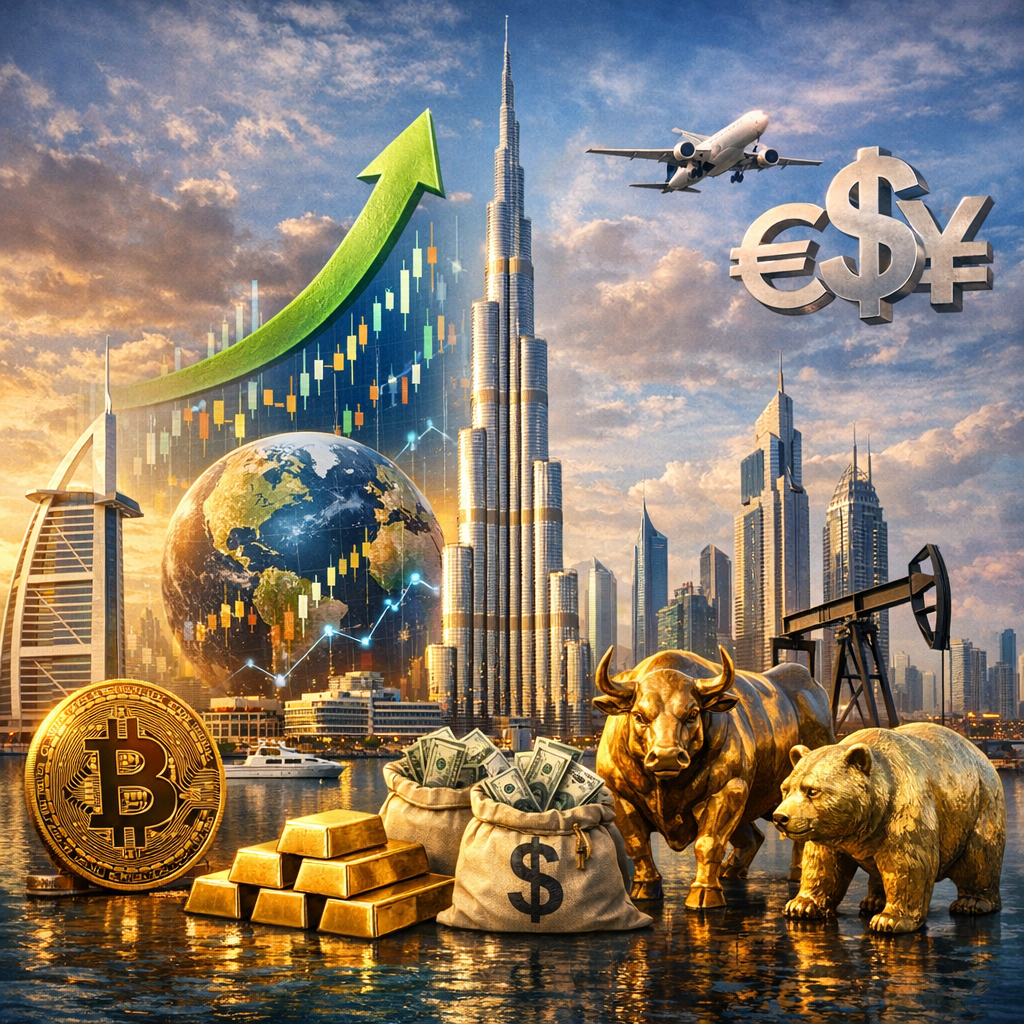
The global economy is currently navigating a complex landscape marked by moderate growth, inflationary pressures, and geopolitical tensions. According to the Organisation for Economic Co-operation and Development (OECD), global growth is projected to slow to 2.7% in 2026, influenced by factors such as energy shocks and rising inflation.
In the United States, the economy is experiencing steady growth, with GDP projected to increase by 2.2% in 2026. This resilience is attributed to robust consumer spending and capital investments, particularly in artificial intelligence technologies. However, the Federal Reserve maintains a cautious stance on interest rates, keeping the benchmark rate between 3.5% and 3.75% to manage inflationary concerns.
Europe faces a more subdued economic outlook, with growth expected to remain modest at 0.8% in 2026. The region continues to grapple with challenges stemming from energy price volatility and geopolitical uncertainties.
Amid these global dynamics, Dubai’s strategic position as a global trade and financial hub becomes increasingly significant. The emirate’s diversified economy, bolstered by sectors such as tourism, real estate, and logistics, provides a buffer against external shocks. Additionally, Dubai’s proactive policies in embracing technological advancements and fostering a business-friendly environment enhance its appeal to international investors.
As the global economic landscape evolves, Dubai’s adaptability and strategic initiatives position it to navigate challenges and capitalize on emerging opportunities, reinforcing its status as a pivotal player in the international economy.