

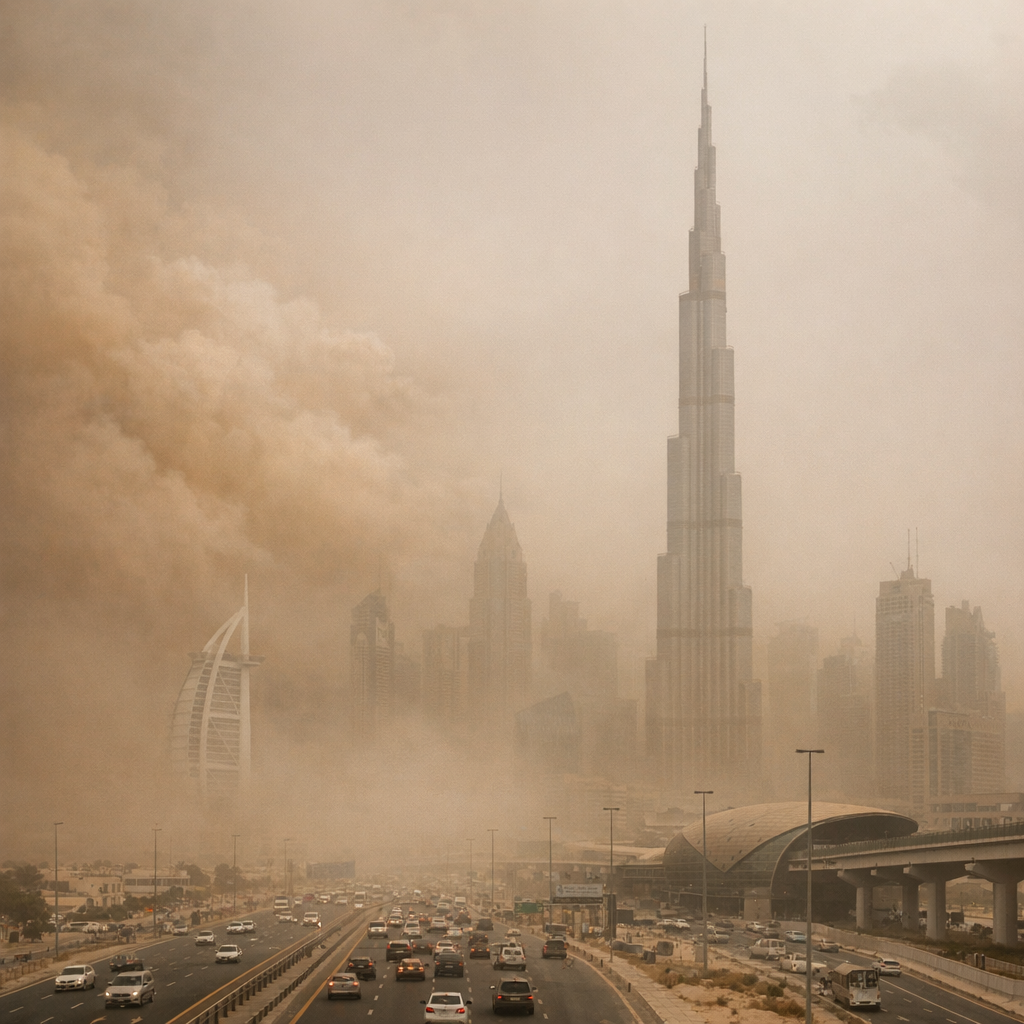
Dubai’s climate is characterized by its hot desert environment, marked by extreme temperatures, high humidity, and minimal rainfall. Understanding these patterns is essential for residents and visitors alike.
Seasonal Weather Patterns
Summer (June to September)
During summer, Dubai experiences intense heat with daytime temperatures often exceeding 40°C (104°F). Humidity levels are high due to the proximity to the Arabian Gulf, making the heat feel more oppressive. Rainfall is virtually nonexistent in these months.
Winter (December to February)
Winters are mild and pleasant, with daytime temperatures ranging between 20°C (68°F) and 26°C (79°F). This period also sees the majority of Dubai’s sparse annual rainfall, typically in the form of short, heavy showers.
Environmental Challenges
Sandstorms
Dubai is occasionally affected by sandstorms, particularly during the summer months. These storms, driven by strong north-westerly winds known as ‘Shamal,’ can reduce visibility and impact air quality. Residents are advised to stay indoors during severe sandstorms and take necessary precautions.
Air Quality
Air quality in Dubai can be influenced by various factors, including vehicle emissions, industrial activities, and natural events like sandstorms. High humidity can exacerbate the effects of pollutants, leading to hazy conditions. It’s important for individuals, especially those with respiratory conditions, to monitor air quality indices and limit outdoor activities during periods of poor air quality.
Adaptation and Preparedness
Understanding Dubai’s climate is crucial for planning daily activities and ensuring safety. Staying informed about weather forecasts, especially during extreme conditions, and taking appropriate measures can help mitigate the challenges posed by the city’s unique environment.