

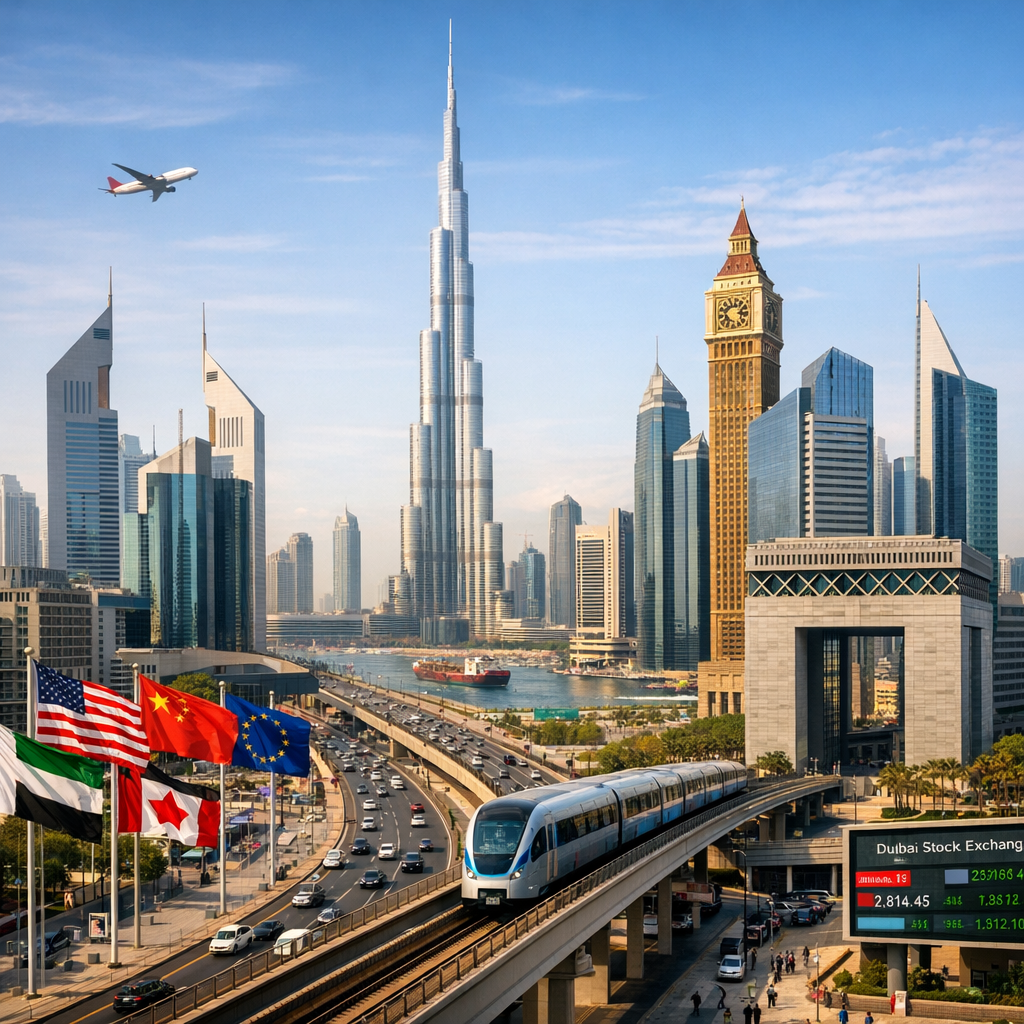
The global economy is currently navigating a complex landscape marked by moderate growth, geopolitical tensions, and evolving trade policies. These factors have significant implications for economies worldwide, including Dubai’s.
Global Economic Overview
According to the World Bank’s latest Global Economic Prospects report, global growth is projected to remain steady over the next two years, easing to 2.6% in 2026 before rising to 2.7% in 2027. This resilience is attributed to better-than-expected growth in major economies, particularly the United States. However, the report also highlights that one in four developing economies remains poorer than in 2019, indicating uneven recovery patterns.
Geopolitical Tensions and Trade Policies
Recent geopolitical developments, such as the war in the Middle East, have introduced new challenges to global economic stability. The International Monetary Fund’s April 2026 World Economic Outlook notes that the conflict threatens to disrupt growth and disinflation efforts. Assuming the conflict remains limited in duration and scope, global growth is projected to slow to 3.1% in 2026 and 3.2% in 2027. Additionally, the United States has adopted a new economic strategy termed “Trumponomics 2.0,” focusing on reshoring manufacturing and imposing tariffs to ensure economic independence. This shift marks a departure from previous support for global supply chains and free trade.
Implications for Dubai
Dubai’s economy is intricately linked to global trade and investment flows. The projected slowdown in global growth and the potential for increased trade barriers could impact Dubai’s trade volumes and foreign direct investment. However, Dubai’s strategic location and diversified economy may provide some resilience against these global headwinds. The emirate’s focus on sectors such as tourism, logistics, and financial services positions it to adapt to changing global dynamics.
In conclusion, while global economic trends present challenges, Dubai’s proactive economic policies and strategic initiatives can help mitigate potential adverse effects. Continuous monitoring of global developments and adaptive strategies will be crucial for sustaining economic growth in the face of evolving global conditions.