

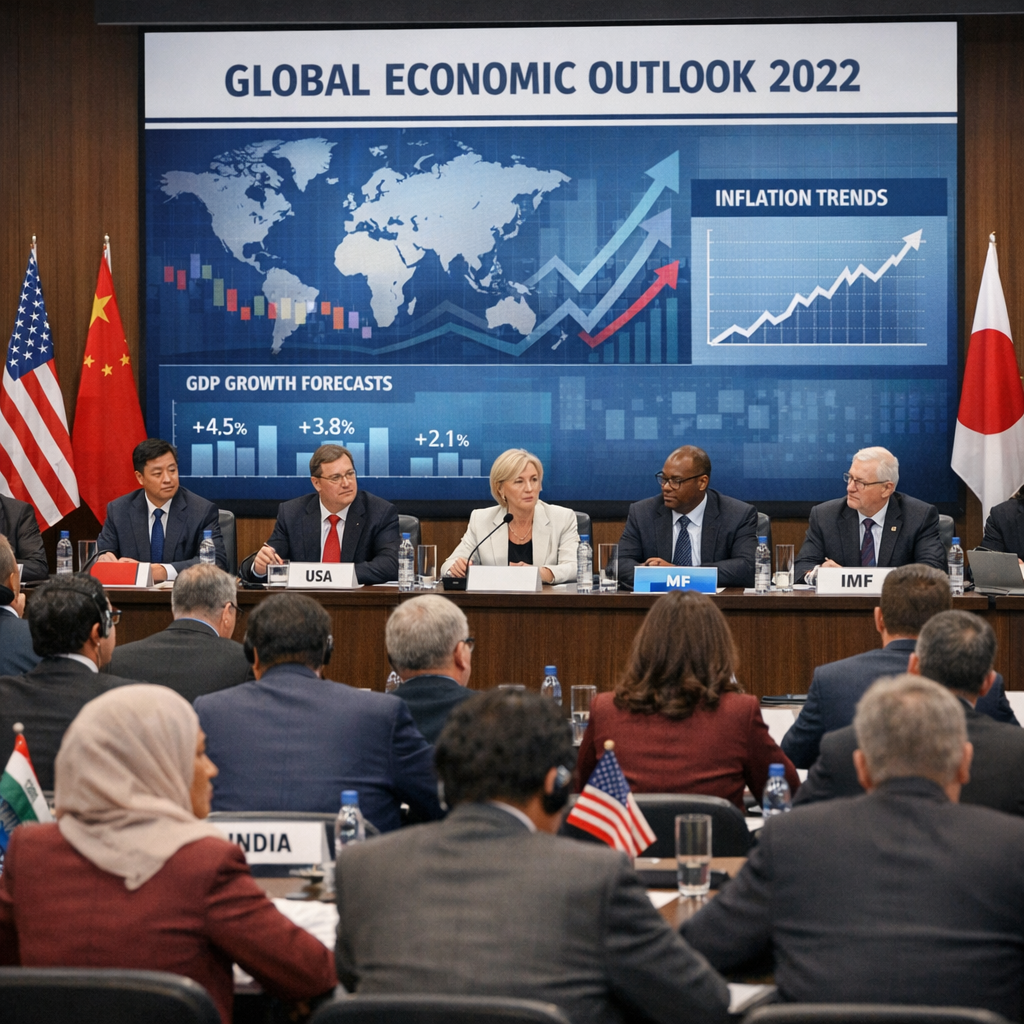
The global economy is currently navigating a complex landscape marked by moderate growth, inflationary pressures, and geopolitical uncertainties. Understanding these dynamics is crucial for policymakers, businesses, and individuals alike.
Global Growth Projections
Recent analyses indicate a slowdown in global economic growth. The World Bank projects a decrease from 3.4% in 2025 to 2.6% in 2026, with a slight uptick to 2.7% in 2027. This deceleration is attributed to subdued investment and structural challenges, despite easing inflation and monetary policy adjustments.
Inflationary Pressures
Inflation remains a pressing concern worldwide. The Organization for Economic Cooperation and Development (OECD) forecasts that annual consumer price inflation in G20 economies will rise to 4.0% in 2026, up from 3.4% in 2025. This increase is largely driven by energy shocks stemming from geopolitical conflicts, notably in the Middle East.
Impact of Geopolitical Events
Geopolitical tensions, particularly in the Middle East, have significantly influenced the global economic outlook. The OECD’s latest Economic Outlook highlights that the evolving conflict in the region has led to an energy shock, driving inflationary pressures and adversely affecting growth. The report outlines two scenarios: a time-limited disruption with a gradual return to pre-conflict energy production levels, and a prolonged disruption leading to higher energy prices and intensified risks of supply shortages.
Regional Perspectives
Different regions are experiencing varied economic impacts. The United States is projected to grow at 2.0% in 2026, supported by resilient consumer spending and investments in artificial intelligence. In contrast, the Eurozone faces slower growth, with projections at 0.8% in 2026, due to rising energy costs and industrial output challenges. Emerging economies like India are expected to lead growth in Asia, with a projected 6.4% increase in 2026, driven by strong consumer demand.
Implications for the United Arab Emirates
For the United Arab Emirates (UAE), these global trends have significant implications. As a major energy producer, the UAE may benefit from higher energy prices in the short term. However, the nation must also navigate the challenges posed by global inflationary pressures and potential disruptions in international trade. Diversifying the economy and investing in sectors like technology and renewable energy could enhance resilience against external shocks.
In conclusion, the global economic landscape is characterized by moderate growth, rising inflation, and geopolitical uncertainties. Staying informed and adaptable is essential for navigating these challenges and seizing emerging opportunities.