

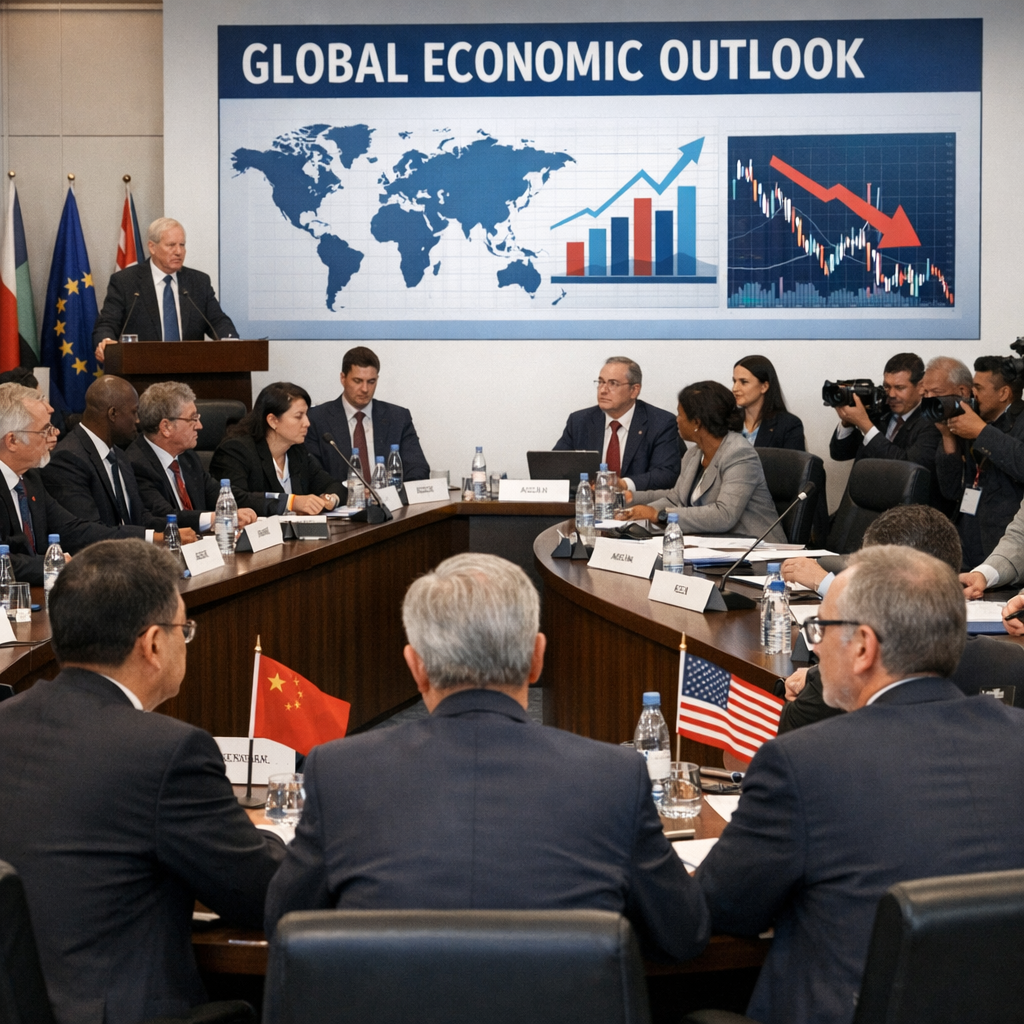
The global economy is currently navigating a complex landscape marked by resilience in some areas and challenges in others. Recent data indicates a mixed picture, with certain sectors showing strength while others face headwinds.
Global Growth Trends
According to the World Bank’s latest report, global growth is projected to remain steady over the next two years, easing to 2.6% in 2026 before rising to 2.7% in 2027. This resilience reflects better-than-expected growth, especially in the United States, which accounts for about two-thirds of the upward revision to the forecast in 2026. However, if these forecasts hold, the 2020s are on track to be the weakest decade for global growth since the 1960s. The sluggish pace is widening the gap in living standards across the world, with nearly all advanced economies enjoying per capita incomes exceeding their 2019 levels, but about one in four developing economies having lower per capita incomes. [Source: World Bank]
Inflationary Pressures
Inflation remains a concern, with the Organization for Economic Cooperation and Development (OECD) projecting annual consumer price inflation in the G20 economies to rise to 4.0% in 2026, from 3.4% in 2025, before easing to 3.1% in 2027 as energy and food price pressures fade. The evolving conflict in the Middle East has become the dominant force shaping global economic prospects, prompting an energy shock that is driving inflationary pressures and is projected to have adverse impacts on growth. [Source: OECD]
Regional Perspectives
In the United States, the economy is described as being in a “Goldilocks” phase—neither overheating nor cooling significantly. GDP grew modestly at 2.1% in both 2025 and the first quarter of 2026, and is projected to grow 2.2% for 2026 and 2.1% in 2027. This steady growth aligns with long-term trends dictated by productivity and labor force expansion. [Source: Kiplinger]
In contrast, the euro area faces modest growth projections, with GDP expected to remain at 0.8% in 2026 before picking up to 1.2% in 2027. Factors such as rising energy prices and geopolitical tensions contribute to this subdued outlook. [Source: OECD]
Implications for Dubai
For Dubai, a city deeply integrated into the global economy, these trends have significant implications. The resilience in global trade and investment presents opportunities for growth, particularly in sectors like logistics, tourism, and finance. However, inflationary pressures and regional geopolitical developments necessitate careful economic planning and diversification to mitigate potential risks.
In conclusion, while the global economic outlook presents both opportunities and challenges, strategic planning and adaptability will be key for economies like Dubai to navigate these uncertain waters successfully.