

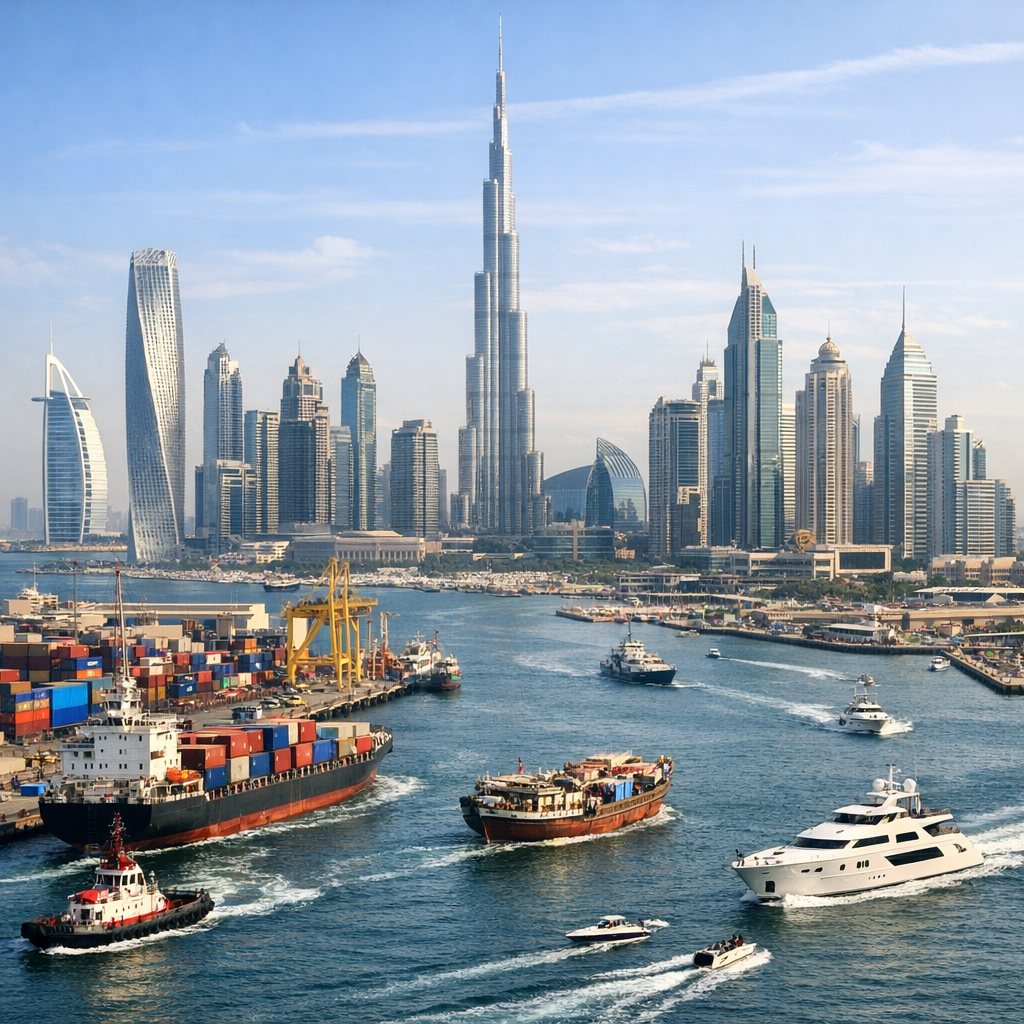
The global economy is currently navigating a complex landscape marked by moderate growth projections, geopolitical tensions, and technological advancements. These factors collectively influence economic activities worldwide, including in Dubai.
Global Economic Outlook
According to the World Bank’s latest report, global growth is projected to remain steady over the next two years, easing to 2.6% in 2026 before rising to 2.7% in 2027. This resilience is attributed to better-than-expected growth in major economies, particularly the United States. However, the report also highlights that one in four developing economies remains poorer than in 2019, indicating uneven recovery patterns.
Geopolitical Tensions and Energy Markets
The International Monetary Fund (IMF) notes that the recent outbreak of war in the Middle East poses significant risks to global economic stability. Assuming the conflict remains limited in duration and scope, global growth is projected to slow to 3.1% in 2026 and 3.2% in 2027. The IMF emphasizes that a prolonged or broader conflict could further weaken growth and destabilize financial markets.
Energy markets have been particularly sensitive to these geopolitical developments. Kiplinger reports that the global economy in 2026 is facing significant challenges due to an energy crisis sparked by the Iran war, which has disrupted oil exports from the Persian Gulf. This has led to rising commodity prices and inflation, expected to reach around 4.5% globally. Despite AI-driven optimism, global growth is forecast to slow to 2.8%.
Technological Advancements and Economic Growth
On a more positive note, technological advancements, particularly in artificial intelligence (AI), are contributing to economic resilience. Morgan Stanley’s 2026 Economic Outlook highlights that U.S. consumer spending and capital expenditures on AI are likely to drive moderate growth as global inflation slows. The report projects annual global economic growth to moderate to 3% in 2025 and 3.2% in 2026, before stabilizing in 2027.
Implications for Dubai
Dubai’s economy is intricately linked to global economic trends due to its status as a major international trade and business hub. The projected global growth slowdown and potential disruptions in energy markets could have several implications for Dubai:
- Trade and Investment: A slowdown in global growth may lead to reduced demand for exports and cautious investment behaviors, potentially affecting Dubai’s trade volumes and foreign direct investment inflows.
- Energy Sector: As a significant player in the energy sector, fluctuations in oil prices and supply chains could impact Dubai’s revenue streams and economic planning.
- Technological Integration: The emphasis on AI and technological advancements presents an opportunity for Dubai to further integrate these technologies into its economy, enhancing productivity and fostering innovation.
In conclusion, while global economic trends present both challenges and opportunities, Dubai’s strategic position and proactive economic policies can help navigate these dynamics effectively.