

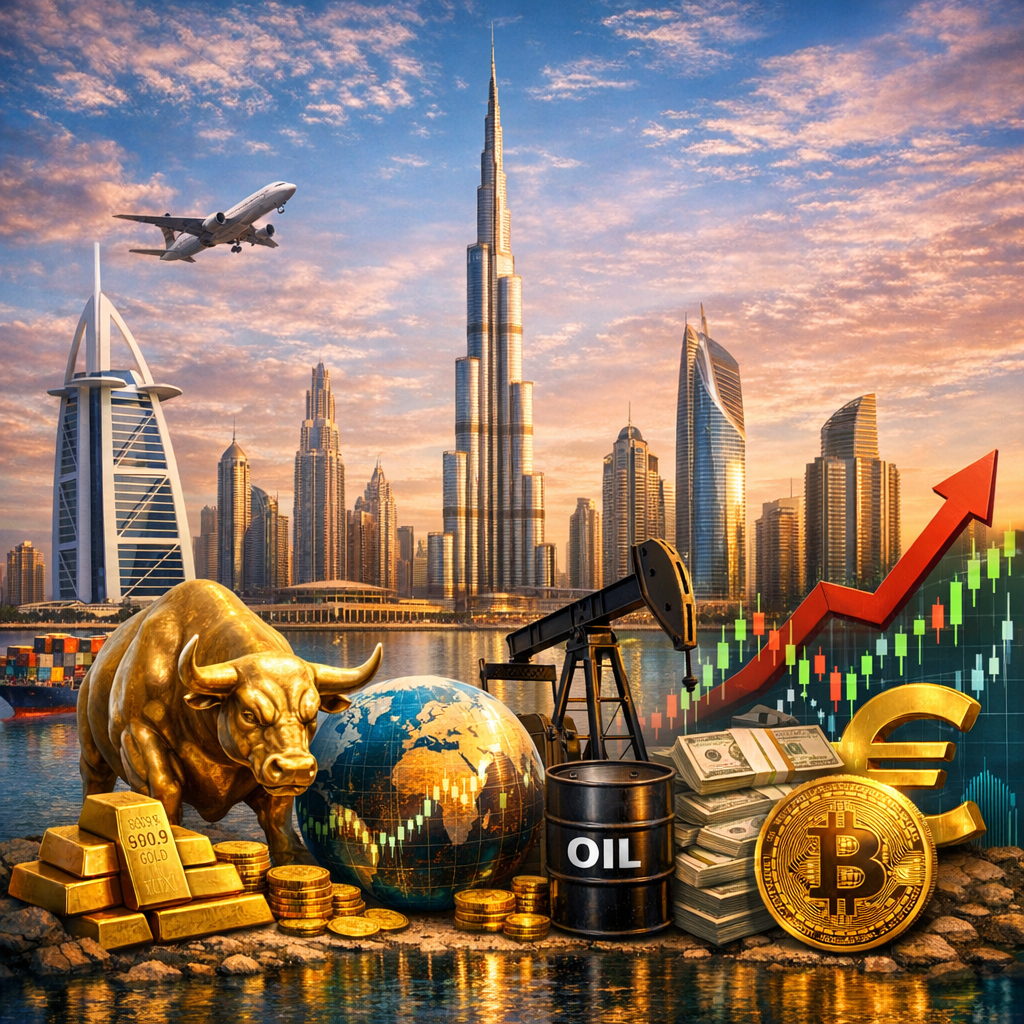
The global economy in 2026 is navigating a complex landscape marked by moderate growth, geopolitical tensions, and technological advancements. These factors collectively influence economic activities worldwide, including in Dubai.
Global Economic Overview
According to the World Bank, global growth is projected to slow to 2.7% in 2026, below the pre-pandemic average of 3.2%. This deceleration is attributed to subdued investment and structural challenges, despite easing inflation and monetary policy adjustments. The United States is expected to experience a modest slowdown, with growth projected at 2.0% in 2026, influenced by declining consumer purchasing power and labor force constraints. The Eurozone faces a more pronounced slowdown, with growth anticipated at 0.8% in 2026, primarily due to rising energy prices and their impact on industrial output.
Implications for Dubai
Dubai’s economy, characterized by its strategic location and diversified sectors, is not immune to these global trends. The anticipated slowdown in major economies could affect Dubai’s trade volumes, given its role as a global trade hub. Additionally, fluctuations in energy prices may impact the region’s oil and gas sector, influencing government revenues and investment strategies. However, Dubai’s ongoing investments in infrastructure, tourism, and technology position it to navigate these challenges effectively. The city’s emphasis on innovation and its strategic initiatives aimed at economic diversification are expected to bolster resilience against global economic headwinds.
Conclusion
While the global economic outlook presents certain challenges, Dubai’s proactive approach to economic diversification and strategic investments provides a buffer against potential adverse effects. Continuous monitoring of global trends and adaptive policy measures will be crucial in sustaining Dubai’s economic growth amidst the evolving global landscape.