

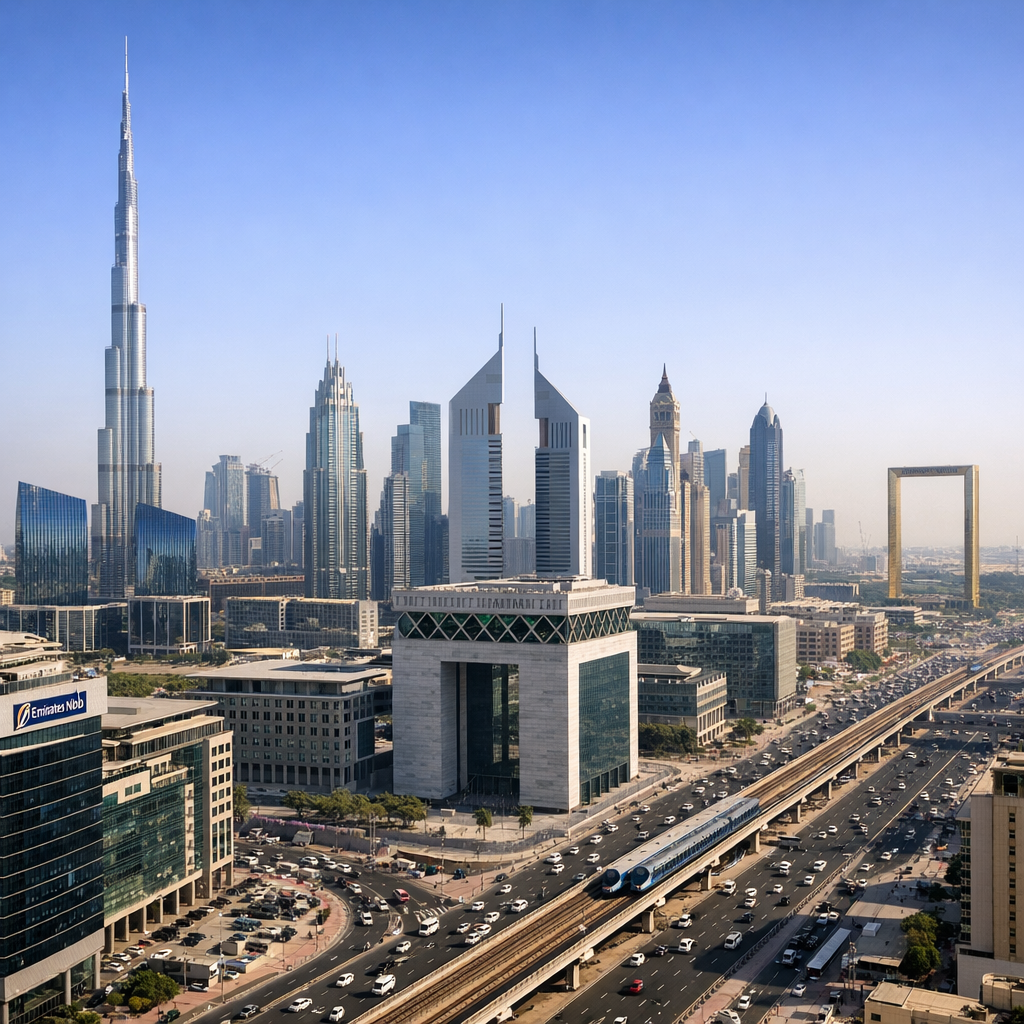
The global economy is currently navigating a complex landscape marked by moderate growth, geopolitical tensions, and technological advancements. These factors collectively influence economic dynamics worldwide, including in Dubai.
Global Economic Overview
According to the World Bank’s latest report, global growth is projected to ease to 2.6% in 2026 before rising to 2.7% in 2027. This slowdown is attributed to subdued investment and structural challenges, despite easing inflation and monetary policy adjustments. The report highlights that while advanced economies have largely recovered to pre-pandemic income levels, about one in four developing economies remain below their 2019 per capita income levels.
Regional Economic Developments
In the United States, the economy is expected to experience moderate growth, with GDP projected to grow by 2.2% in 2026 and 2.1% in 2027. This steady growth aligns with long-term trends dictated by productivity and labor force expansion. Consumer spending remains stable but is supported by low savings rates, with April’s personal savings at a near-record low of 2.6%.
Europe faces slower growth, with the eurozone projected to grow at 1.1% in 2026 and 1.3% in 2027. Germany’s fiscal support is partially offset by consolidation in France and Italy. Additionally, the region is grappling with energy cost challenges, which have significantly impacted industrial output, especially in Germany and the U.K.
In Asia, India stands out with robust growth, projected at 6.4% in 2026, driven by strong consumer demand. China, however, is expected to see a slowdown, with growth projected at 4.5% in 2026, hindered by property sector issues but bolstered by gains in green-tech and AI exports.
Implications for Dubai
Dubai’s economy is intricately linked to global economic trends due to its status as a global trade hub and its diversified economic base. The projected slowdown in global growth could have several implications for Dubai:
- Trade and Logistics: As a major logistics and trade center, Dubai may experience fluctuations in trade volumes corresponding to global demand shifts. The slowdown in Europe and China could affect trade flows, while growth in India may present new opportunities.
- Energy Sector: Given the region’s reliance on energy exports, fluctuations in global energy prices and demand could impact revenue streams. The recent energy crisis, sparked by geopolitical tensions, has led to rising commodity prices and inflation, which could affect Dubai’s energy sector.
- Tourism and Real Estate: Dubai’s tourism and real estate sectors are sensitive to global economic conditions. A slowdown in key markets could influence tourist inflows and investment in real estate. However, Dubai’s strategic initiatives to attract tourists and investors may help mitigate some of these effects.
In conclusion, while global economic trends present challenges, Dubai’s proactive economic policies, strategic location, and diversified economy position it to navigate these complexities effectively. Continuous monitoring of global developments and adaptive strategies will be crucial in sustaining Dubai’s economic resilience.