

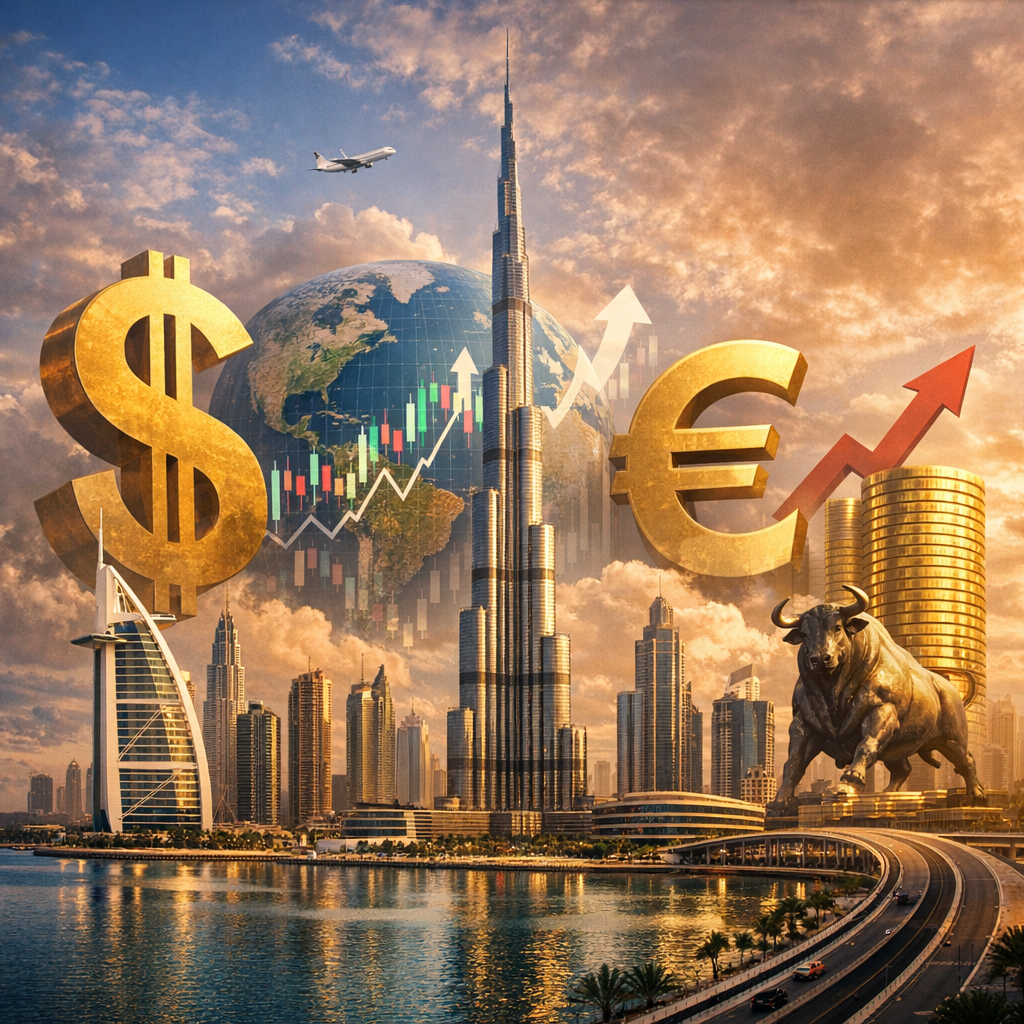
As the global economy experiences significant transformations, it is crucial to understand how these changes may affect Dubai, a city deeply integrated into international markets.
Global Economic Overview
Recent forecasts indicate a moderation in global economic growth. The World Bank projects a slowdown to 2.6% in 2026, with a slight uptick to 2.7% in 2027. This deceleration is attributed to subdued investment and structural challenges, despite easing inflation and monetary policies. Similarly, the United Nations Conference on Trade and Development (UNCTAD) anticipates global growth to slow to 2.7% in 2026, below the pre-pandemic average of 3.2%, due to trade tensions and fiscal strains.
Regional Economic Trends
In the United States, consumer spending and investments in artificial intelligence are expected to drive moderate growth, with real GDP projected to reach 1.8% in 2026 and 2.0% in 2027. China’s economy is forecasted to expand by 5% in 2026, supported by government policy measures, before moderating to 4.5% in 2027. The Eurozone is likely to experience modest growth, with projections of 1.1% in 2026 and 1.3% in 2027, influenced by varying fiscal policies across member states.
Implications for Dubai
Dubai’s economy is closely linked to global trade and investment flows. The anticipated slowdown in global growth could impact key sectors such as tourism, real estate, and trade. However, Dubai’s strategic initiatives in diversifying its economy, investing in technology, and enhancing infrastructure may help mitigate some of these effects. Additionally, the city’s position as a regional hub could attract businesses seeking stability amid global uncertainties.
In conclusion, while global economic trends present challenges, Dubai’s proactive policies and strategic investments position it to navigate these shifts effectively, maintaining its status as a dynamic and resilient economic center.