

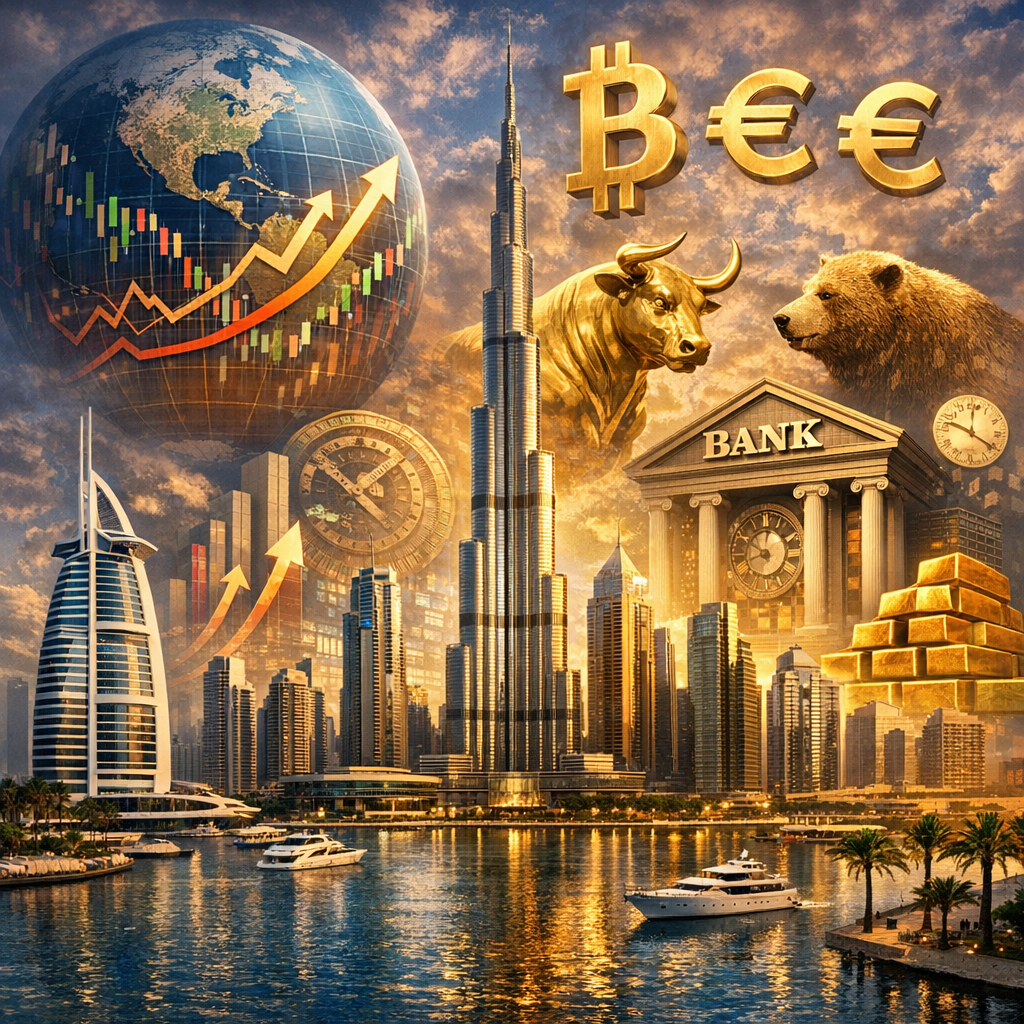
As the global economy navigates a complex landscape marked by geopolitical tensions and technological advancements, Dubai stands at a crossroads, poised to adapt and thrive amidst these changes.
Global Economic Outlook
Recent forecasts indicate a moderation in global economic growth. The World Bank projects a slowdown to 2.6% in 2026, with a slight uptick to 2.7% in 2027. This deceleration is attributed to subdued investment and structural challenges, despite easing inflation and monetary policies. Similarly, the United Nations Conference on Trade and Development (UNCTAD) anticipates global growth to slow to 2.7% in 2026, below pre-pandemic averages, due to trade tensions and fiscal strains.
Geopolitical Influences
Geopolitical events, notably the ongoing conflict in the Middle East, have introduced volatility in commodity and financial markets. The Organization for Economic Cooperation and Development (OECD) highlights that such conflicts test the resilience of the global economy, potentially impacting growth and inflation rates. Economist Gita Gopinath warns that rising imbalances among major powers threaten growth and fuel protectionism, emphasizing the need for structural reforms and targeted technological applications to catalyze growth.
Technological Advancements
Despite these challenges, technological innovations, particularly in artificial intelligence (AI), offer avenues for economic resilience. Investments in AI are expected to drive moderate growth, with the U.S. leading in this sector. However, the benefits of AI are not uniformly distributed, and regions like Dubai must strategically position themselves to harness these advancements.
Implications for Dubai
Dubai’s economy, characterized by its strategic location and diversified sectors, is both susceptible to and capable of leveraging these global trends. The anticipated slowdown in global growth may affect trade volumes and investment inflows. However, Dubai’s proactive policies in embracing technology and innovation position it well to mitigate adverse effects. By investing in AI and fostering a conducive environment for technological enterprises, Dubai can enhance its economic resilience.
Furthermore, Dubai’s role as a global trade hub necessitates vigilance in monitoring geopolitical developments. The Middle East conflict underscores the importance of diplomatic agility and economic diversification to navigate potential disruptions.
Conclusion
In an era of economic uncertainty, Dubai’s adaptability and forward-thinking strategies are crucial. By aligning with global technological trends and maintaining a diversified economic base, Dubai can not only weather potential challenges but also emerge as a leader in the evolving global economic landscape.