

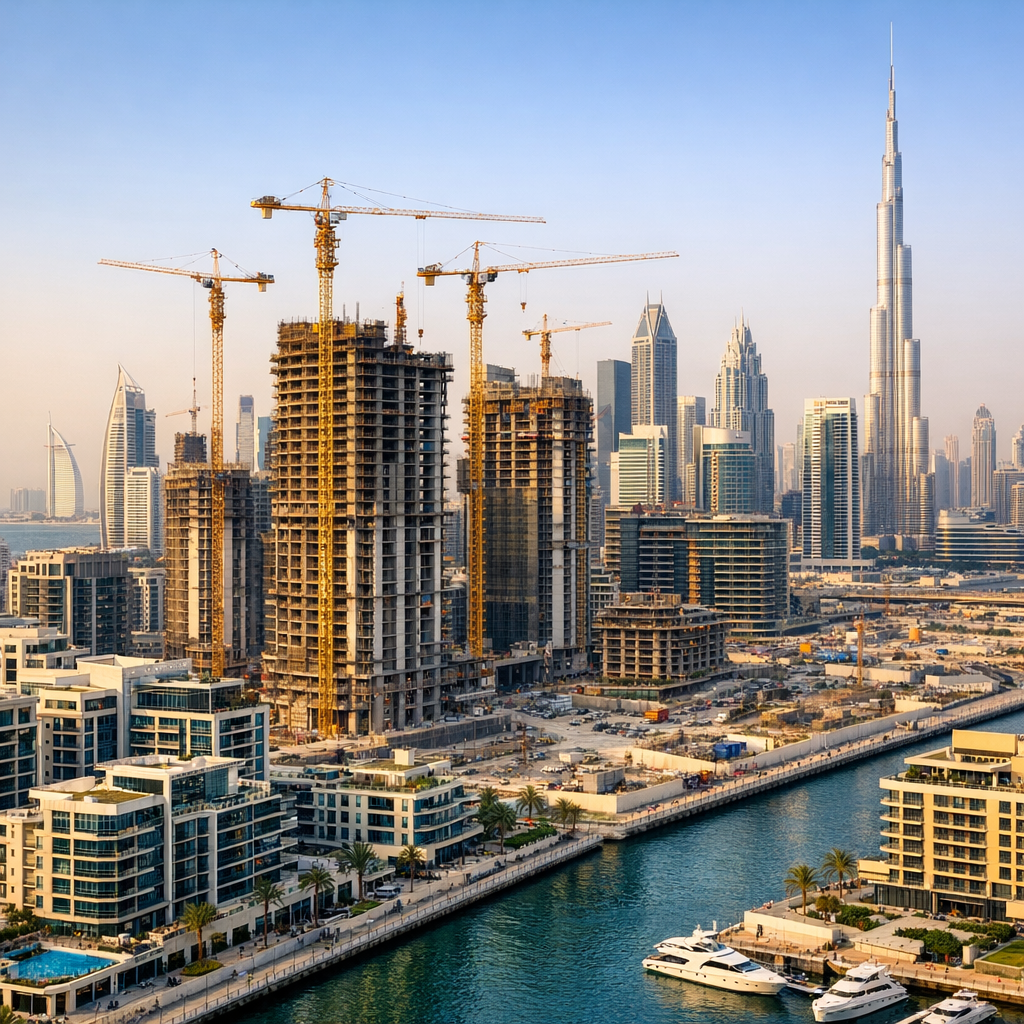
Dubai’s real estate market continues to demonstrate resilience and growth, driven by a combination of population expansion, economic diversification, and strategic government initiatives. This article delves into the current market trends, rental dynamics, and ongoing developments shaping the city’s property landscape.
Market Trends
In recent years, Dubai has witnessed a significant surge in real estate transactions. For instance, in 2025, the city recorded over 215,700 property transactions, marking an 18.7% increase compared to the previous year. This uptick underscores Dubai’s appeal as a global real estate hub.
Property prices have also seen a steady rise. By the end of 2025, average prices per square foot in established communities ranged between AED 1,450 and AED 1,550, reflecting an 8–12% year-over-year increase. Prime locations such as Downtown Dubai, Dubai Marina, and Palm Jumeirah experienced even higher growth rates, with some areas witnessing up to an 18% increase.
Rental Market Dynamics
The rental sector has mirrored the sales market’s upward trajectory. Average rental yields for residential properties in Dubai are estimated at 6.78%, with apartments reaching yields as high as 7.24%. However, annual rental growth has shown signs of deceleration, with an 8.5% increase noted in May 2025, down from 14.3% in January of the same year.
Development and Supply
To meet the growing demand, developers have been proactive in launching new projects. In 2025, over 150,000 new units were introduced to the market, with a significant portion expected to be completed by 2027. This influx aims to balance the demand-supply equation and provide diverse options for investors and residents alike.
Conclusion
Dubai’s real estate market remains dynamic, characterized by robust sales, a competitive rental environment, and continuous development. For potential investors and residents, staying informed about these trends is crucial to making strategic decisions in this ever-evolving landscape.