

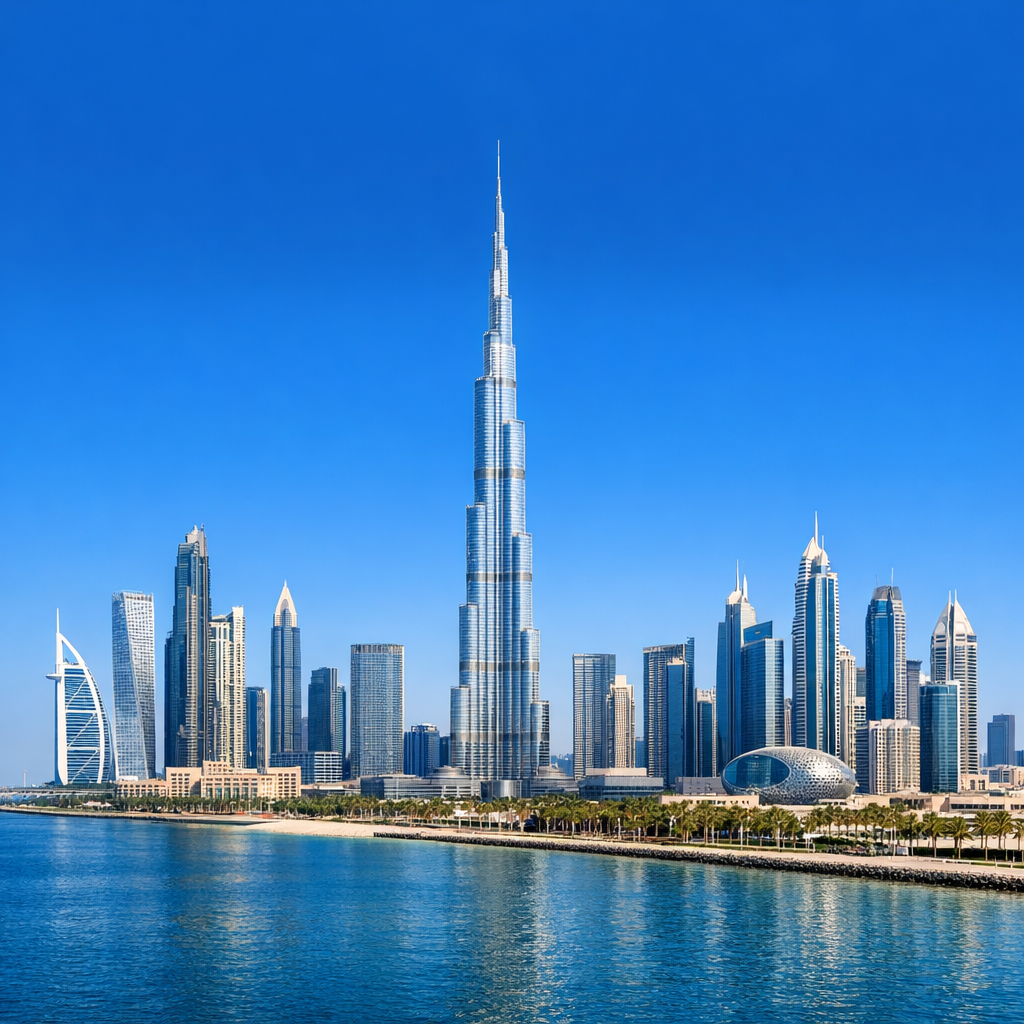
Dubai’s climate is characterized by its hot desert environment, with distinct seasonal variations and environmental challenges that residents and visitors should be aware of.
Seasonal Weather Patterns
Summer (June to September)
During the summer months, Dubai experiences intense heat, with daytime temperatures often exceeding 45°C (113°F). Humidity levels can also be high, especially near the coast, making outdoor activities challenging. It’s advisable to stay hydrated and limit exposure to the sun during peak hours.
Winter (December to February)
Winter brings milder temperatures, ranging from 20°C to 26°C (68°F to 79°F) during the day, with cooler evenings. This season is considered the most comfortable for outdoor activities and tourism.
Environmental Challenges
Sandstorms
Dubai is occasionally affected by sandstorms, particularly during the summer months. These storms, driven by strong north-westerly winds known as ‘Shamal,’ can reduce visibility and impact air quality. Residents are advised to stay indoors during severe sandstorms and take necessary precautions.
Water Scarcity
As a desert city, Dubai faces challenges related to water scarcity. The city relies heavily on desalination plants to meet its water needs. Sustainable water usage and conservation efforts are essential to address this issue.
Staying Informed
Staying updated on weather forecasts and environmental advisories is crucial for planning daily activities and ensuring safety. Local authorities provide regular updates and guidelines to help residents and visitors navigate Dubai’s unique climate.