

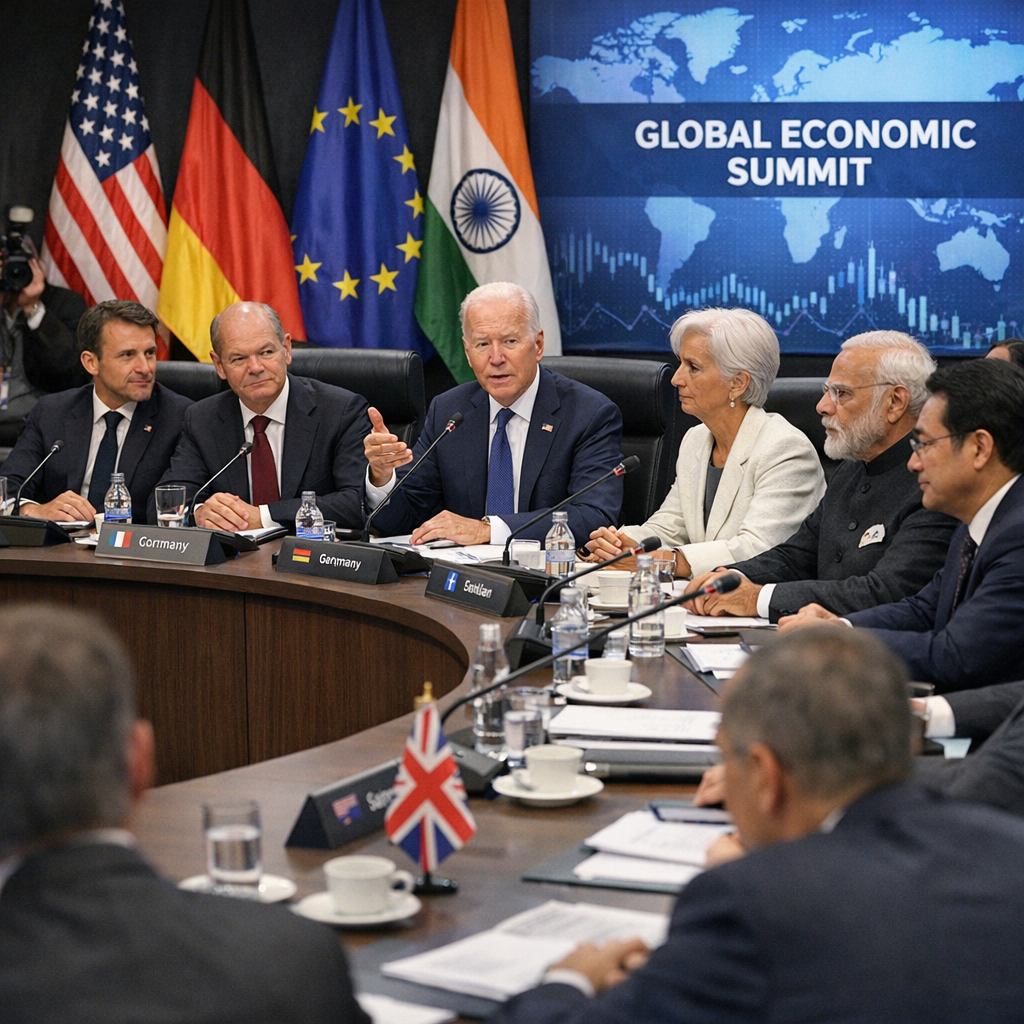
The global economy is currently navigating a complex landscape marked by geopolitical tensions, trade uncertainties, and evolving economic policies. Understanding these dynamics is crucial for businesses and policymakers worldwide.
Economic Growth Projections
Recent analyses indicate a moderation in global economic growth. The World Bank projects a slowdown to 2.6% in 2026, with a slight uptick to 2.7% in 2027. This deceleration is attributed to subdued investment and structural challenges, despite easing inflation and monetary policy adjustments.
Impact of Geopolitical Tensions
Ongoing conflicts, particularly in the Middle East, have introduced significant uncertainties. The International Monetary Fund (IMF) notes that the war in the Middle East poses risks to global growth and inflation, especially affecting emerging markets and developing economies. The IMF projects global growth to slow to 3.1% in 2026, with inflation expected to rise modestly before resuming its decline in 2027.
Regional Economic Outlooks
Different regions are experiencing varied economic impacts:
United States
The U.S. economy demonstrates resilience, with growth supported by consumer spending and investments in artificial intelligence. However, inflationary pressures and potential policy shifts may influence future growth trajectories.
Europe
Europe faces challenges due to energy price volatility and geopolitical uncertainties. The eurozone’s growth is projected to slow, with concerns about stagflation as energy costs impact industrial output.
Asia
China’s economy is undergoing rebalancing, with a shift from export-driven growth to domestic demand. While growth is expected to moderate, investments in infrastructure and technology sectors may provide support. India, on the other hand, continues to exhibit robust growth driven by strong domestic momentum.
Policy Recommendations
To navigate these uncertainties, experts recommend:
- Enhancing international cooperation to address trade tensions and geopolitical conflicts.
- Implementing structural reforms to boost productivity and economic resilience.
- Investing in technology and innovation to drive sustainable growth.
In conclusion, while the global economic outlook presents challenges, proactive policy measures and international collaboration can pave the way for a more stable and prosperous future.