

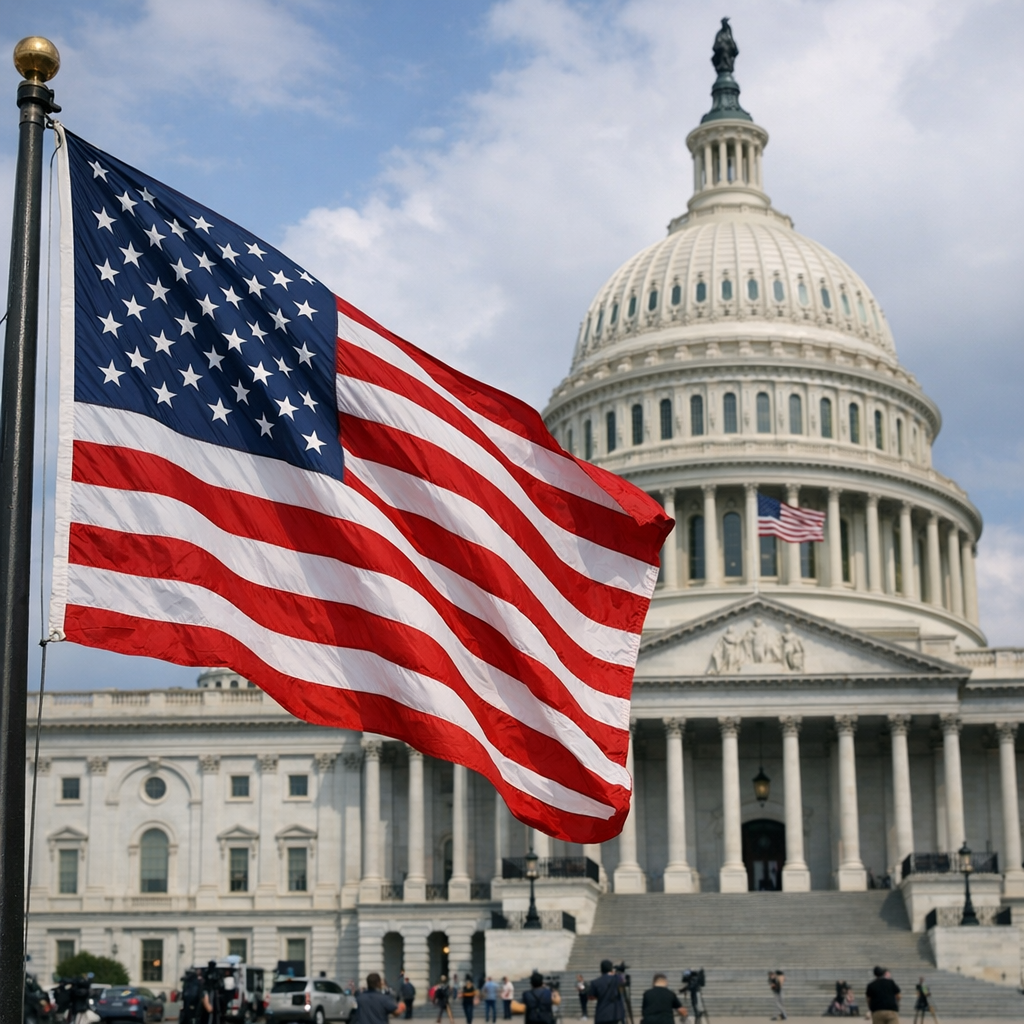
The United States is currently experiencing significant shifts in both its economic and political arenas, with developments that have far-reaching implications domestically and internationally.
Economic Overview
Recent data indicates a complex economic landscape. The U.S. economy has shown resilience, with job openings remaining robust at 7.6 million in May. However, challenges persist, including concerns over inflation and consumer costs. The Federal Reserve has maintained interest rates but signaled potential hikes later this year to address inflationary pressures. Additionally, the national debt has surpassed $39 trillion, raising questions about fiscal sustainability and future economic policies.
Political Dynamics
On the political front, the two-party system faces increasing strain. Polarization between Republicans and Democrats has intensified over issues such as immigration, abortion rights, and voting access. The upcoming midterm elections in November 2026 are poised to be pivotal, with all 435 House seats and 35 Senate seats up for grabs. The outcomes will significantly influence the political agenda on topics ranging from healthcare to America’s role in global affairs.
Global Implications
These domestic developments have global ramifications. The U.S. economy’s performance influences international markets, and its political decisions shape global diplomatic relations. As the U.S. navigates these challenges, the international community remains attentive to the potential impacts on global stability and economic growth.
In conclusion, the United States stands at a crossroads, with its economic and political decisions poised to shape not only its future but also that of the global community.