

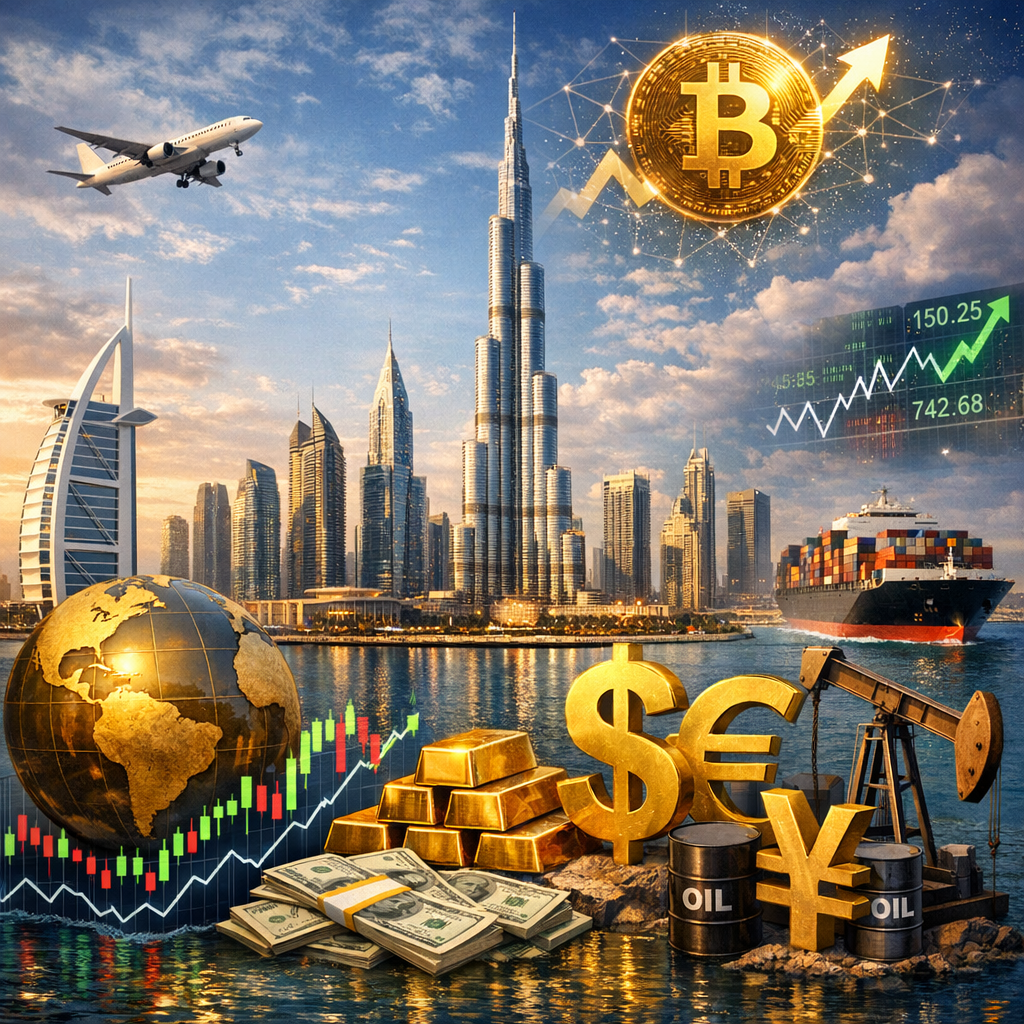
As the global economy faces a complex landscape marked by geopolitical tensions and technological advancements, Dubai’s strategic position necessitates a nuanced understanding of these developments.
Global Economic Overview
Recent forecasts indicate a moderation in global economic growth. The World Bank projects a slowdown to 2.6% in 2026, influenced by trade tensions and policy uncertainties. Similarly, the United Nations anticipates a growth rate of 2.7% for the same year, citing subdued investment and structural challenges.
Geopolitical Tensions and Energy Markets
The ongoing conflict in the Middle East has disrupted oil exports, leading to rising commodity prices and inflation. This situation has prompted concerns about global economic stability and has had a direct impact on energy-dependent economies.
Technological Advancements and Economic Resilience
Despite these challenges, technological innovations, particularly in artificial intelligence (AI), are driving economic resilience. The United States, for instance, is leveraging AI investments to bolster growth, with projections indicating a GDP growth of 2.1% in 2026.
Implications for Dubai
Dubai’s economy, characterized by its diversification and strategic location, is both influenced by and influential in these global trends. The city’s robust infrastructure and commitment to innovation position it to navigate the complexities of the current economic climate effectively.
In conclusion, while global economic shifts present challenges, they also offer opportunities for economies like Dubai to adapt and thrive by leveraging technological advancements and strategic planning.