

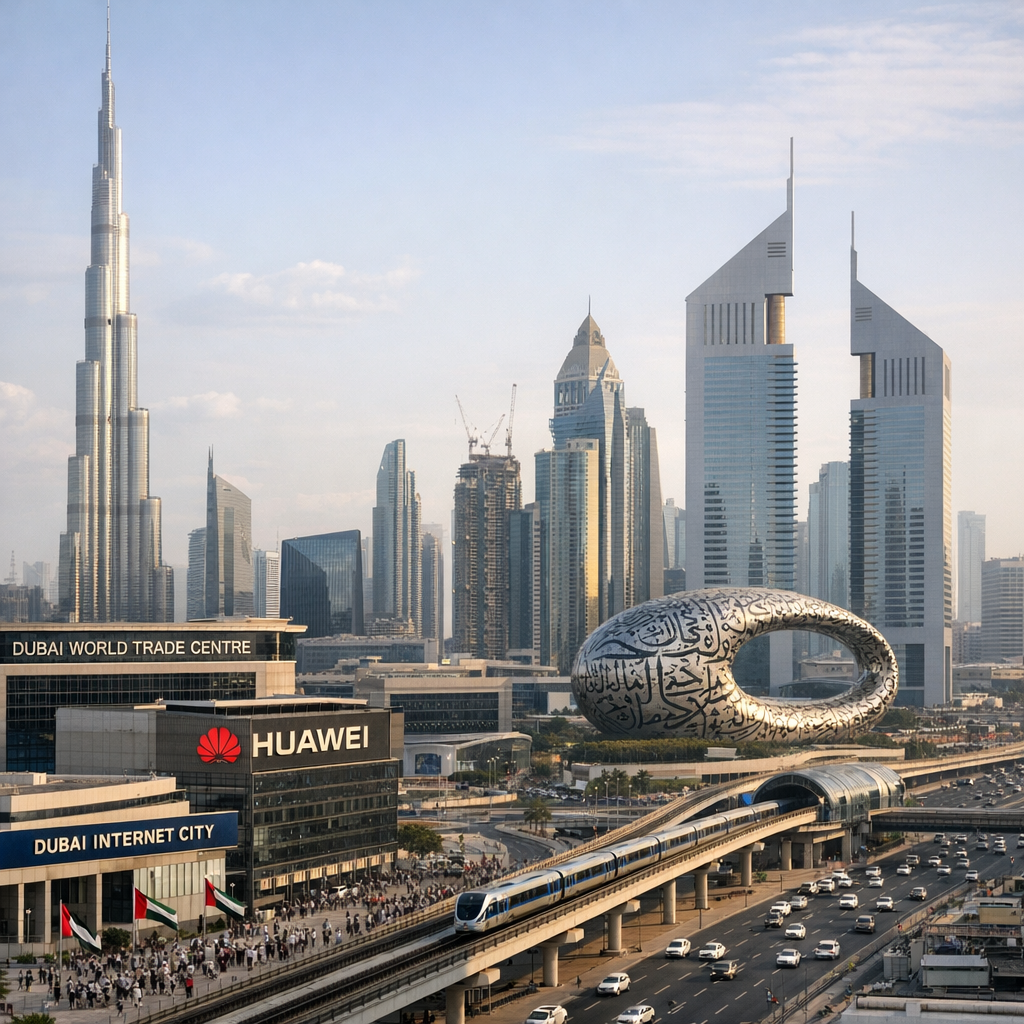
As the global economy navigates a complex landscape marked by geopolitical tensions, technological advancements, and shifting trade patterns, it is crucial to understand how these developments may influence Dubai’s economic trajectory.
Global Economic Outlook
Recent forecasts indicate a moderation in global economic growth. The World Bank projects global GDP growth to ease to 2.6% in 2026, reflecting a slowdown from previous years. This deceleration is attributed to factors such as trade tensions, policy uncertainties, and structural challenges in various economies.
Key Influencing Factors
Geopolitical Tensions
Ongoing conflicts, particularly in the Middle East, have introduced volatility in global markets. The OECD’s interim economic outlook highlights that the intensification of conflicts in the region is testing the resilience of the global economy, potentially impacting trade and investment flows.
Technological Advancements
The rapid adoption of artificial intelligence (AI) is transforming industries worldwide. Visa’s 2026 Global Economic Outlook emphasizes that AI integration is driving structural economic transformations, influencing productivity and business investment patterns.
Trade Dynamics
Shifts in global trade patterns, influenced by policy changes and economic realignments, are reshaping international commerce. The World Bank notes that while some economies are adjusting their trade flows, others face challenges due to policy uncertainties and evolving global demand.
Implications for Dubai
Dubai’s strategic position as a global trade and business hub means that these global trends have direct implications for its economy.
Trade and Logistics
Given Dubai’s reliance on international trade, disruptions in global supply chains or shifts in trade policies could affect its logistics and shipping sectors. Adapting to new trade routes and agreements will be essential to maintain its status as a key trading hub.
Technology and Innovation
The global emphasis on AI and technological innovation presents opportunities for Dubai to further its smart city initiatives and diversify its economy. Investing in AI-driven industries and fostering a tech-friendly environment can position Dubai as a leader in the digital economy.
Energy Markets
Fluctuations in global energy prices, influenced by geopolitical events, can impact Dubai’s energy sector and broader economic stability. Diversifying energy sources and investing in renewable energy can mitigate potential risks associated with energy market volatility.
Conclusion
Staying attuned to global economic trends is vital for Dubai’s continued growth and resilience. By proactively adapting to these changes and leveraging its strategic advantages, Dubai can navigate the complexities of the global economy and sustain its position as a leading global city.