

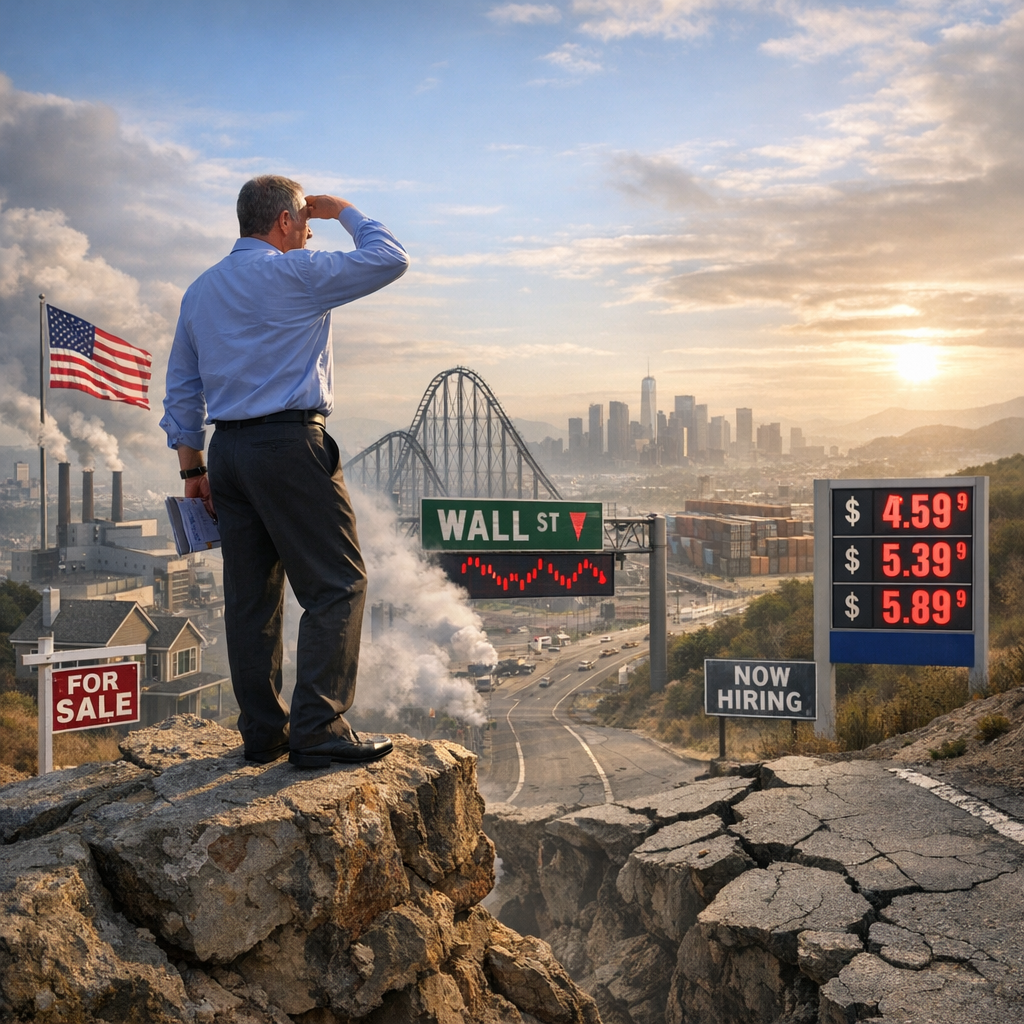
The United States economy continues to evolve amidst a dynamic policy environment and global uncertainties. Recent data indicates a complex interplay between growth, inflation, and public sentiment.
Economic Growth and Employment
In 2025, the U.S. economy expanded with a real GDP growth of 2.2%, aligning with the average annual rate from 2000 to 2024. The labor market added 115,000 jobs in April 2026, maintaining the unemployment rate at 4.3%. This resilience underscores the economy’s capacity to adapt to changing conditions.
Inflation and Consumer Sentiment
Inflation remains a concern, with the Consumer Price Index (CPI) rising by 2.4% over the 12 months leading up to January 2026. Public perception reflects this unease; a Pew Research Center survey from February 2026 found that 72% of Americans rate economic conditions as only fair or poor, with significant partisan divides influencing these views.
Policy Impacts and Trade Dynamics
Recent policy shifts, including tax cuts and increased tariffs, have introduced both opportunities and challenges. The International Monetary Fund (IMF) projects that these changes will provide a modest boost to activity in the near term but may contribute to a rising fiscal deficit. Additionally, the IMF notes that higher tariffs are expected to modestly lower the trade deficit and raise revenue in the near term, though they represent a negative supply shock to the U.S. economy.
Global Implications
The U.S. economic trajectory holds significant implications for global markets. As the world’s largest economy, its policy decisions and economic health influence international trade, investment flows, and economic confidence worldwide. Observers and stakeholders, including those in Dubai, should monitor these developments closely to navigate the interconnected global economic landscape effectively.