

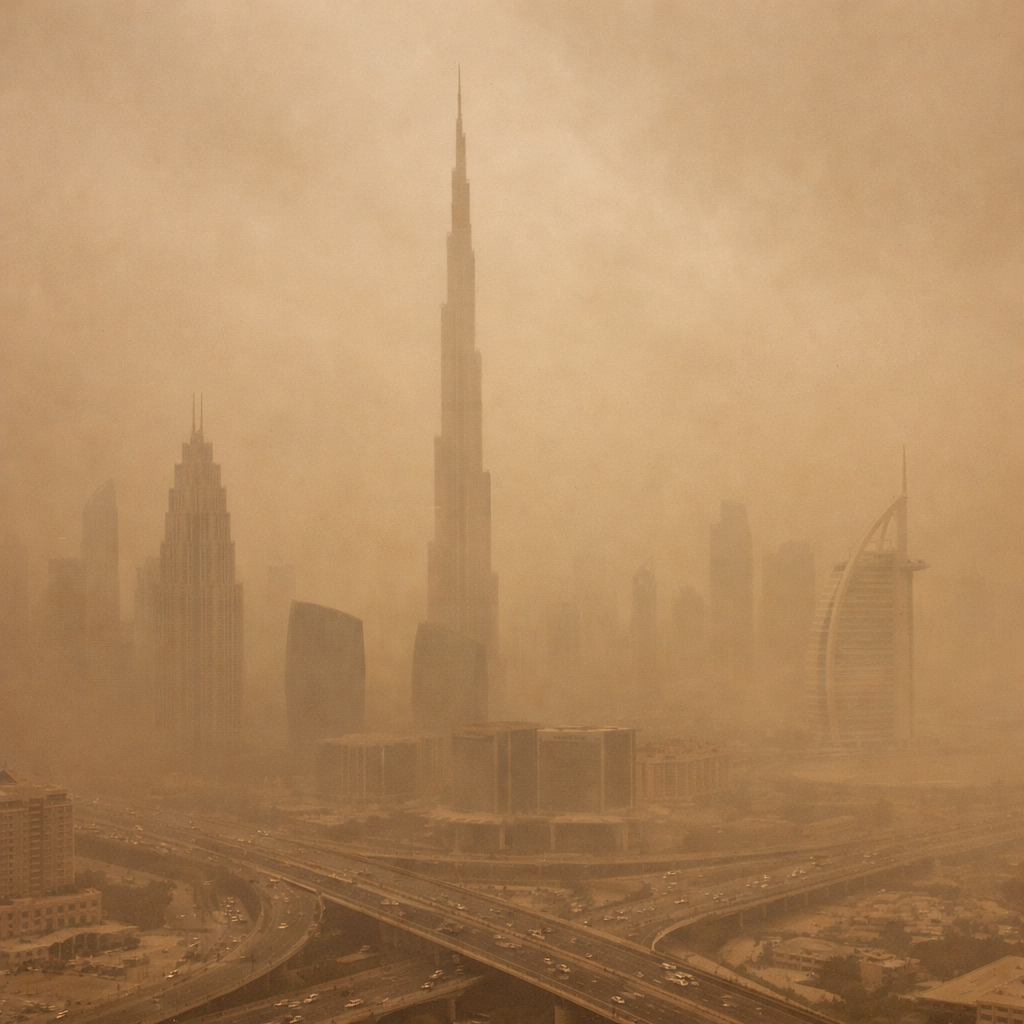
Dubai’s climate is characterized by its hot desert environment, marked by extreme temperatures, high humidity, and minimal rainfall. Understanding these patterns is essential for residents and visitors alike.
Seasonal Weather Patterns
Summer (June to September)
During summer, daytime temperatures often exceed 40°C, with peaks reaching up to 50°C. Coastal areas experience high humidity levels, sometimes surpassing 80%, making the heat feel more intense. This combination can lead to heat indices that approach the human survivability limit, making outdoor activities challenging.
Winter (December to February)
Winters are mild and pleasant, with daytime temperatures ranging between 20°C and 26°C. Nights can be cooler, occasionally dropping to 14°C. This season also brings the majority of Dubai’s limited rainfall, averaging around 100 mm annually, primarily between December and March.
Environmental Challenges
Sandstorms
Dubai experiences sandstorms, particularly between June and September. These storms, driven by strong north-westerly winds known as ‘Shamal,’ can reduce visibility and impact daily activities. The fine desert dust carried by these storms can also affect air quality and health.
Air Quality
Air quality in Dubai is influenced by various factors, including vehicle emissions, industrial activities, and construction dust. The best air quality is typically recorded in December and January, following periods of rain or cooler weather. However, during summer months, the combination of high temperatures and humidity can exacerbate pollution levels, leading to health advisories.
Adaptation and Mitigation
Dubai has implemented several measures to mitigate the effects of its harsh climate. These include the development of extensive indoor facilities, green building initiatives, and urban planning that incorporates shaded areas and green spaces. Additionally, public awareness campaigns educate residents on staying hydrated and limiting outdoor activities during peak heat periods.
Understanding Dubai’s climate and environmental challenges is crucial for ensuring safety and comfort. By staying informed and taking appropriate precautions, residents and visitors can effectively navigate the city’s unique weather conditions.