

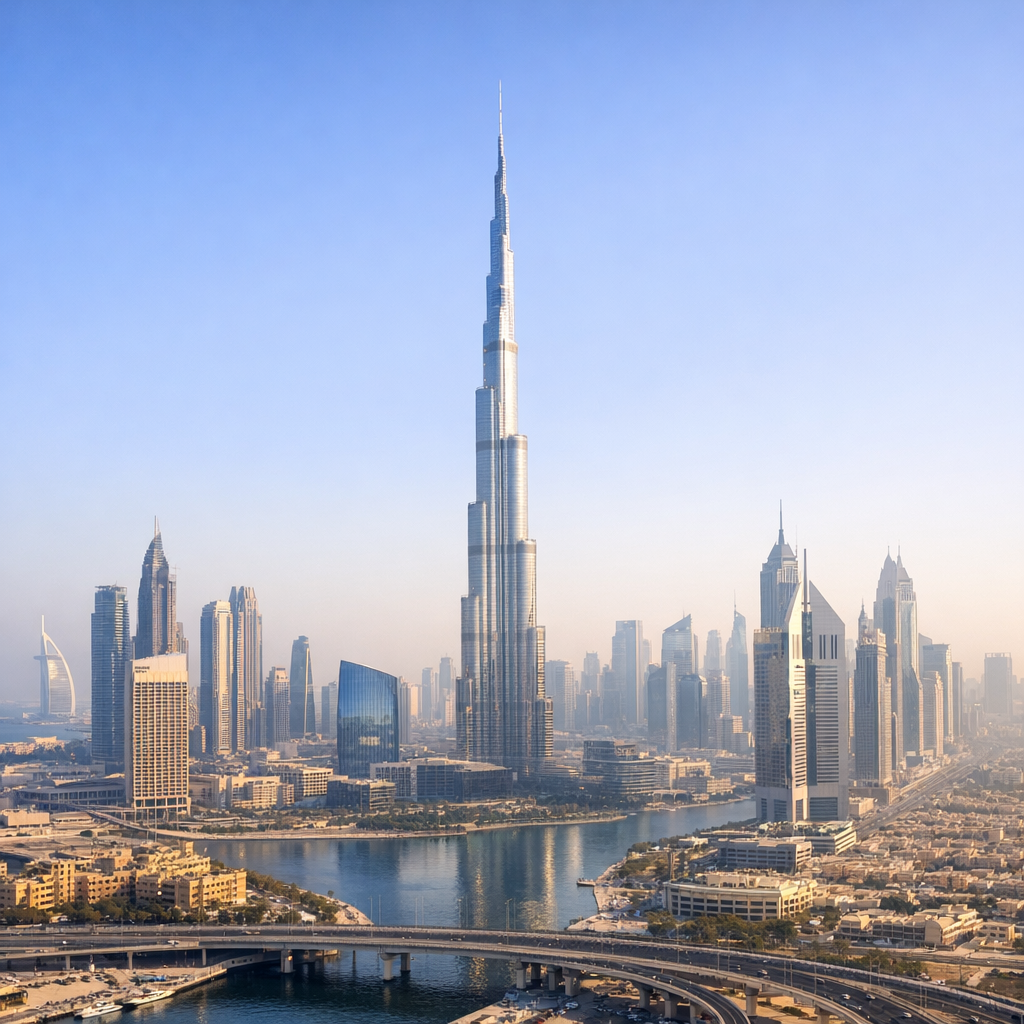
Dubai’s climate is characterized by its hot desert environment, with distinct seasonal variations and environmental challenges that residents and visitors should be aware of.
Seasonal Weather Patterns
Summer (May to September)
During the summer months, Dubai experiences extremely high temperatures, often exceeding 40°C (104°F). The combination of intense heat and high humidity, influenced by the warm waters of the Arabian Gulf, can make outdoor activities challenging. It’s advisable to limit exposure during peak heat hours and stay hydrated.
Winter (December to March)
Winter brings milder temperatures, with daytime highs ranging between 20°C (68°F) and 26°C (79°F). This period is considered the most comfortable time for outdoor activities. Rainfall is rare but can occur, usually in short, heavy bursts.
Environmental Challenges
Sandstorms
Dubai occasionally experiences sandstorms, particularly during the summer months. These storms, driven by strong winds, can reduce visibility and affect air quality. It’s important to stay indoors during severe sandstorms and follow local advisories.
Water Scarcity
As a desert city, Dubai faces challenges related to water scarcity. The primary sources of freshwater include desalination plants and groundwater extraction. Desalination is energy-intensive and has environmental implications, such as the release of brine into the Arabian Gulf, affecting marine ecosystems.
Staying Informed
For daily updates on Dubai’s climate, residents and visitors can consult the National Center of Meteorology website. Staying informed helps in planning activities and taking necessary precautions during extreme weather conditions.