

Dubai has long been recognized for its rapid development and architectural marvels. However, beyond the skyscrapers and luxury, the emirate is making significant strides in environmental sustainability, aiming to balance urban growth with ecological preservation.
Advancements in Clean Energy
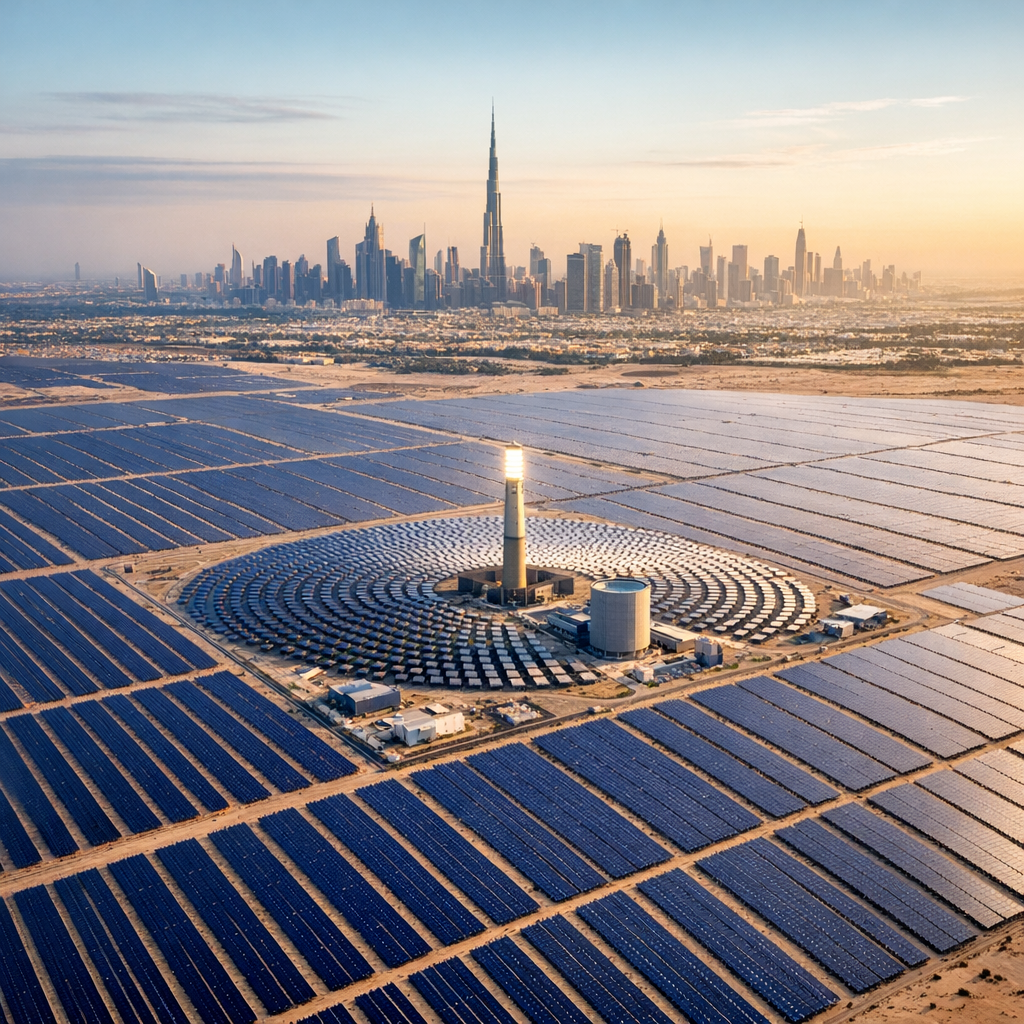
Central to Dubai’s sustainability efforts is the Mohammed bin Rashid Al Maktoum Solar Park. This ambitious project is set to be the world’s largest single-site solar park, with a planned capacity exceeding 8,000 megawatts by 2030. Such initiatives align with the Dubai Clean Energy Strategy 2050, which aims to provide 100% of the emirate’s energy production capacity from clean sources by mid-century.
Innovative Waste Management
Addressing waste management, Dubai has launched the Warsan Waste Management Centre, touted as the world’s largest energy-from-waste facility. This center is designed to convert 1.9 million tonnes of municipal solid waste annually into sustainable energy, supporting Dubai’s goal of zero waste to landfill by 2030.
Biodiversity Conservation Efforts
In terms of biodiversity, the Dubai Environment and Climate Change Authority (DECCA) has been proactive. In 2026, DEWA, in collaboration with DECCA, planted 700 mangrove trees at the Jebel Ali Marine Sanctuary, engaging 254 volunteers who contributed 508 hours of service. These efforts are part of a broader initiative to plant 100 million mangrove trees across the UAE by 2030, aiming to enhance marine biodiversity and protect coastal ecosystems.
Community Engagement and Sustainable Practices
Community involvement is also a cornerstone of Dubai’s environmental strategy. The ‘Dubai Can’ initiative encourages residents to reduce single-use plastic water bottle waste by promoting the use of refillable bottles and providing access to free drinking water through strategically placed stations across the city.
Furthermore, Dubai Municipality oversees eight protected areas covering approximately 31% of the emirate’s total area. These reserves represent diverse ecosystems, including mountains, deserts, and coastal regions, and are managed with the goal of conserving and restoring natural habitats.
Through these multifaceted initiatives, Dubai demonstrates a robust commitment to environmental sustainability, ensuring that its rapid development does not come at the expense of the natural environment.