

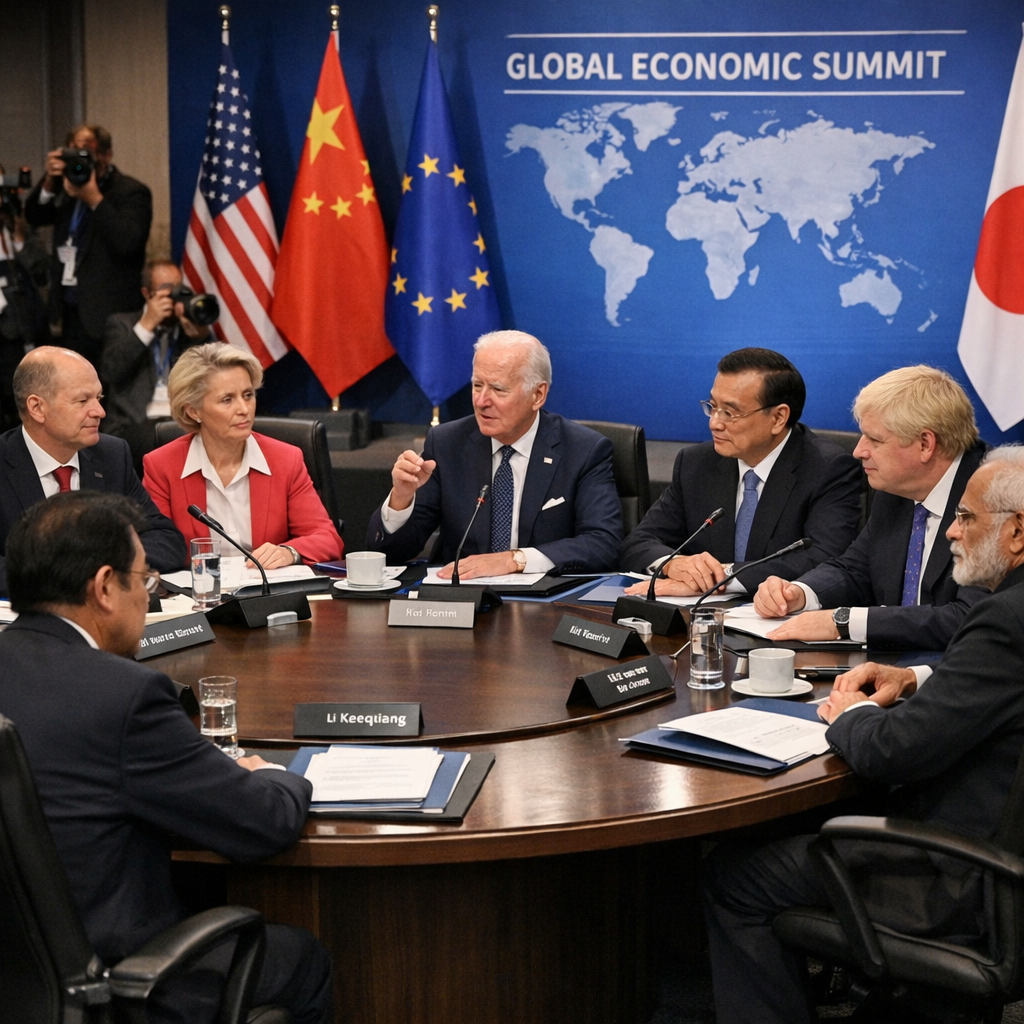
The global economy is currently navigating a complex landscape marked by geopolitical tensions and rapid technological advancements. According to the United Nations Conference on Trade and Development (UNCTAD), global growth is projected to slow to 2.7% in 2026, down from 3% in 2025. This deceleration is attributed to subdued investment and structural challenges, despite easing inflation and monetary policy adjustments.
Geopolitical Tensions and Economic Impact
Recent conflicts in the Middle East, particularly the war involving Iran, have significantly disrupted global oil supplies. The International Monetary Fund (IMF) notes that the closure of the Strait of Hormuz has led to a nearly 32% increase in oil prices, contributing to stalled progress against inflation. This situation underscores the vulnerability of the global economy to geopolitical shocks.
Technological Advancements and Economic Resilience
On a more positive note, increased investment in artificial intelligence (AI) and technological advancements are providing some resilience. The World Economic Forum highlights that surging AI investment is a defining trend for 2026, offering opportunities for economic growth despite existing challenges.
Regional Economic Outlooks
Different regions are experiencing varied economic trajectories. The United States is expected to see a growth of 2.3% in 2026, driven by tax cuts, productivity gains, and a strong stock market. In contrast, the eurozone faces slower growth at 0.9%, primarily due to energy challenges. China anticipates a growth rate of 4.6%, influenced by property market issues but bolstered by infrastructure investment and tech exports. India remains a bright spot, with a projected growth of 6.4%, making it the fastest-growing major economy.
Policy Recommendations
To navigate these uncertainties, experts recommend that governments and companies adopt agile policies. The World Economic Forum suggests that timely and targeted fiscal support, diversification of energy sources, and investment in new technologies and education are crucial for building resilience and fostering long-term growth.
In conclusion, while the global economic outlook for 2026 presents challenges, strategic investments in technology and prudent policy measures can help mitigate risks and support sustainable growth.