

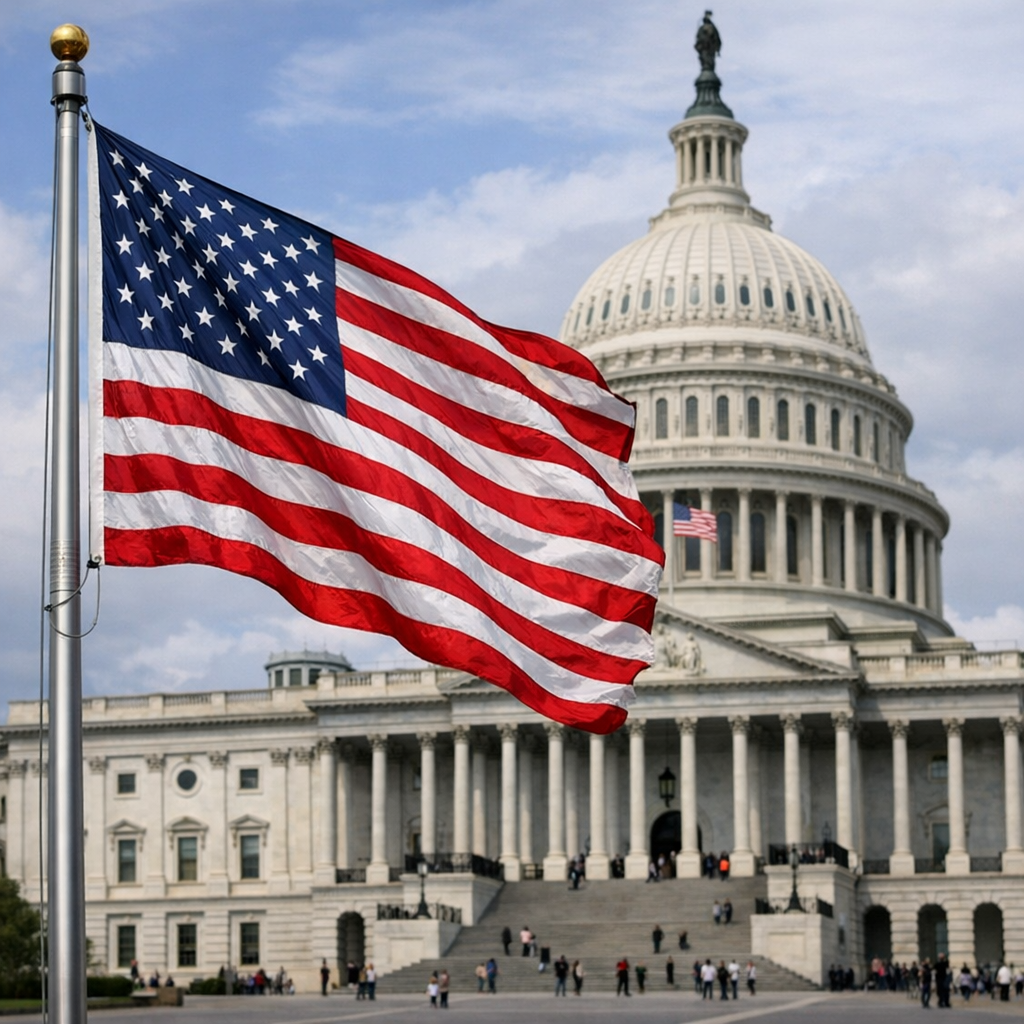
The United States is currently experiencing a dynamic and multifaceted political and economic environment, marked by significant developments that have both domestic and international implications.
Political Climate
Recent polling data indicates a heightened level of public concern regarding the U.S. political system. Approximately one-third of Americans identify politics and government as the nation’s most pressing issues. This sentiment is particularly pronounced among older demographics, while younger individuals tend to focus more on economic challenges such as housing affordability and basic needs.
These concerns are set against a backdrop of increasing political polarization and debates over issues like immigration, healthcare, and the role of federal institutions. The upcoming midterm elections are expected to be pivotal, with all 435 House seats and 35 Senate seats up for grabs, potentially reshaping the legislative landscape.
Economic Overview
On the economic front, the International Monetary Fund (IMF) has described the U.S. economy as “buoyant,” projecting a growth rate of 2.4% in the fourth quarter of 2026. Unemployment rates are anticipated to decline to 4.1% by the end of the year, with inflation expected to align with the Federal Reserve’s 2% target by 2027.
However, the IMF has also highlighted potential risks, including substantial federal budget deficits that could pose stability challenges. Additionally, the Federal Reserve has maintained interest rates but signaled the possibility of future hikes to manage inflationary pressures.
Implications for the UAE
For the United Arab Emirates, these developments in the U.S. hold particular significance. The UAE’s economic ties with the U.S. are substantial, encompassing trade, investment, and financial markets. A stable and growing U.S. economy can bolster global economic confidence, potentially benefiting the UAE’s export sectors and investment portfolios.
Conversely, political uncertainties and policy shifts in the U.S. could introduce volatility into global markets, necessitating strategic planning and adaptability from UAE businesses and policymakers.
In conclusion, staying informed about the evolving U.S. political and economic landscape is crucial for stakeholders in the UAE. Understanding these dynamics enables better navigation of potential challenges and the identification of opportunities arising from the interconnected global economy.